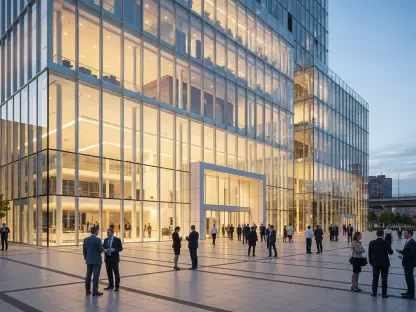

The once-familiar landscape of convention halls and ballroom galas has been irrevocably altered, giving rise to a new era where digital intelligence and physical presence must coexist to create meaningful business connections.
The Post-Pandemic Pivot Why Corporate Events Will Never Be the Same
The global corporate events market is experiencing a significant resurgence, with projections indicating it will reach nearly £441 billion by 2029. This growth signals renewed confidence in the power of in-person engagement, yet it occurs within a fundamentally changed landscape. The return to face-to-face meetings is not a return to the old normal; rather, it is an evolution into a more complex, technology-infused ecosystem.
In this new environment, the convergence of artificial intelligence and hybrid event frameworks is no longer a niche technological trend but a strategic imperative. Businesses that fail to integrate these tools risk falling behind in efficiency, reach, and attendee satisfaction. This evolution demands a new way of thinking about how events are planned, executed, and measured, shifting the focus from simple logistics to sophisticated, data-driven experiences.
This article dissects the profound operational, financial, and experiential shifts defining the future of corporate gatherings. It explores how organizations are leveraging technology to navigate rising costs, extended planning cycles, and heightened attendee expectations, ultimately transforming events from standalone activities into integral components of a broader business strategy.
Navigating the New Event Ecosystem Technology Tactics and Trade-offs
The Rise of the Intelligent Co-Pilot How AI is Automating Event Complexity
Artificial intelligence has emerged as a critical co-pilot for event professionals, streamlining complex logistics that were once managed manually. From personalizing attendee agendas based on past behavior to analyzing real-time engagement data at scale, AI-powered tools are automating the intricate details of event management. This allows planners to handle a greater volume of events with leaner teams, a crucial advantage in a competitive market.
Evidence of this shift is clear, with 58% of event professionals now leveraging automation to enhance their workflows. In parallel, the technical demands of sophisticated events have spurred a reliance on specialized expertise. This has led to a parallel trend of outsourcing, where planners depend on external partners for advanced A/V production, platform management, and compliance, creating new strategic dependencies.
The Hybrid Imperative Balancing Digital Reach with Financial Realities
Hybrid events have firmly transitioned from a temporary solution to a permanent, core component of corporate event strategy for 80% of organizers. This model offers the best of both worlds, combining the immersive quality of in-person interaction with the scalable reach of digital participation. Organizations are leveraging this format to connect with a global audience without the associated geographical and financial barriers.
The financial arguments for this model are compelling, with 61% of organizers finding hybrid events more cost-effective than their purely in-person counterparts. By reducing the need for massive venues and limiting travel and accommodation overhead, companies can reallocate funds toward creating a higher-quality experience for both physical and virtual attendees. Consequently, investment in advanced A/V and immersive technology is rising as organizers respond to growing expectations for seamless, broadcast-quality digital experiences.
The Great Recalibration Redefining Value Amidst Rising Costs and Longer Timelines
A paradoxical trend has emerged where 74% of Fortune 1000 companies are increasing their event budgets, yet they face rising per-capita costs. This is driven by a strategic shift toward smaller, more curated gatherings designed for high-impact engagement. As a result, fixed costs for venues and production are spread across fewer attendees, pushing up the average spend per person.
This financial pressure is compounded by significant operational challenges. Booking lead times for major convention venues now average 18 to 24 months, demanding earlier budget commitments and reducing organizational flexibility. To counter these constraints, 90% of planners are strategically turning to secondary cities, which offer greater availability and more predictable pricing without compromising the quality of the attendee experience.
From Logistics to Legacy Prioritizing Attendee Experience and Sustainable Impact
The criteria for a successful event have expanded beyond logistical execution and financial return. Non-financial factors, particularly sustainability, are now central to the planning process, with 83% of professionals integrating environmental considerations into core decisions, from venue selection to supply chain management. This reflects a broader understanding that a company’s values must be visibly demonstrated through its actions.
This evolution marks a definitive shift from a focus on logistics to an emphasis on the complete attendee journey. The modern approach prioritizes creating a purposeful and engaging experience that begins long before the event and continues after its conclusion. Ultimately, the most successful corporate events will be those that masterfully align technological innovation with ethical considerations and human-centric design, creating a lasting and positive legacy.
A Practical Playbook for the Modern Event Strategist
The key takeaways for today’s event professionals are clear: AI-driven efficiency, the financial and strategic viability of hybrid models, and proactive budget management are non-negotiable pillars of success. Thriving in this new landscape requires a blend of long-term strategic foresight and agile, technology-enabled execution to deliver measurable results.
To navigate this complexity, planners should adopt several actionable strategies. Early and strategic booking of venues and travel is paramount to mitigating the impact of extended lead times and rising costs. Furthermore, prioritizing the attendee experience—from session design to networking opportunities—remains the most effective way to ensure high participation and satisfaction. Selecting secondary markets can also provide a crucial balance between budget efficiency and a high-quality event environment.
Corporate travel management platforms have become indispensable tools in this ecosystem. These systems allow organizations to coordinate complex itineraries for teams attending multiple events, streamline expense management, and optimize spending across an entire event portfolio. By centralizing these functions, businesses can ensure every detail is tracked and aligned with strategic objectives.
Forging the Future of Corporate Connection
The integration of advanced technology and hybrid frameworks has permanently reshaped the purpose and value of corporate events. These gatherings are no longer isolated marketing or HR functions but are now recognized as powerful drivers of revenue, culture, and community. They are meticulously planned strategic initiatives designed to produce tangible business outcomes.
Success in this evolved landscape was measured not just by attendance numbers but by the ability to create meaningful connections and generate measurable returns. The events that stood out were those that were meticulously planned and strategically executed, leveraging data and technology to enhance every touchpoint of the attendee journey.
This transformation represented a call to action for business leaders. Embracing this evolution allowed organizations to build more resilient, impactful, and meaningful engagement strategies that fostered lasting relationships and drove sustainable growth in an increasingly interconnected world.