
A central rug inspired by the iconic clock from the SS Rotterdam serves as a subtle design nod to the company’s storied past within the modernized social architecture of the ship. This intentional blend of historical reverence and contemporary luxury defines the current era of Holland America Line, as the brand navigates a significant strategic pivot through its comprehensive fleet-wide transformation program. Known as the Holland America Evolution, this initiative seeks to harmonize over 150 years of maritime heritage with the sophisticated expectations of the modern traveler. By redesigning core social spaces and introducing innovative hospitality concepts, the cruise line aims to ensure its older vessels remain competitive alongside its newest flagships. The centerpiece of this effort on the Oosterdam is the debut of Bar 1873, a venue that transcends the traditional lounge experience by functioning as a curated gallery of seafaring lore while addressing the growing demand for authentic travel experiences.
Strategic Integration: Heritage and Modern Luxury
Legacy Branding: The Concept of Bar 1873
Bar 1873 distinguishes itself by rejecting a one-size-fits-all design philosophy, instead opting for a tailored approach where each ship in the fleet will feature a version of the bar tied to a specific chapter of history. On the Oosterdam, the inaugural theme is May She Be Blessed, which focuses specifically on the tradition of ship christenings and the influential godmothers who have launched the fleet’s vessels over many decades. This narrative focus ensures that the bar feels unique to the vessel, turning a standard social space into a curated gallery of maritime lore that encourages guest interaction. Rather than serving as a static museum, the venue operates as a vibrant social hub where the history of the company is celebrated through modern aesthetics and sensory engagement. The specific focus on the 1958 christening of the Rotterdam V by Queen Juliana reinforces the line’s historic Dutch connection, a unique selling point that distinguishes it from other major cruise lines.
The beverage program at Bar 1873 further enhances this storytelling by offering what the company describes as glass-based narratives, including the signature May She Be Blessed cocktail. This interactive drink allows guests to choose specific essences to personalize their cocktail, effectively mimicking the ceremonial blessing of a ship in a way that provides a high degree of guest agency. Beyond this custom offering, the menu features modern reinterpretations of classic maritime cocktails, providing a sophisticated drinking experience that feels both nostalgic and innovative for the contemporary palate. This emphasis on mixology as a form of performance art allows the staff to engage guests in conversations about the company’s history while serving high-quality refreshments. By integrating beverage craftsmanship with historical themes, Holland America ensures that the guest experience is multi-sensory and deeply personal. This strategy represents a departure from traditional shipboard bars, shifting toward a boutique-heritage aesthetic.
Fleet Evolution: Modernizing the Vista Class
The Holland America Evolution represents the most substantial investment in the company’s history, specifically targeting the revitalization of the Vista and Signature Class ships such as the Oosterdam and Zuiderdam. Led by President Beth Bodensteiner, the program seeks to update public spaces and guest accommodations to mirror the high standards found on the line’s newer Pinnacle Class vessels. This strategic alignment ensures a consistent brand experience across the entire fleet, regardless of the age or size of the specific vessel. By modernizing these ships, the company is positioning itself to capture a broader market share through 2027 and beyond, focusing on travelers who value both heritage and modern amenities. The investment covers everything from structural enhancements to the integration of new digital technologies that streamline the guest journey. This comprehensive approach demonstrates a long-term commitment to the existing fleet, ensuring these vessels remain relevant in an increasingly competitive luxury market.
Balancing modernization with the preservation of the mid-sized ship intimacy for which Holland America is renowned remains a central challenge of this transformation. Many loyal guests choose this cruise line specifically for its perfectly sized vessels, which offer a more personal level of service than the industry’s massive mega-ships. The Evolution program addresses this by introducing fresh, interactive experiences like Bar 1873 that appeal to modern travelers without alienating the established guest base. This delicate equilibrium is achieved by maintaining the classic silhouettes and layouts of the ships while injecting contemporary design elements and upgraded programming. By focusing on quality over quantity, the company reinforces its reputation for sophisticated cruising. The initiative also reflects a shift in demographics, as newer generations of cruisers seek out brands that offer a sense of history combined with the luxury and convenience of modern technology. This evolution is not just about aesthetics but about refining the identity.
Architectural Design: Visual and Social Storytelling
Thematic Decor: Visual Storytelling Techniques
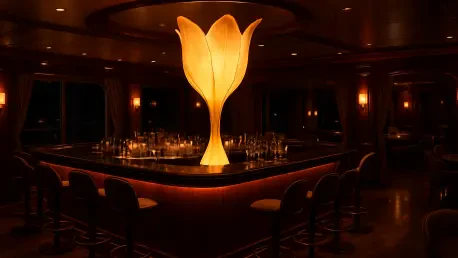
The physical environment of Bar 1873, developed in partnership with the renowned London-based design firm SMC, is centered around a stunning three-meter-tall illuminated tulip sculpture. This centerpiece pays homage to the Netherlands’ national flower and Holland America’s signature orange tulip while acting as a visual beacon within the ship’s central two-story atrium. The sculpture is carefully engineered to cast intricate, atmospheric patterns of light and shadow throughout the lounge, creating an immersive environment that shifts dynamically as the day turns into night. This use of light as a design tool adds a layer of depth to the social space, making it a focal point for evening gatherings and pre-dinner socialization. The tulip sculpture is not only a decorative element but a symbolic representation of the company’s roots, grounding the modernized interior in the cultural heritage of the Netherlands. This integration of symbolic art and functional design creates a space that is both visually striking.
Complementing the central tulip sculpture are over 200 repurposed heritage artifacts and bespoke artworks that line the venue, transforming the bar into a legitimate gallery of maritime history. Design details are deeply symbolic, featuring a grand fireplace modeled after the hearth in the original Holland America headquarters in Rotterdam, which is now the Hotel New York. Carpets are woven with patterns that mimic the interplay of light on ocean waves, while vintage-style maps and a visual timeline of the company’s legacy are integrated into the walls. These elements are woven together to ensure that every corner of the lounge invites guests to explore the brand’s 19th-century origins in a modern setting. The inclusion of these artifacts serves to humanize the history of the cruise line, connecting guests to the sailors and travelers of previous generations. This boutique-heritage aesthetic represents a sophisticated shift away from generic nautical themes toward a more nuanced and curated approach.
Versatile Environments: Entertainment and the Crow’s Nest
Music plays a vital role in defining the atmosphere of Bar 1873, which features live piano performances during the early evening and late into the night. These performances are frequently joined by vocalists and members of the Vivace ensemble, providing an intimate, upscale alternative to the ship’s larger, high-energy theater venues. The focus on live, acoustic performances reinforces the lounge’s identity as a refined retreat where guests can enjoy high-quality entertainment in a personal and relaxed setting. This musical programming is curated to complement the sophisticated environment, offering a mix of classic and contemporary arrangements that appeal to a wide range of tastes. By prioritizing live music in these social hubs, Holland America enhances the overall ambiance and encourages guests to linger longer in the newly designed spaces. This approach to entertainment reflects a broader trend in the cruise industry where guests seek out smaller venues that offer unique and high-quality performances.
In addition to the arrival of Bar 1873, the Oosterdam has debuted a refreshed Crow’s Nest, the ship’s iconic observation lounge that has historically been a favorite for its panoramic views. The Evolution update has transformed this space into a more versatile destination, featuring enhanced programming that transitions seamlessly from daytime enrichment lectures to vibrant evening social hours. With an expanded musical repertoire focusing on hits from the 1970s to the modern day, the reimagined Crow’s Nest complements the historical elegance of Bar 1873 by offering a dynamic venue for dancing and sightseeing. The redesign focused on increasing the functional flexibility of the space, allowing it to serve as a quiet library and observation area by day and a high-energy lounge by night. This duality ensures that the venue remains occupied and relevant throughout the cruise, maximizing the utility of one of the ship’s most scenic locations while catering to diverse guest needs.
Strategic Outcomes: A Blueprint for Fleet Sustainability
The successful introduction of Bar 1873 and the broader Evolution program demonstrated a clear consensus within the leadership of Holland America Line regarding the future of the brand. By effectively using its 150th anniversary as a springboard for a comprehensive refresh, the company confirmed that tradition and innovation are not mutually exclusive but rather complementary forces. As the rollout continued through 2026, the strategy proved that heritage brands can maintain their relevance by grounding new experiences in historical truth. To ensure long-term success, stakeholders should prioritize the expansion of these themed venues across all Vista and Signature Class vessels, maintaining the high standard of craftsmanship seen on the Oosterdam. Future developments will likely involve even greater integration of digital storytelling and personalized guest services, further bridging the gap between maritime history and modern luxury. This proactive approach to fleet management set a new benchmark for the industry, showing how to revitalize established assets while honoring the past.