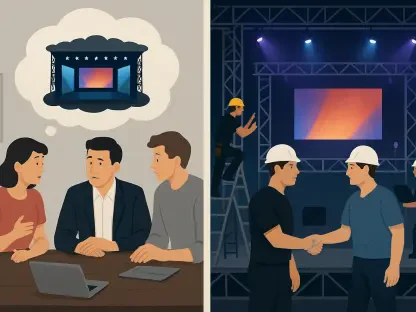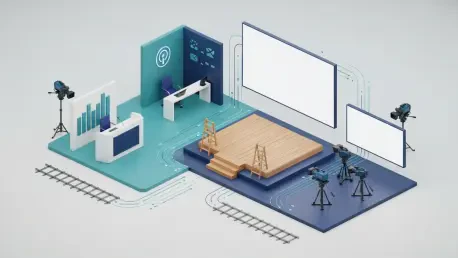

A high-stakes live event is only as strong as the unseen digital architecture supporting the physical stage, where a single second of lag can shatter the illusion of a multi-million dollar brand narrative. The traditional barrier between the visionaries who design an event and the engineers who build it is finally crumbling. In an industry where a brilliant creative concept often hits a wall during technical execution, Premier Studios introduced a unified model that ensures what is designed on a screen actually works on a stage. By merging content strategy, graphic design, and studio production into one powerhouse department, the agency moved away from the fragmented silos that plagued planning for decades.
The End of the Creative and Technical Divide
This shift addresses the friction that typically occurs when creative leads and technical directors work in isolation. When these two worlds collide only at the final hour, the resulting mismatch often leads to compromised quality or costly last-minute adjustments. By integrating these disciplines from the start, the production process becomes a single, fluid motion that honors the original vision without sacrificing functional stability.
The Rise of Content-Led Experiences in a Digital Age
Modern audiences no longer settle for passive viewing; they demand immersive environments that bridge the gap between broadcast quality and live energy. This shift forced a reevaluation of how event agencies operate, moving from simple logistics providers to comprehensive creative partners. As events become increasingly reliant on high-definition motion graphics and seamless video integration, the need for a production hub that understands both aesthetic and infrastructure has become the new industry standard.
Moreover, the transition toward content-led experiences reflects a broader digital evolution where the screen is as vital as the stage. Today’s attendees expect the same visual fidelity they encounter in high-end streaming media, requiring producers to think like broadcast directors. This necessitates a mastery of motion design and real-time rendering that traditional event setups were never built to accommodate.
A Comprehensive Ecosystem for Creative Execution
Premier Studios moved beyond being a mere service provider to become a full-scale creative and production hub. This evolution is defined by several core pillars that allow for a seamless transition from concept to delivery. By combining scriptwriting, presentation design, and motion graphics, the agency ensures a consistent brand narrative across all touchpoints. Significant investment in Leicester-based studio spaces and dedicated podcast facilities provides the technical backbone for broadcast-grade video production.
Furthermore, leveraging the broader ecosystem, including the Premier Woodshop, allows for the creation of physical environments that match the digital sophistication of the on-screen content. This synergy ensures that every physical element on stage serves a purpose within the digital broadcast, creating a unified experience for both in-person attendees and global streaming audiences.
Strategic Growth and Industry Validation
The relaunch of Premier Studios is backed by tangible success, with the agency recently surpassing £10 million in revenue and maintaining a 34% year-on-year growth rate. This model proved its efficacy through high-stakes projects like KFC’s RGMFest, which demanded a perfect blend of high-energy live performance and complex digital assets. Founder Ben McCarthy emphasizes that the goal is to eliminate the friction that occurs when creative and technical teams work in isolation.
The agency’s commitment to nurturing talent—evidenced by multiple staff members appearing on “30 Under 30” lists—underscores a culture of innovation. This growth is not merely financial but reflects a fundamental shift in how the market values integrated expertise. By proving that a single agency can manage both the conceptual spark and the technical load, Premier established a new benchmark for scalability and creative reliability in the sector.
Implementing the Integrated Production Model
For organizations looking to elevate their event standards, the Premier Studios approach offered a blueprint for modern production. These strategies focused on streamlining the workflow and maximizing the impact of every piece of content. Design for delivery became the foundational rule; every project began by considering the technical environment—whether it was a broadcast studio or a stadium—to avoid costly adjustments during the final installation.
The conclusion of these efforts resulted in a system that prioritized narrative continuity and eliminated communication silos. Agencies that successfully adopted this model saw a dramatic reduction in technical errors and a marked increase in audience engagement metrics. By blending physical and digital assets into a multi-dimensional experience, the industry moved toward a future where the distinction between the medium and the message finally dissolved into a singular, impactful brand journey.