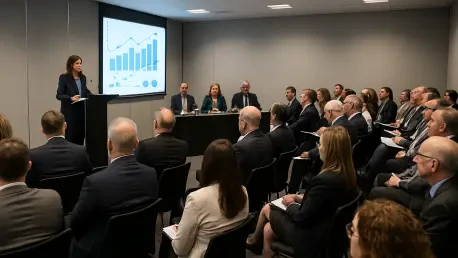

The landscape of the international business events sector has undergone a profound transformation, requiring associations to pivot toward high-level advocacy and data-driven governance to remain relevant. At the recent 36th Annual General Meeting held at Excel London, the Meetings Industry Association demonstrated how a commitment to structural progress can yield substantial dividends for a diverse membership base. The gathering served as a pivotal moment for the organization to reflect on its trajectory, moving beyond traditional networking to become a sophisticated voice for the UK’s meetings industry. By aligning internal operations with broader economic goals, the association established a framework that prioritizes measurable impact over simple participation. This strategic shift is not merely a response to market pressures but a proactive effort to redefine how business events are perceived by stakeholders and policymakers. The assembly highlighted a year defined by significant maturation, where the focus remained squarely on delivering tangible value to the 721 organizations that comprise its current roster.
Structural Evolution and Membership Expansion
The reported growth of the association reflects a broadening interest in specialized industry representation, particularly as organizations navigate complex regulatory environments. Under the ongoing leadership of Chair Andrew Mosley and CEO Shonali Devereaux, the membership reached a record total of 721 entities, bolstered by the addition of 135 new organizations including venues, academic institutions, and specialized suppliers. This expansion is indicative of a wider trend where industry players seek the safety and influence of a collective body to address challenges that are too large for individual firms to handle alone. The leadership transition that occurred toward the end of 2024 has successfully stabilized the organization’s mission, allowing it to pursue an aggressive growth strategy while maintaining its core focus on quality and professional standards. This surge in participation underscores the necessity for a unified platform that can effectively communicate the unique requirements of the business events community to a global audience of stakeholders.
Central to the association’s recent success is the transformation of its data gathering mechanisms, specifically through the “Insights” program which moved to a biannual reporting cycle. These reports now provide a comprehensive deep-dive into critical metrics regarding people and performance, offering members a level of intelligence that was previously inaccessible to smaller organizations. These data points are not intended for passive consumption; instead, they serve as the foundation for the association’s professional development curriculum and its targeted advocacy efforts. By hosting more than 30 training events and various networking initiatives such as “Connect Days,” the organization has created a feedback loop where real-world data informs educational content. This approach ensures that the skills being taught are those most in demand by the modern workforce, bridging the gap between theoretical training and practical application in a rapidly evolving market. The emphasis on high-quality reporting allows for more precise benchmarking across different sectors within the hospitality industry.
Advocacy and Collaborative Strategic Initiatives
Strategic collaboration has emerged as a cornerstone of the association’s efforts to influence national policy and environmental standards within the events sector. A prominent example of this cooperative spirit was the joint ESG Summit held in partnership with Beam, which addressed the growing pressure for sustainable practices across all levels of event planning and execution. Beyond sustainability, the association intensified its political engagement by working closely with government bodies like the Department for Business and Trade and the Department for Culture, Media and Sport. These interactions are vital for ensuring that the economic contributions of business events are recognized in official government statistics and policy frameworks. By maintaining a constant presence in these discussions, the organization advocates for a more favorable operating environment for its members. This engagement helps demystify the industry for legislators, highlighting its role as a driver of local economies and a catalyst for international trade through high-impact professional gatherings.
The confirmation of the 2026/2027 Board of Directors signaled a commitment to continuity and diverse expertise, with leaders from PwC, ACC Liverpool, and major hotel groups stepping into key roles. A primary focus for this leadership team involved the pursuit of SIC code reform to more accurately categorize the business events sector within national economic reporting structures. This technical but crucial change was identified as a necessary step to ensure the industry receives appropriate support and recognition during policy deliberations. The association established that the next phase of growth must involve leveraging these new governance structures to maintain an agile response to emerging market trends. By focusing on legislative advocacy and membership-centric initiatives, the organization provided a clear roadmap for sustaining momentum through the current year and beyond. Ultimately, the assembly successfully formalized the transition from a traditional trade body into a proactive legislative partner, ensuring that the economic value generated by its members was championed at the highest levels of government.