
The architectural transformation of professional communities from isolated regional clusters into deeply integrated global ecosystems represents a fundamental shift in how corporate event strategy is executed today. Senior in-house event leaders now operate in a data-driven economy that demands sophisticated networking frameworks to navigate complex international markets. This evolution is best exemplified by the recent transition of the International Corporate Events Network, which reflects a broader industry movement toward connective layer models. By integrating enterprise-level intelligence, these networks provide the strategic support necessary for professionals to thrive in an interconnected landscape.
The Globalization of Professional Event Communities
Growth Metrics: Strategic Expansion Drivers
The transition of the former ICE into the International Corporate Events Network serves as a benchmark for industry maturation. This strategic expansion into three distinct international regions addresses the growing scale of corporate event responsibilities that now cross multiple borders. Consequently, the industry witnessed a shift from informal networking toward formalized peer-to-peer knowledge sharing designed to drive strategic impact.
Real-World Application: The Connective Layer Model
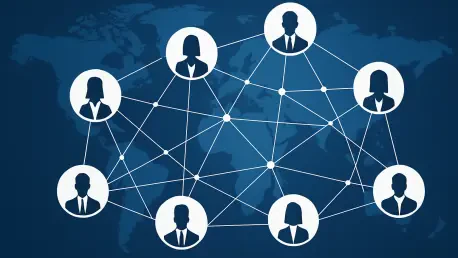
The International Corporate Events Network functions as a connective layer that dismantles traditional professional silos. This model prioritizes data-led intelligence, ensuring that real-world experience informs high-level executive decision-making. Furthermore, the integration of specialized roles to oversee global event strategy allowed organizations to manage enterprise-level programs with precision.
Expert Perspectives on Industry Transformation
Anita Howard emphasized a mission to raise global standards through a unified identity that transcends geographical limitations. The appointment of Ben Goedegebuure, bringing a Maritz executive background, reinforced the move toward sophisticated intelligence frameworks. Thought leaders agreed that professionals shaping the global landscape required advanced tools to translate community insights into business strategies.
The Future of Global Event Intelligence and Networking
The shift from superficial networking to deep-tier strategic collaboration signaled a long-term change in how professional credibility is established. Unified alliances will likely set new benchmarks for measurable outcomes while addressing the challenge of scaling niche executive communities. Intelligence frameworks will continue to incorporate emerging technologies and adapt to global economic shifts, ensuring that event leaders remain at the forefront of corporate innovation.
Conclusion: Navigating the New Era of Event Collaboration
The transition of the International Corporate Events Network signaled the maturation of an industry that recognized the limitations of isolated operations. Leaders fostered a more unified and intelligent global alliance by successfully dismantling professional silos. This evolution proved that embracing data-driven, cross-border networks was the only viable path for those seeking to lead in a complex global economy.