
With a rich background spanning travel, tourism, and major event management, Katarina Railko has a unique perspective on the intersection of culture and hospitality. Today, she joins us to dissect the landmark partnership between Green & Fortune and the new London Museum, a collaboration set to redefine the visitor experience in one of the city’s most anticipated cultural openings. We explore the strategy behind creating a culinary destination that is as compelling as the exhibits themselves.
Winning a competitive 10-year contract for a major cultural institution is a significant achievement. What do you believe was the key differentiator in your proposal, and how will you maintain that innovative edge to “shift the dial” on museum hospitality over the next decade?
I believe the winning edge came from being a genuinely London-centric business. Unlike larger, more generic firms, Green & Fortune lives and breathes this city. The proposal wasn’t just about food; it was about embodying London’s past and present. The ambition to truly “shift the dial” on what a museum can offer resonated because it was authentic. For the next decade, maintaining that edge means treating the partnership as a living, evolving entity. We’ll be constantly collaborating with the museum’s curators and avoiding a static menu, ensuring that the dining experience feels as fresh and dynamic in year nine as it does on opening day.
The partnership emphasizes locally sourced, sustainable menus that respond to the museum’s program. Could you describe the practical steps for building these unique supply chains in London? Please share an example of how a menu might adapt to reflect a new, co-curated exhibition.
Building these supply chains in a city as dense as London is about forging deep relationships. It’s not just about finding a supplier; it’s about finding a partner. We go to the source—visiting urban farms in the city’s outskirts, meeting artisan bakers in small neighborhood shops, and connecting with cheesemongers who have been part of London’s fabric for generations. For an exhibition on, say, the history of London’s River Thames, the menu would directly reflect that. We might feature smoked eel from a local smokery, create a dessert using honey from hives kept near the riverbanks, or serve a modern take on a classic dockworker’s lunch, all presented with stories that connect the plate back to the gallery walls.
With four distinct hospitality concepts planned, from grab-and-go to all-day dining, how do you balance commercial viability with creative expression? Please walk us through the process of ensuring each concept authentically reflects the unique character of its historic Smithfield location.
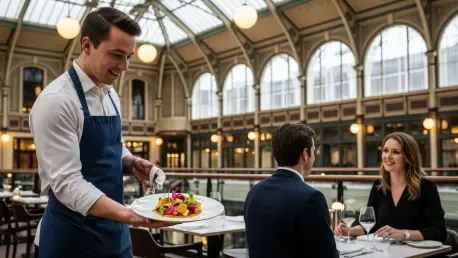
The balance comes from a deep understanding of the visitor journey. A family dashing in for a quick bite before an exhibition has different needs than a couple settling in for a leisurely meal. The grab-and-go concept will be fast, fresh, and high-quality, reflecting the energy of a bustling market. The all-day dining space, however, will be a destination in its own right, a place where you can feel the history of the Victorian architecture around you. Authenticity is achieved by weaving the story of Smithfield into every detail—from the design of the spaces, which will honor the original ironwork of the General Market, to menu items that give a nod to the area’s rich history as the city’s primary food market.
Catering events in a renovated 150,000 sq ft Victorian market presents unique logistical challenges. What are the key operational considerations for this historic space, and what specific training will the new team receive to execute both intimate receptions and large-scale gala dinners flawlessly?
The scale of a 150,000 square foot historic space is both a blessing and a challenge. Operationally, our primary focus is on flow and infrastructure—how we move food, staff, and equipment through a landmark building without disrupting its character. We’re planning meticulous service routes and dedicated prep areas that respect the building’s heritage. The new team’s training will be intensive and scenario-based. They won’t just learn the menu; they’ll learn the building. They will run drills for a 50-person reception in a delicate gallery space and then immediately switch gears to practice service for a 500-guest gala dinner in the main hall, ensuring they are masters of both agility and scale.
This partnership is projected to create 80 new jobs and support significant revenue growth by 2026. How do your recent senior leadership appointments align with this expansion, and what key qualities will you prioritize when recruiting the new on-site team for the museum?
The recent appointments of leaders like Sarah Miller as Managing Director and Dan Rampart as Chef Director were strategic moves to build the precise expertise needed for a project of this magnitude. They bring a combination of creative vision and operational excellence that is essential for driving this growth. When recruiting the 80 new team members, we’re looking for more than just technical skill. We’re prioritizing passion for London. We want people who are natural storytellers, who are genuinely excited to share a piece of the city’s heritage with every visitor they serve, whether they’re a barista, a chef, or an event manager.
The goal is to give visitors a “real taste of the city.” Beyond local ingredients, how will you integrate London’s rich food culture and heritage into the dining experience itself? Can you share an anecdote or specific idea for bringing the city’s story to life on the plate?
It’s about creating an immersive experience. Imagine sitting down for a meal and your menu explains that the bread is from a recipe popular during the Victorian era when the market was first built, or that the herbs in your dish were grown in a community garden just a mile away. We could host themed dinners that recreate historical London feasts or collaborate with local brewers to create a signature beer exclusive to the museum. The idea is to make every meal a discovery. A simple dish like a meat pie could be served with a short history of its origins in the city’s street food scene, turning a simple lunch into a memorable, educational moment.
What is your forecast for the future of museum and cultural venue hospitality?
The future is about integration and destination dining. Museums are no longer just places to see things; they are becoming community hubs and complete cultural experiences. Hospitality is moving from a supporting role to a headline act. We’ll see more venues where the restaurant is as much of a draw as the main exhibition. The focus will be hyper-local, with venues telling the story of their specific neighborhood through food. Ultimately, the successful museum of the future will be one where a visitor comes for the art and stays for dinner, feeling that both experiences were seamlessly and beautifully connected.