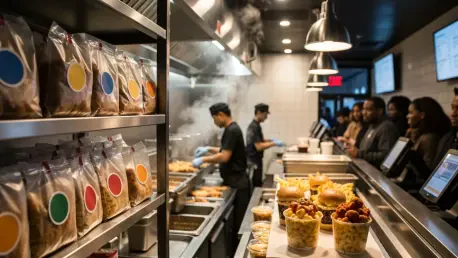

A late-night line that wraps past the door, delivery drivers stacked by the counter, and a fryer crew moving with metronomic precision signal more than hype—they point to a repeatable playbook in a category where many stumble. Asad’s Hot Chicken, a Philadelphia-based, 100% zabiha halal fast-casual brand, now spans 12 locations across Pennsylvania and New Jersey, with Cherry Hill added in April and Delaware on deck, creating a timely case study in scaling flavor without sanding down the edges that made the brand pop.
This market analysis examines how a narrow-but-deep menu, calibrated heat levels, and deliberate LTO-to-core innovation worked in concert to lift frequency and average check. It also evaluates the November mac and cheese rollout, late-night operating strategy, and omnichannel mix to assess sustainability, margin protection, and expansion runway in the tri-state area.
Market context and demand signals
Hot chicken remains a sticky consumer draw because it converts novelty into habit through predictability: seven spice levels, hand-breaded texture, and portions built for sharing. In dense suburban corridors and campus-adjacent trade areas, this profile hits three demand vectors at once—value, intensity, and convenience—creating a diversified daypart beyond the lunch rush.
Moreover, halal positioning widens the addressable base without limiting mainstream appeal. In markets like Philadelphia’s suburbs and South Jersey, where multicultural dining is normalized and price sensitivity runs high, a value-forward check paired with high flavor density sustains repeat visits. Competitors that chase variety often see slow stations and inconsistent holds; Asad’s narrower SKU set instead supports speed and quality at volume.
Operating levers and unit economics
Product consistency as the margin backbone
Hand-breaded, never-frozen spec, tight brining windows, and standardized fry times underpin unit-level reliability. That discipline reduces waste, stabilizes cook-to-hold, and keeps complaint rates low—critical as kitchens train up new crews. The seven-level heat ladder creates perceived customization without operational drag, preserving throughput while satisfying a broad palate range.
Late-night throughput and channel orchestration
Most stores run until 2–3 AM, a window where rivals taper off and delivery demand spikes. The menu’s build simplicity—tenders, sliders, loaded fries—pairs with predictable cook cycles, keeping queues short even with heavy third-party volume. The brand app funnels repeat orders and enables targeted offers, while marketplaces extend reach; the mix, however, requires vigilant margin management to avoid overexposure to high commission lanes.
Menu innovation that pays for itself
The chain-wide launch of house-made mac and cheese in November—plain, loaded with chopped hot and spicy chicken, and the Mac Attack Platter—followed controlled tests in Norristown and Bensalem. This item broadened baskets, softened spice for mixed groups, and traveled well, lifting attachment without gumming up the line. Pre-portioning and batch timing contained station congestion, translating menu buzz into defensible contribution margin.
Projections, risks, and upside scenarios
Regional densification remains the near-term mode, with Delaware as the next node and additional sites likely clustering around late-night corridors and college-heavy ZIP codes. Under a base case, app penetration rises as loyalty, heat-level reordering, and suggestive add-ons (mac and cheese, sauces) nudge ticket size upward. A bull case assumes incremental product extensions within the same flavor universe—cooling slaws, seasonal sauces—tested locally and scaled only when they protect speed.
Cost headwinds persist. Chicken and dairy volatility challenge gross margin, but contract discipline, smarter yield controls, and platter-based pricing can absorb bumps. Regulatory moves around delivery fees and late-night operations could shift mix; however, diversified channels and flexible hours give the brand levers to re-balance demand without confusing guests.
Conclusion
The brand’s growth thesis had rested on a few tight gears working in sync: a hero product with calibrated heat, a late-night advantage that competitors ceded, and an innovation cycle that favored operationally simple, high-utility items. The mac and cheese rollout had validated that approach by broadening baskets while keeping lines moving. Looking ahead, the most durable gains would have come from three moves: deepening app-driven personalization tied to heat levels, honing labor to demand curves on late-night shifts, and enforcing spec audits that kept texture and spice calibration uniform across new kitchens. Operators and investors tracking the category would have treated this playbook as a template: scale the footprint, not the variance; let data, not novelty, decide what earns a permanent spot; and use omnichannel orchestration to turn heat into habit.