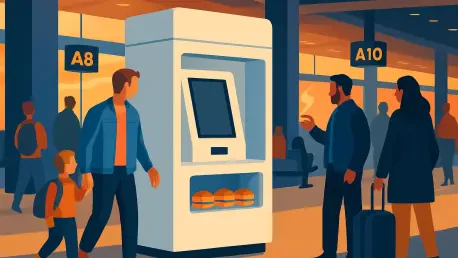

I’m thrilled to sit down with Katarina Railko, a seasoned expert in hospitality with a deep background in travel and tourism. Katarina has honed her skills navigating the fast-paced world of entertainment, events, and industry expos, making her the perfect person to unpack the exciting intersection of fast-food innovation and automated retail. Today, we’re diving into White Castle’s groundbreaking move to launch an automated kiosk at Boston Logan International Airport, exploring how this aligns with their storied legacy and what it means for the future of dining on the go. Our conversation touches on the inspiration behind venturing into airport dining, the technology ensuring quality in a high-traffic hub, and the broader vision for non-traditional expansion while preserving a family-owned charm.
How did the concept of bringing White Castle to a major hub like Boston Logan International Airport come about, and what was the journey like partnering with innovative companies to make this happen? Can you share a memorable moment from the setup process?
I’m so excited to talk about this project because it really showcases how far the boundaries of hospitality and fast-food can be pushed. The idea stemmed from a desire to meet travelers where they are—literally. Airports are chaotic, high-energy spaces, and we saw an opportunity to offer something familiar and comforting with White Castle’s iconic Sliders, right in the middle of that hustle. Partnering with leaders in automated retail was key; it was a complex dance of aligning technology with our brand’s promise of hot, tasty food. I remember vividly the first test run of the kiosk in Terminal A’s satellite concourse. We had a small team gathered, watching anxiously as the machine heated an Original Slider® in under two minutes. When it popped out steaming hot, perfectly assembled, there was this collective cheer—it felt like we’d just cracked a code! Traveler response has been incredible so far; the location across from the kids’ play area has drawn families who are thrilled to grab a quick bite without derailing their tight schedules. It’s that kind of instant gratification we aimed for, proving that innovation can still feel personal.
Speaking of that quick turnaround, how does the automated kiosk technology maintain the freshness and quality White Castle is known for, especially for travelers in a rush? Could you share some behind-the-scenes insights into perfecting this experience?
That’s a fantastic question because quality is non-negotiable for us, even in an automated setting. The kiosk technology is designed to heat Sliders on demand, ensuring they’re as fresh as if they’d just come off the grill in one of our 340 restaurants. It’s a precise system—think of it as a mini kitchen that calibrates temperature and timing to preserve that signature steam and flavor of something like the Cheddar Bacon Cheese Slider. Behind the scenes, we spent countless hours testing to ensure zero compromise; I recall late nights in a test facility, tweaking settings and tasting Slider after Slider until we got that perfect bite every time. We also focused on user-friendliness—travelers don’t have time for complicated interfaces, so the kiosk is intuitive, almost like ordering from a touchscreen app but with the reward sliding out hot in front of you. There’s something magical about watching a busy parent or a weary business traveler light up when they realize they can get a hot meal in under two minutes without missing their gate. It’s those small victories that make the tech worth it.
White Castle has a rich history of innovation since its founding in 1921. What’s the overarching strategy for expanding into more non-traditional locations like airports, and how do you choose where to go next? Can you give us a glimpse into that decision-making process?
Innovation has been in White Castle’s DNA since day one, and moving into non-traditional spaces like airports is a natural evolution of that spirit. The broader vision is about accessibility—bringing the Crave to people wherever they are, whether that’s a grocery freezer aisle or a busy terminal like Logan. We look for high-traffic areas where convenience is king, but also where there’s an emotional connection; travelers often need a quick comfort, and our Sliders fit that bill perfectly. Deciding on locations involves a mix of data and instinct—foot traffic numbers, demographic trends, and even the vibe of a place play a role. For instance, placing the kiosk in Terminal A near a kids’ play area wasn’t random; it’s a spot where families linger, and we’ve seen that resonate with Cravers who associate our brand with nostalgia. I can’t spill all the beans, but I’ll say we’re eyeing other transportation hubs and unexpected venues where that instant connection can spark joy. It’s about weaving our legacy into modern life, one Slider at a time, and watching engagement grow as a result.
With such a strong presence in traditional restaurants and retail, how does White Castle balance its family-owned roots with these cutting-edge, tech-driven expansions? What’s the feedback from loyal fans been like as you’ve ventured into this space?
Balancing our family-owned charm with tech-forward moves is something we think about every day. At our core, we’re still that Columbus, Ohio-based business that started in 1921, driven by a passion for connecting with people through food. Even with automated kiosks, we embed that warmth into the experience—whether it’s the familiar taste of an Original Slider® or the ease of grabbing it on the go. I remember talking to a long-time Craver at Logan who was skeptical at first about a machine-made Slider, but after trying it, he grinned and said it took him right back to childhood road trips. Feedback like that keeps us grounded; Cravers have largely embraced this as an extension of our accessibility, not a departure from our roots. They’re thrilled to see us in unexpected places, and social media buzz has been overwhelmingly positive, with travelers posting about grabbing Sliders before flights. It’s a delicate dance, but we’re committed to ensuring every innovation feels like a hug from an old friend, not a cold transaction.
Given White Castle’s legacy as a pioneer—recognized as the ‘Most Influential Burger of All Time’—how does this airport kiosk initiative build on that reputation, and what’s next for pushing the envelope in fast-food convenience? Could you share an inspiring moment from this project that captures that forward-thinking spirit?
This kiosk at Logan Airport is a direct extension of our legacy of influence and innovation. Being named the ‘Most Influential Burger of All Time’ in 2014 by Time magazine wasn’t just an accolade—it’s a challenge to keep redefining what fast food can be. Launching in a major airport shows we’re not just resting on our laurels; we’re meeting modern needs with solutions that surprise and delight, much like we did back in 1921. One moment that stands out from this project was during the grand unveiling—seeing a traveler, frazzled from a delayed flight, approach the kiosk with low expectations, only to walk away with a hot Chicken & Cheese Slider and a genuine smile. That shift in their day, powered by our tech, felt like a small but powerful win. As for what’s next, we’re exploring more ways to integrate automation without losing soul, looking at new venues and refining the tech to offer even more menu variety. The goal is to keep breaking barriers, ensuring Cravers can find us in the most unexpected corners of their lives.
What’s your forecast for the future of automated retail in the fast-food industry, especially in high-traffic spaces like airports?
I see automated retail becoming a cornerstone of fast-food, especially in places like airports where speed and space are at a premium. The demand for convenience isn’t slowing down, and technology like our kiosk at Logan is just the beginning—expect to see more brands experimenting with self-service solutions that prioritize quality alongside efficiency. In the next five to ten years, I predict these units will evolve to offer personalized experiences, maybe even customizing orders via apps before you reach the terminal. The challenge will be maintaining that human touch, ensuring travelers don’t just get food but a moment of delight amid their chaos. We’re already seeing traction with partnerships in automated dining, and I’m confident this will reshape how we think about dining on the go. It’s an exciting horizon, and I can’t wait to see how it unfolds!