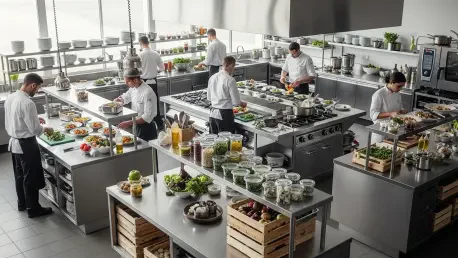

Transforming a massive commercial kitchen into a green powerhouse requires more than just swapping plastic straws for paper ones; it demands a total overhaul of every operational layer. While many firms in the hospitality sector struggle to make marginal gains, Eden Caterers has achieved a remarkable 24% reduction in its total carbon footprint over the last twelve months. This double-digit drop, revealed in the company’s latest Impact Report, serves as a blueprint for how high-volume catering can evolve to meet the urgent demands of a changing planet.
A Masterclass: Rapid Carbon Reduction Within the Hospitality Sector
The achievement highlights that sustainability is no longer a niche project but a core business metric. By adopting a rigorous, data-driven strategy, the firm has demonstrated that significant environmental progress does not have to come at the expense of culinary excellence or logistical scale. This success stems from a refusal to accept the status quo, pushing the boundaries of what is traditionally expected from a large-scale food service provider.
Furthermore, this reduction proves that rapid change is possible when leadership prioritizes transparency. Instead of hiding behind vague corporate jargon, the organization has utilized hard data to track and manage its impact. This level of honesty has allowed the business to identify specific inefficiencies and address them with precision, turning an environmental obligation into a distinct operational advantage.
The Growing Pressure: Environmental Accountability in Commercial Catering
Today, the hospitality landscape is shifting as corporate clients move beyond price and taste to scrutinize the ethical background of their suppliers. As businesses face their own net-zero mandates, they increasingly require caterers who can provide verifiable evidence of low-carbon operations. This shift has turned carbon reporting into a vital tool for staying competitive in an industry where transparency is now as essential as food safety.
Global scrutiny on the food sector’s contribution to climate change has reached a boiling point, necessitating a fundamental rethink of traditional sourcing. Companies that fail to adapt to these expectations risk being left behind as the market gravitates toward those who can prove their commitment to the Earth. This trend reflects a broader societal movement where every meal is viewed through the lens of its environmental cost.
Core Pillars: From Low-Carbon Swaps to Plastic-Free Logistics
The strategy behind the 24% reduction involves a multi-layered approach that examines every step of the catering lifecycle. A major component of this plan is the implementation of low-carbon food swaps, where high-emission ingredients are replaced with sustainable alternatives that do not compromise flavor. By re-engineering menus around seasonal and plant-forward options, the company has significantly lowered the greenhouse gas intensity of its primary product.
Beyond the kitchen, the firm has overhauled its entire logistics and packaging network to eliminate unnecessary waste. Moving toward plastic-free delivery systems and optimizing transport routes has allowed for a systemic reduction in secondary emissions. These tactical shifts prove that small, intentional adjustments in procurement can lead to a massive aggregate reduction in a company’s total environmental output.
Measuring Success: External Accreditations and Expert Verification
The integrity of these environmental claims is reinforced by prestigious third-party oversight and industry recognition. The company recently secured SALSA accreditation and earned the Sustainability Award for Caterers at the London Venue & Catering Awards, signaling a high level of professional trust. These accolades validate the internal data and provide clients with the assurance that the reported progress is both real and measurable.
Independent verification from Net Zero Now confirms that the organization is not only meeting its current climate goals but is actually positioned to exceed them. Managing Director Nick Mead has championed this open-book approach, arguing that industry-wide accountability is the only way to ensure the food sector contributes meaningfully to global climate targets. This collaborative mindset encourages other players in the field to share data and improve together.
Future-Proofing the Kitchen: Strategies for Achieving Long-Term Emissions Targets
The path forward involves even more ambitious milestones, including a commitment to ensure every dish served contains less than 1kg CO2e. Looking toward 2050, the company aimed for a 70% reduction in emissions per diner, a goal that necessitated deep investments in technological innovation. By establishing these specific, measurable benchmarks, the firm moved beyond simple promises to create a practical, scalable roadmap for the future of sustainable dining.
Achieving these long-term objectives required forging deeper partnerships with suppliers who prioritized regenerative agricultural practices. These collaborations ensured that the entire supply chain, not just the final kitchen, operated under the same rigorous environmental standards. Ultimately, the focus transitioned toward a holistic model where carbon efficiency became the primary driver for all future business growth and innovation.