
Katarina Railko is a distinguished hospitality expert who has spent years refining her craft within the high-stakes world of travel, tourism, and large-scale entertainment events. With an extensive background in managing the intricate logistics of expos and conferences, she brings a unique perspective to the evolving landscape of the restaurant industry. Today, she joins us to discuss the strategic shifts currently reshaping quick-service and fast-casual dining, from the push for regional authenticity and premium proteins to the rise of specialized beverage programs. We explore how major brands are balancing operational efficiency with the demand for bold, seasonal flavors and how these innovations impact guest loyalty and long-term supply chain strategies.
Taco Cabana is testing a new menu in El Paso that focuses on street-style preparations and expanded proteins like Al Pastor and Carne Asada. How does shifting toward traditional, regional authenticity impact operational complexity, and what specific kitchen adjustments are required to maintain speed while using handmade tortillas?
Moving toward regional authenticity like Al Pastor and Carne Asada requires a fundamental shift in how back-of-house staff manages prep cycles and heat management. When a brand commits to handmade tortillas, the kitchen must often implement dedicated “tortilla stations” that operate in a continuous loop to ensure the product is fresh without slowing down the assembly line. The complexity increases significantly with proteins like Al Pastor, which traditionally require specific marination times and searing techniques to achieve that signature street-style char. To maintain speed, operations likely utilize specialized high-heat equipment that mimics traditional methods while ensuring food safety and consistency across hundreds of orders. It is a delicate dance between artisanal quality and the high-volume throughput that Taco Cabana customers expect.
SONIC recently introduced a Refreshers line using real fruit and sparkling water, while Chipotle launched a Fresh Cilantro Lime Sauce to tap into the “sauce obsession” trend. How do these low-calorie beverage options and specialized condiments influence total guest spend, and what metrics determine if a limited-time sauce should become a permanent staple?
Low-calorie beverages and premium sauces serve as high-margin “add-ons” that effectively increase the average check size without requiring the guest to commit to a full second meal. For SONIC, the Refreshers line taps into the “feel-good hydration” trend, capturing guests who might have previously opted for free water but are now willing to spend a few extra dollars for a crisp, fruit-infused experience. When Chipotle introduces something like the Fresh Cilantro Lime Sauce, they are looking closely at the attachment rate—specifically how many guests are willing to pay a premium for a specialized condiment. If the data shows that the sauce drives repeat visits or is frequently added to high-value items like bowls and burritos, it moves from a limited-time offering to a permanent fixture. Brands also monitor “social sentiment” and inventory turnover to see if the demand remains steady once the initial marketing buzz fades.
Mountain Mike’s Pizza is innovating with a Garlic Parm Stuffed Crust, and Smalls Sliders has introduced its first specialty slider featuring bacon and jalapeños. When pushing the boundaries of core products like pizza and sliders, how do you balance bold flavor profiles with mass-market appeal, and what is the step-by-step process for testing these “savory upgrades”?
The balance is achieved by taking a familiar, well-loved base and adding “safe adventure” elements, such as the zesty garlic and parmesan flavors at Mountain Mike’s which enhance rather than replace the classic pizza experience. The testing process typically begins with sensory panels where the R&D team evaluates the “craveability” of the bold ingredients, like the heat of the jalapeños against the saltiness of the bacon at Smalls Sliders. Following internal trials, the product enters a regional “alpha test” to gather real-world data on prep times and ingredient waste. Finally, the brand looks at customer feedback scores to ensure the bold flavors aren’t polarizing enough to alienate their core demographic. This step-by-step refinement ensures that a “savory upgrade” feels like a natural evolution of the menu rather than a jarring gimmick.
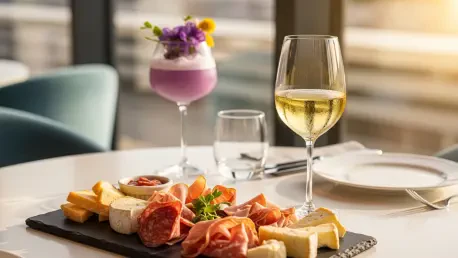
Ruby Slipper is featuring floral and tropical cocktails like the Lavender 75, while la Madeleine has launched a Parisian Charcuterie Board paired with Louis Jadot wines. What are the logistical challenges of implementing a high-end alcohol partnership in a fast-casual setting, and how do seasonal floral profiles specifically drive brunch-time traffic?
The primary logistical challenge in a fast-casual setting like la Madeleine is the training required for staff to speak confidently about a premium wine like Louis Jadot, which carries a much different brand expectation than standard house pours. You have to manage inventory for fragile glassware and ensure that the charcuterie—which involves premium meats and cheeses—is stored and plated with the same level of care as a fine-dining establishment. Floral profiles like the Lavender 75 at Ruby Slipper are incredibly effective at driving brunch traffic because they are highly “Instagrammable” and evoke a sense of seasonal renewal that resonates emotionally with guests. These drinks create a multisensory experience through scent and color, making the brunch feel like a special event rather than just a quick meal. By offering these elevated pairings, brands successfully bridge the gap between casual convenience and an upscale dining experience.
Pizza Inn is offering a marshmallow-infused Peeps Pizzert for Easter, and Soulman’s Bar-B-Que is focusing on pre-ordered family feasts. What are the distinct advantages of offering a playful, novelty dessert versus a traditional bulk meal package for holiday marketing, and how do you manage inventory for such highly specific, time-sensitive ingredients?
A novelty dessert like the Peeps Pizzert creates immediate social media buzz and acts as a “veto-breaker,” where kids or families choose Pizza Inn specifically for that unique, time-sensitive treat. In contrast, Soulman’s Bar-B-Que feasts focus on high-value utility, solving a logistical problem for the host by providing whole smoked turkeys and hickory-smoked hams. Managing inventory for the Peeps Pizzert requires tight coordination with specific vendors for the marshmallow chicks, as these ingredients have no use once the holiday passes. Conversely, the bulk meal strategy relies on “pre-order” windows, which allows the kitchen to forecast exactly how much protein to smoke, drastically reducing waste. Both strategies work to capture holiday spending, but one does it through playful brand engagement while the other does it through operational convenience and volume.
Taco Bell is rolling out a Cantina Chicken lineup featuring slow-roasted shredded chicken and Avocado Verde Salsa. How does the introduction of a premium protein line change a brand’s competitive positioning against fast-casual rivals, and what are the long-term implications for supply chain sourcing when moving toward more complex, seasoned meats?
By introducing slow-roasted, Mexican-spiced shredded chicken, Taco Bell is directly challenging the quality perceptions typically reserved for fast-casual competitors like Chipotle or Qdoba. This shift repositions the brand as a destination for “culinary-forward” fast food, moving beyond just value-based pricing to include “premium” as a core pillar. Long-term, this move requires a much more robust and specialized supply chain, as sourcing specific cuts of chicken that can withstand slow-roasting while maintaining moisture is more difficult than sourcing standard grilled strips. The brand must also secure long-term contracts for ingredients like the Avocado Verde Salsa to ensure consistency in flavor and cost across thousands of locations. This evolution suggests that even global giants are realizing that the modern consumer is willing to pay more for complex, well-seasoned proteins that feel more “chef-driven.”
What is your forecast for the evolution of quick-service restaurant menus as they increasingly blend authentic regional flavors with high-end convenience?
I expect to see a “hyper-localization” of menus where national brands use data to launch exclusive, culturally-specific items in certain regions, much like Taco Cabana’s current El Paso test. We will also see a continued “premiumization” of the drive-thru, where high-end partnerships—like the wine and charcuterie at la Madeleine—become more common as brands try to capture the “at-home date night” market. The line between fast-food and casual dining will continue to blur, driven by sophisticated flavor profiles and real, fresh ingredients that were once considered too expensive for the QSR space. Ultimately, the winners will be the brands that can deliver these elevated, authentic experiences without sacrificing the 3-to-5-minute window that defines the industry. Convenience is no longer enough; the food now has to tell a story.