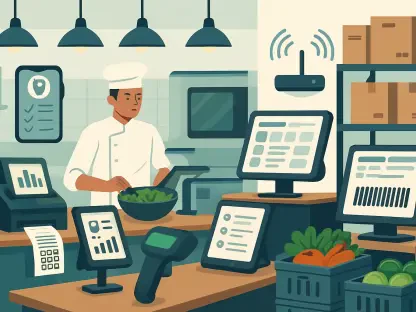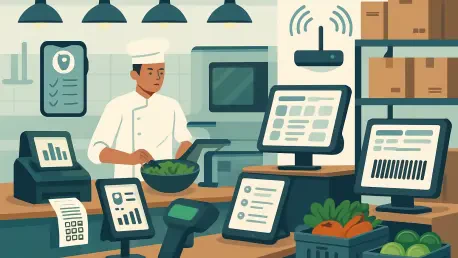

Many current scanning systems are classified as partial scanners, meaning they update inventory levels but permanently discard the critical lot code data needed for compliance. This technical deficiency places restaurant groups at a distinct disadvantage in a landscape governed by the FDA’s Food Traceability Rule, often referred to as Rule 204. Historically, inventory management software was built with a primary focus on accounting and financial reconciliation rather than granular food safety protocols. These legacy systems excel at matching an invoice to the number of boxes received on a loading dock, but they frequently overlook the Traceability Lot Code (TLC) entirely. Without this specific identifier, a restaurant cannot differentiate between a safe batch of produce and one flagged for a potential outbreak. Consequently, the lack of data forces operators to discard entire stocks of a commodity rather than surgically removing affected items, which leads to massive financial losses for the brand.
Bridging the Gap: Enhancing Receiving Technology
The “last mile” of food delivery represents the most vulnerable segment of the supply chain, where discrepancies between digital records and physical inventory often occur. While a supplier might generate an Advance Shipping Notice (ASN) that lists precise lot codes for every case of produce, the chaotic reality of warehouse operations frequently interferes with this data. Last-minute substitutions, driver errors, or truck swaps at a regional distribution center can result in a restaurant receiving cases that do not match the electronic paperwork originally sent. If the receiving software is programmed only to confirm that the correct quantity of product has arrived, it effectively blinds the restaurant to these discrepancies. This creates what is known as a “clean invoice,” which satisfies the accounting department but is completely useless for regulatory traceability. Without real-time verification of the actual lot codes present on labels, the entire chain of custody is broken before it reaches the shelf.
To address these logistical fractures, the industry is increasingly moving toward the universal adoption of GS1-128 barcodes, which provide a significantly higher level of data granularity than standard UPC symbols. These advanced barcodes allow for the encoding of complex information strings, including Global Trade Item Numbers, expiration dates, and the all-important batch or lot numbers. However, the hardware must be capable of interpreting the entire data sequence rather than just the product identifier. Many older handheld units only capture the basic item code to update stock levels, discarding the rest of the metadata to save storage space or simplify the interface. Compliance in the modern era requires sophisticated receiving technology that can extract, store, and link the TLC to specific internal records. This ensures that the record includes the location where the lot code was originally assigned, providing a complete historical narrative that satisfies federal auditors and protects consumers.
Regulatory Compliance: Navigating Standards and Verification
The FDA has outlined a rigorous framework for what constitutes a compliant receiving record for those foods identified on the Traceability List. Under these requirements, restaurants must document not only the Traceability Lot Code and product description but also the unit of measure, the previous source of the food, and the exact date and location of arrival. While the final rule is established, the industry currently benefits from an enforcement stay that extends from 2026 to July 20, 2028. This timeframe provides a crucial two-year window for restaurant groups to modernize their technology stack and phase out manual, paper-based logging systems. This transition is not merely a bureaucratic hurdle but an opportunity to build a more resilient infrastructure. Organizations that wait until the 2028 deadline to update their software risk facing severe operational disruptions and potential legal liabilities if they are unable to provide requested documentation within the mandatory twenty-four-hour response window during an official inquiry.
Moving toward a truly integrated food safety system requires the industry to embrace a standardized set of electronic data fields that allow for the seamless exchange of information between disparate software platforms. This standardization essentially transforms the static shipping notice into a live, dynamic document that updates automatically as products change hands. When a distributor makes a correction at the point of delivery—such as swapping a specific lot of poultry—the change is instantly reflected in the restaurant’s digital database. By establishing these universal data protocols, leaders create a reliable ledger that is easily accessible for audits or emergency responses. Ultimately, readiness is measured by implementing Mock Recall Tests where managers trace lot codes from week-old deliveries. By prioritizing precise data capture, restaurant groups transform their docks into defense lines, ensuring safety responses become targeted operations that preserve inventory and trust.