
With a sharp eye for transformative projects in the hospitality sector, Katarina Railko has become a key voice in analyzing developments that blend luxury with authentic local character. We sat down with her to discuss Emerson Hospitality’s ambitious redevelopment of Black Creek Barns, a project poised to redefine the Hudson Valley resort experience. Our conversation explored the intricate balance of preserving history while introducing modern luxury, the strategic financing behind sustainable construction, and what it takes to create a true destination just 90 miles from New York City.
Your vision for Black Creek Barns combines craft, nature, and wellness. How will these elements manifest in the day-to-day guest experience, and what specific metrics will you use to measure the resort’s success in delivering this unique blend?
This is really the heart of the project. It’s not about just having amenities; it’s about weaving them into a seamless narrative for the guest. Imagine a guest starting their day with a quiet walk on the trails bordering the John Burroughs Black Creek Trail, feeling completely immersed in that 2,000-acre protected area. In the afternoon, they might take a pottery class in the 9,000-square-foot craft center, getting their hands dirty and creating something tangible. They can then transition to the greenhouse-style wellness center for a hydrotherapy session. Success for us won’t just be high occupancy rates. We’ll be tracking guest participation in our craft workshops, repeat visitor data, and specific feedback on how these integrated experiences contributed to their stay. The goal is a destination where guests leave feeling genuinely restored and inspired, not just rested.
Restoring six historic structures on a site designed by Julian Burroughs presents unique opportunities. Can you describe the greatest challenge in adapting these buildings for modern luxury use, and share a step-by-step example of how you’re preserving their historical character?
The greatest challenge is unquestionably the balancing act between preservation and modernization. You’re dealing with structures that have a soul, a history embedded in their very framework, and you cannot lose that. A prime example is our process for adaptive reuse. First, we conduct a meticulous structural and material analysis of each of the six buildings. We identify the core historical elements that must be preserved—the original timber, the stone foundations. The next step is painstaking restoration, sourcing materials that are historically accurate. Only then do we begin the delicate process of integrating modern systems—like the high-efficiency HVAC funded by our C-PACE loan—in a way that is almost invisible, ensuring the building’s historic character remains the star of the show while delivering the comfort today’s luxury guest expects.
With a limited supply of luxury accommodations in the Hudson Valley, how will this 70-room resort differentiate itself? What specific features, from the craft center to the cliffside pool, do you believe will most attract guests from the New York City market 90 miles away?
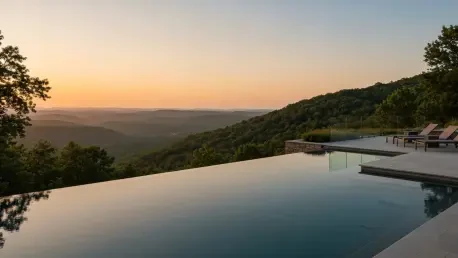
It’s true that the market has a supply gap, but simply adding 70 rooms isn’t enough. Differentiation comes from creating an experience that can’t be replicated. For the New York City guest, the draw is a genuine escape that engages them on a deeper level. The 9,000-square-foot craft and design center is a massive differentiator; it’s a destination in itself, not just an add-on. We’re offering a chance to learn a new skill and connect with artisans. The cliffside pool isn’t just a place to swim; it’s an architectural feature designed to make you feel like you’re floating above the 153-acre landscape. That combination of hands-on creativity and profound connection to nature is what will make the 90-mile drive an essential journey for those seeking an authentic, enriching getaway.
The development utilizes prefabricated cabins and a $19 million C-PACE facility for sustainability upgrades. Could you elaborate on the decision to pursue this strategy and explain how these choices practically affect the construction timeline and the resort’s long-term operational costs?
This was a strategic decision driven by both principle and pragmatism. The $19 million C-PACE facility allows us to invest heavily upfront in top-tier sustainable systems—energy-efficient windows, lighting, and advanced HVAC and water systems. This dramatically lowers our long-term operational costs, which is a huge benefit for financial stability, but it also aligns with the brand’s ethos of respecting the natural environment. Pairing this with prefabricated cabins from B&B Micro Manufacturing is brilliant. It significantly shortens the on-site construction timeline and, most importantly, minimizes the physical impact and disruption to the pristine 153-acre site. We are building in a way that honors the land, and these choices make that possible.
The financing involved a balanced $38 million package from multiple partners. For others undertaking a large-scale redevelopment, what were the most critical steps in securing this complex capital stack, and what advice would you offer on navigating construction and C-PACE loans simultaneously?
Securing a complex, $38 million package like this hinges on telling a compelling and coherent story to your capital partners. The most critical step was demonstrating how the two major components—the $19 million construction loan and the $19 million C-PACE facility—were not just parallel but synergistic. You have to prove that the traditional loan builds the beautiful, historic resort, while the C-PACE loan makes it a smarter, more efficient, and more profitable asset in the long run. My advice is to have an impeccably detailed plan that clearly delineates the use of funds for each loan. Lenders need to see that you’re not just financing a building, but engineering a sustainable and financially sound business for decades to come.
What is your forecast for the luxury hospitality market in the Hudson Valley?
My forecast is exceptionally strong. The demand for authentic, experience-driven luxury travel, particularly within driving distance of major metropolitan areas like New York City, is only growing. The current limited supply of high-end accommodations creates a significant opportunity for well-conceived projects. Developments like Black Creek Barns, which offer a deep connection to place, history, and nature, are setting a new standard. I believe we will see continued investment in the region, but the most successful properties will be those that, like this one, move beyond simply providing a room and instead curate a memorable, holistic destination experience. The future here is not just about luxury, but about meaningful luxury.