
With a sharp eye for innovation in travel and tourism, Katarina Railko has become a key voice in the hospitality industry, particularly known for her insights on the technology shaping guest experiences at major conferences and expos. Today, she joins us to dissect the recent acquisition of OpenKey by Canary Technologies, a move poised to redefine hotel arrivals. We’ll explore the fusion of mobile key access with AI-powered guest management, discussing how this synergy creates a more seamless journey for travelers, the practical implications for hoteliers of all sizes, and the future of personalized, tech-driven hospitality.
The acquisition of OpenKey expands Canary’s access to more door lock providers. Beyond hardware integration, what specific software synergies are most exciting, and how will this merger accelerate the transition to a truly frictionless arrival for guests at partner hotels?
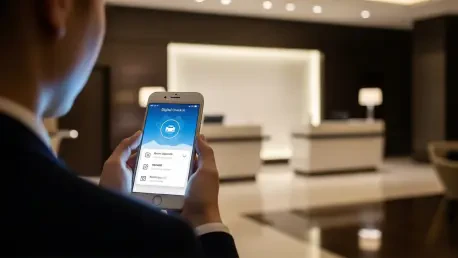
What’s truly exciting here is the creation of a single, unbroken digital thread from pre-arrival to the moment a guest steps into their room. Previously, a hotel might use one system for mobile check-in and another for the actual room key. Now, within Canary’s ecosystem, these are one and the same. Imagine a guest receiving a notification to check in on their phone, seamlessly accepting an offer for a room upgrade, and then having their mobile key automatically activated and delivered to their device. This eliminates that last, clunky step of waiting for a separate key app to function. It transforms the arrival from a process into an experience, meeting that rising guest expectation for total mobile-first convenience that Canary’s CEO mentioned.
With OpenKey’s technology now part of your guest management system, what is the step-by-step process for a hotelier to implement this combined solution? Please share some key metrics they should track to measure the impact on guest satisfaction and operational efficiency.
For a hotelier, the implementation becomes much more streamlined. The first step is integrating the Canary platform with their property management system, and now, thanks to the OpenKey acquisition, Canary can directly manage the integration with a much wider range of door lock systems. This removes a major headache for the hotel’s IT team. Once live, the key is to track the right data. Hoteliers should be laser-focused on the mobile check-in adoption rate to see if guests are embracing the technology. They should also monitor guest satisfaction scores, specifically comments related to the arrival process, and measure the reduction in queue times at the front desk. On the revenue side, tracking the conversion rate of digital upsells offered during this new, seamless check-in flow is crucial to measuring the full ROI.
Your platform supports major brands like Marriott and Four Seasons. How does integrating OpenKey enhance the value proposition for these large partners, and what new capabilities does it unlock for smaller hoteliers wanting to offer a seamless digital experience?
For global giants like Four Seasons or Marriott, this acquisition is about enhancing brand consistency and operational efficiency at scale. It provides a more robust, all-in-one solution that can be deployed across their vast portfolios, which already span over 20,000 hotels in more than 100 countries. It strengthens their ability to deliver a predictable, high-tech guest experience no matter the location. For smaller, independent hoteliers, this is even more of a game-changer. It democratizes technology that was once the exclusive domain of major flags. A boutique hotel can now offer an end-to-end digital journey—from check-in to mobile key to in-stay messaging—that rivals the biggest names in the industry, allowing them to compete on guest experience, not just price.
Following a recent funding round aimed at expanding AI capabilities, how will OpenKey’s mobile key data be leveraged by your AI? Could you provide an example of how this will further personalize the guest journey beyond just unlocking a door?
This is where the future gets really interesting. The $80 million funding round was specifically aimed at expanding AI, and mobile key data is a rich new source of behavioral insight. The AI can learn a guest’s patterns. For instance, if the data shows a guest consistently enters their room for the final time around 10 p.m., the AI could trigger a “good night” message with a prompt to set a morning wake-up call or order breakfast for the following morning. If the system detects a guest hasn’t returned to their room by late evening, it could proactively send a message checking if they need directions or assistance. It moves the interaction from reactive to proactive, using access patterns to anticipate needs and add thoughtful, personalized touches throughout the stay.
What is your forecast for mobile-first guest access in the hotel industry?
I believe we’re rapidly moving past the point of mobile-first access being a novelty or a perk; it is becoming a baseline expectation for the modern traveler. Within the next five years, I forecast that a seamless, fully mobile check-in and room entry experience will be as standard as in-room Wi-Fi. The physical front desk will evolve from a transactional checkpoint into a concierge-style hub for genuine hospitality and complex problem-solving. This acquisition is an accelerator for that shift, pushing the industry toward a future where a guest’s smartphone is the only key they need to unlock a truly personalized and frictionless hotel stay.