
Katarina Railko brings a unique perspective to the mobility sector, blending her extensive background in hospitality and high-stakes events with the technical demands of modern parking solutions. As the industry moves away from isolated hardware toward integrated guest experiences, her expertise helps bridge the gap between operational efficiency and the emotional nuances of customer service. This discussion explores the strategic shift behind rebranding a major industry player and how a unified digital ecosystem is redefining the journey from arrival to departure. We examine the integration of advanced sensors, the elimination of fragmented legacy systems, and the data-driven future of asset management.
Why was the transition to a broader brand identity necessary to reflect a multi-service approach, and how does expanding the focus beyond parking to the entire arrival-to-departure journey change the way hospitality and service are delivered?
The evolution from Towne Park to simply “Towne” marks a pivotal realization that parking is no longer a standalone task, but the first and last impression of a guest’s entire journey. By positioning ourselves as a multi-service provider, we shift the focus from merely moving cars to managing the complete flow of human experiences across diverse markets. This transition allows us to combine our human capital infrastructure with an operating platform that treats every touchpoint as a premium service opportunity. When we look at the arrival-to-departure sequence, we are not just providing a spot; we are delivering a warm, seamless transition that sets the tone for the client’s entire stay or visit. It is about a relentless focus on service excellence that transforms a utilitarian necessity into a sophisticated hospitality asset.
How does integrating revenue control, guidance systems, and mobile payments into a single data-driven ecosystem improve asset performance, and what specific metrics should owners prioritize when evaluating the success of a modern parking platform?
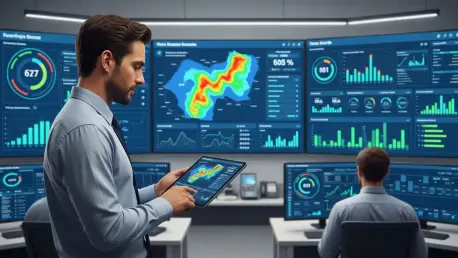
The launch of the Nexity platform changes the game by pulling fragmented data into a single, modern ecosystem that provides real-time visibility and control. By weaving together access control, guidance, and digital payments, owners can finally see a clear picture of how their assets are performing minute by minute. We prioritize outcomes like revenue optimization and operational flow, ensuring that every square foot of a parking facility is contributing to the bottom line. This level of integration allows for a level of performance that was previously impossible, giving owners the powerful tools they need to drive stronger financial results while keeping consumers happy. When you have all these capabilities in one place, you stop guessing and start making decisions based on hard, actionable data.
Following the acquisition of specialized tech firms like Frogparking, how are advanced tools such as LiDAR sensors and AI being deployed to reduce friction for consumers, and what practical steps are required to implement these technologies in high-traffic environments?
The strategic acquisition of Frogparking in September was a major milestone that allowed us to incorporate next-generation hardware like LiDAR sensors into our standard operations. These sensors, combined with AI, work behind the scenes to detect vehicle movements with incredible precision, effectively removing the “clutter” and delays that typically frustrate drivers in busy garages. Implementing this requires a thoughtful rollout where we align our advanced IP and software with the physical constraints of a high-traffic environment to ensure a frictionless flow. It is not just about the gadgets; it is about using that tech to rapidly adapt to evolving client needs and ensuring the consumer never has to struggle with a ticket or a gate. This forward-thinking approach means we are building for the future, creating a tech stack that is as flexible as it is powerful.
The parking and mobility industry has historically struggled with fragmented hardware and software solutions. How does a unified platform solve these legacy compatibility issues, and what are the operational advantages of having real-time visibility across all parking and valet management functions?
For too long, the industry has been held back by “siloed” systems where the valet software didn’t talk to the revenue hardware, creating a massive headache for operators. Nexity solves this by bringing hardware, software, and valet management into one unified platform that is unmatched in today’s market. Having that real-time visibility across all functions means a manager can spot a bottleneck at the valet stand or a malfunction at a payment kiosk instantly, rather than finding out hours later. This total integration eliminates the friction caused by legacy compatibility issues and allows for a much smoother, more professional operation. It gives our partners a level of value and performance that simply does not exist anywhere else, making the entire management process feel intuitive rather than combative.
When balancing the need for revenue optimization with the goal of a seamless consumer experience, what trade-offs must be managed, and how can data-driven insights help bridge the gap between financial performance and customer satisfaction?
Finding the sweet spot between maximizing profit and keeping guests happy is an art form, but data-driven insights turn it into a science. With the right analytics, we can optimize pricing and space utilization without creating long lines or confusing digital payment hurdles that sour the guest experience. We use our technology to identify where friction points exist—like a slow exit process—and fix them, knowing that a seamless experience actually encourages repeat visits and higher spending. The goal is to unlock greater value from the asset while making the consumer feel like the entire process was effortless. By leveraging our expertise and the Nexity platform, we bridge that gap, ensuring that financial success and customer satisfaction are two sides of the same coin.
What is your forecast for parking and mobility technology?
I believe we are entering an era where parking will become invisible, fully integrated into the broader urban mobility and hospitality landscape through AI-driven automation. We will see a shift where high-tech sensors and real-time data exchange allow vehicles to transition from streets to stalls without a single stop, making the “arrival experience” a completely fluid event. As client needs continue to evolve, platforms will need to be increasingly modular, allowing us to plug in emerging innovations as soon as they hit the market. Ultimately, the winners in this space will be those who can blend high-touch human service with high-tech infrastructure to create a level of value that feels both futuristic and deeply personal.