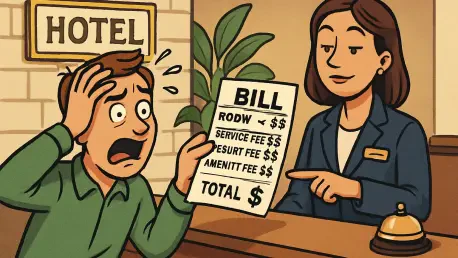

We are joined today by Katarina Railko, a leading expert in the hospitality industry whose extensive background in travel and tourism gives her a unique perspective on the intersection of consumer protection and hotel operations. We’ll be exploring New York City’s landmark new rule that takes aim at hidden hotel fees, a move expected to reshape price transparency across the country. Our conversation will delve into the specific operational hurdles hotels now face, the far-reaching enforcement of this rule beyond city lines, and how this shift toward honesty in pricing could level the competitive landscape for smaller businesses while saving travelers millions.
New York City’s rule requires the total price of a hotel stay, including all mandatory fees, to be disclosed upfront. What specific steps must a hotel now take to reconfigure its online advertising and booking systems to comply with this transparency mandate?
This is a fundamental rewiring of how hotels have presented their pricing for years. It’s not just about adding a line of fine print. Hotels must completely overhaul their digital storefronts, from their own websites to their listings on third-party booking platforms. The advertised price must now be the total price, baking in those mandatory “destination” or “resort” fees from the very first click. This means reprogramming the booking engines to display a single, all-inclusive figure instead of the deceptive “drip pricing” model. It’s a significant technical and marketing lift because it forces them to abandon a strategy that, while frustrating for customers, was very effective at making initial prices seem lower than the competition.
This new rule goes beyond the federal model by requiring disclosure of mandatory credit card holds. Could you describe the operational changes hotels must make to implement this, and how this will alter the check-in and checkout experience for a typical guest?
This is where the New York City rule really raises the bar. It tackles another major point of friction for travelers: the surprise incidental hold. Operationally, hotels must now standardize this disclosure process. It means training every single front-desk agent to clearly and proactively communicate the exact hold amount at check-in. It also requires updating their property management and payment systems to include this disclosure in booking confirmations and even provide a disclaimer at checkout. For the guest, this transforms the experience from one of potential shock and anxiety—wondering why a huge chunk of their credit limit is suddenly gone—to one of clarity and trust. You’ll know precisely what to expect before you even hand over your card.
The rule’s provisions apply to any hotel advertising to a New York City consumer, regardless of its location. What are the key enforcement challenges for this broad jurisdiction, and what mechanisms will be used to ensure a hotel in another state complies?
The extraterritorial reach of this rule is its most ambitious—and challenging—aspect. Enforcing a New York City ordinance on a hotel in another state presents a significant hurdle. The primary mechanism will undoubtedly be consumer-driven. The Department of Consumer and Worker Protection will rely heavily on complaints from New Yorkers who travel elsewhere and encounter non-compliant hotels, much like the 300-plus complaints they received last year regarding local hidden fees. They will likely pursue these out-of-state businesses as engaging in deceptive practices targeting their citizens. It creates a powerful incentive for national chains to adopt this as a standard practice rather than risk facing legal action from a major market like New York.
With consumers expected to save over $46 million by 2026, can you provide an example of how a hidden “resort” or “destination” fee previously impacted a traveler’s budget? Please detail how the new rule prevents this scenario.
Imagine a family planning a trip, carefully budgeting for a hotel they found advertised at $250 a night. They book a four-night stay, thinking their lodging cost will be $1,000. But upon checkout, they’re hit with a mandatory $40 per night “destination fee” they barely noticed in the fine print. Suddenly, their bill is $1,160, an unexpected expense that can throw off their entire trip budget, forcing them to cut back on meals or activities. The new rule prevents this ambush entirely. That same hotel must now advertise the room at $290 from the start. The family sees the true cost upfront, allowing them to make an informed decision and budget accurately, eliminating that awful feeling of being deceived at the end of a vacation.
The administration stated that eliminating hidden fees helps “honest small businesses.” How does price transparency level the playing field for smaller, independent hotels competing against larger chains, and what are the anticipated effects on their booking rates and revenue?
This is a crucial point. For years, smaller, independent hotels that offer honest, all-inclusive pricing have been at a disadvantage. A small hotel advertising an honest $200 room would appear more expensive online than a large chain hotel advertising a $170 room that secretly carries a $30 resort fee. The consumer, shopping on price, naturally clicks on the lower advertised rate. This rule levels that playing field. Now, when both hotels have to show the true, all-in price of $200, the smaller hotel can compete fairly on amenities, service, and location rather than losing out to a deceptive pricing gimmick. I anticipate these honest businesses will see an increase in booking conversions from consumers who value transparency and are now able to make a true apples-to-apples comparison.
What is your forecast for the regulation of junk fees in the travel industry?
I believe this New York City rule is a major catalyst, not an endpoint. We are seeing a powerful consumer and regulatory movement toward all-in pricing across the board. Following the FTC’s lead and now with a major city like New York taking an even tougher stance, the pressure on the entire industry is immense. I predict we will see other major cities and states adopt similar, if not identical, regulations within the next few years. The long-term forecast is a travel industry where upfront, transparent pricing becomes the national standard, not the exception, forcing airlines, hotels, and rental companies to compete on the true total cost of their services.