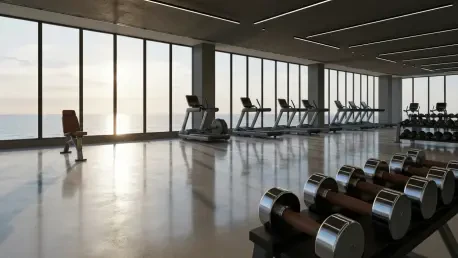

The modern consumer’s relationship with fitness has fundamentally evolved beyond a simple personal activity, transforming into a significant cultural driver that now shapes decisions in travel, community affiliation, and daily lifestyle choices. This paradigm shift has rendered the traditional, one-size-fits-all gym model obsolete, creating a critical demand for fitness spaces that are intentionally designed, aesthetically pleasing, and experience-driven. In this new landscape, the quality and nature of a facility’s fitness offering have become a crucial differentiator, separating thriving businesses from those left behind. Answering this call is Skelcore, the luxury arm of Evolution Group USA, which is pioneering solutions that merge premium design with innovative performance to help operators build environments that foster customer retention and maximize their return on investment. The company’s approach recognizes that fitness equipment is no longer just a tool but a central element of a facility’s brand and a catalyst for its success.
The End of the Cookie-Cutter Gym
For decades, the fitness industry was dominated by a monotonous layout characterized by endless rows of cardio machines and a minimal, uninspired selection of weights, an approach that no longer resonates with the sophisticated expectations of contemporary members and guests. This legacy model fails to create a memorable or engaging experience, making facilities interchangeable and vulnerable in an intensely competitive market. Consumers today are actively seeking environments that align with a broader lifestyle centered on longevity, community, and holistic well-being, a sentiment echoed by Skelcore’s CEO and founder, Marc Ackermann. The failure to provide such an atmosphere is not merely a missed opportunity but a significant business risk. Facilities that cling to this outdated philosophy struggle to cultivate loyalty, as members see no unique value proposition compelling them to stay, leading to high attrition rates and a constant, costly search for new customers.
This inadequacy extends beyond user experience and directly impacts a facility’s operational and financial health. The traditional gym layout is often spatially inefficient and fails to accommodate the diverse training modalities that modern users demand, from functional fitness to specialized strength training. Operators who do not adapt are left with underutilized spaces and a clientele that feels their needs are not being met. The consensus viewpoint is clear: the future belongs to operators who understand that their physical space is a direct reflection of their brand. The choice of equipment, the flow of the floor plan, and the overall aesthetic are no longer secondary considerations but front-line strategic imperatives. In this new era, intentional design is not a luxury but a fundamental requirement for building a sustainable and profitable fitness business that can attract and retain a dedicated community of users.
Differentiation Through Design and Innovation
In a saturated market dominated by a handful of decades-old brands, achieving meaningful differentiation has become the primary challenge for fitness operators. Skelcore has addressed this by pioneering a concept of “retro innovation,” successfully tapping into the cultural resurgence of “old-school” strength training by modernizing classic equipment. This approach involves more than just a cosmetic update; it combines a nostalgic aesthetic reminiscent of bodybuilding’s golden era with vastly superior, modern biomechanics and premium finishes. Machines like plate-loaded chest presses and incline presses are re-engineered to provide a better feel and safer movement patterns while presenting a visually distinct profile. This unique design philosophy allows facilities to break away from the sea of sameness, creating an environment that feels both timeless and cutting-edge, instantly signaling a commitment to quality and a deeper understanding of fitness culture.
This focus on aesthetic appeal serves as a powerful, built-in marketing engine. In an age driven by social media, visually unique equipment becomes a highly shareable asset, effectively turning the machines themselves into a core element of a club’s brand identity. Younger demographics, in particular, are drawn to facilities that offer a distinct and photogenic backdrop for their fitness journey. Products like chrome dumbbells and weights accented with rich walnut serve as style statements, creating a “brand within the brand” that members are eager to feature in their online content. This phenomenon drives a significant amount of organic, word-of-mouth promotion, as members become brand ambassadors. The result is a self-perpetuating cycle where the gym’s unique environment attracts new clients, who in turn promote the space to their networks, solidifying the facility’s reputation as a premier destination.
From Amenity to Essential
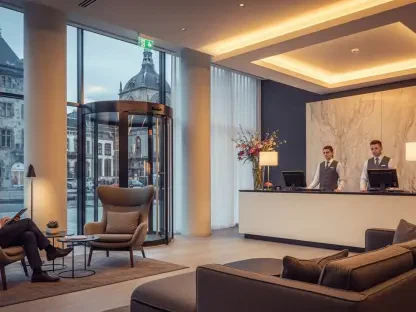
Nowhere are the stakes for creating a premium fitness experience higher than in the hospitality sector. What was once a “nice-to-have” amenity has evolved into an essential offering, now ranking alongside location and Wi-Fi as a top consideration for discerning travelers. A common and costly pitfall for hotels is the significant investment in property-wide design and luxury finishes while completely neglecting the gym, resulting in a poorly equipped, impractical, and uninspiring space. This disconnect creates a jarring experience for guests, undermining the property’s premium positioning and failing to meet the expectations of a clientele accustomed to high-end fitness environments. For a hotel aiming to compete in the burgeoning wellness tourism market, a subpar gym is no longer an option; it is a direct liability that can impact booking decisions and guest satisfaction scores.
Skelcore directly confronts this challenge with a series of curated, turnkey solutions meticulously designed for the hospitality industry. These packages—categorized as Bronze, Silver, Gold, and Platinum—are not one-size-fits-all but are tailored to a property’s specific size, market position, and clientele. This allows for the seamless integration of premium strength, cardio, and functional training options that feel like a natural extension of the hotel’s brand. Furthermore, the company has solved critical practical challenges by designing equipment with smaller footprints, enabling hotels to maximize functionality within limited square footage. This spatial efficiency increases guest capacity and ensures a world-class feel, regardless of the property’s scale. By providing a strategic and holistic approach to outfitting hotel gyms, Skelcore empowers properties to elevate the guest experience and capitalize on the immense growth of wellness-focused travel.
Innovating for Efficiency and Flexibility
An overarching trend reshaping the fitness industry is the definitive shift toward smaller, more efficient facilities. This movement is driven by the dual pressures of rising commercial real estate costs and the limited availability of large-format spaces, leading to the rise of specialized formats like 10,000-square-foot strength and recovery-focused gyms. Skelcore has anticipated this future by engineering equipment lines, such as the Power Series, that are designed for maximum spatial efficiency. These machines can fit approximately 1.5 times the number of units into the same footprint as competing brands without sacrificing functionality or user experience. This innovation is critical for operators looking to build connected communities in more intimate settings, allowing them to offer a comprehensive range of equipment while achieving a much faster return on investment by optimizing every square foot of their valuable real estate.
This forward-thinking approach also extends to supporting the growing popularity of hybrid training models. Modern facilities are increasingly converting underutilized areas into flexible spaces for a diverse range of activities, including Pilates, yoga, HIIT classes, and functional training on dedicated turf zones. To support this versatility, Skelcore offers products like foldable Pilates reformers and modular, turf-friendly rigs that empower operators to adapt their offerings to meet evolving consumer demands. This flexibility is no longer a luxury but a necessity for long-term viability, as it allows a facility to diversify its revenue streams and cater to a broader demographic. By providing equipment that is both space-efficient and adaptable, Skelcore empowers operators to create dynamic, multi-functional environments that inspire people to “train for life,” ensuring their business remains relevant and profitable in a constantly changing market.
A Strategic Imperative for Growth
The industry’s rapid evolution confirmed that the selection of fitness equipment was no longer a simple operational decision but had become a front-line strategic imperative that directly impacted brand identity, guest satisfaction, and long-term financial growth. Skelcore’s holistic approach, which synthesized premium aesthetics with flawless practicality, resonated deeply with operators seeking to break away from outdated models. The company mitigated the common failure of designing visually stunning yet operationally impractical gyms by working collaboratively with its partners, ensuring each space featured a logical flow and a comfortable, inviting environment for members. This ecosystem—from open-frame designs that created brighter spaces to retro-modern machines that attracted new demographics—was designed to cultivate loyalty. The brand’s expansion into more than 50 countries in just four years stood as definitive proof that its philosophy was not just effective but essential for modern success. It provided a new playbook, empowering facilities to build fresh, functional, and inspiring environments where smarter, more intentional spaces led to sustainable business growth.