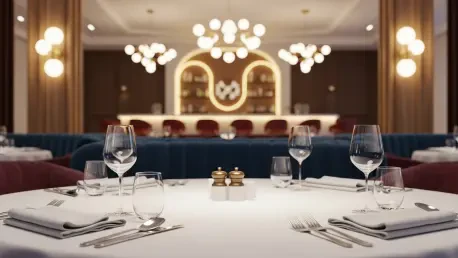

With a rich background spanning the travel, tourism, and events industries, hospitality expert Katarina Railko has a unique perspective on what makes an experience truly memorable. Today, she shares her insights on a transformative new partnership aimed at revolutionizing the hotel restaurant model. We’ll explore the entire lifecycle of creating a successful venue, from initial concept to daily operations, and discuss how to measure success beyond simple revenue. Our conversation will also cover the strategic advantages of building proprietary brands and the operational shifts required to create dining experiences that captivate locals and hotel guests alike.
Your new partnership with Ring On Hook covers the full lifecycle from concept to optimization. Can you describe the most critical stages in this process and how this integrated collaboration will create restaurants that locals embrace, not just hotel guests? Please provide a step-by-step example.
This partnership is about breaking the mold of the traditional, often uninspired, hotel restaurant. The most critical stage is right at the beginning: concept development. We don’t just ask, “What food should we serve?” We ask, “What story does this neighborhood want to hear?” For example, we might start by analyzing the local demographic and competitive landscape. From there, we build a freestanding concept—say, a rustic Italian eatery with a strong community feel. Ring On Hook then helps coordinate a design that feels authentic and independent, completely separate from the hotel lobby’s aesthetic. This integrated approach continues through pre-opening training, where staff are immersed in the restaurant’s unique brand story, not the hotel’s. The goal is to create a destination so compelling that locals see it as their new favorite spot, and hotel guests feel lucky to have it downstairs.
The goal is to make restaurants a competitive advantage that boosts owner returns. Beyond revenue, what key performance indicators will define success for this new vertical, and how do you ensure a unique guest experience also translates directly into strong profitability? Please share some specific metrics.
Of course, revenue and profit are paramount for owners, but the true measure of success is more nuanced. A key metric we’ll track is the percentage of non-hotel guest patronage. When you see a high volume of local diners, you know you’ve created a genuine, standalone business, not just a hotel amenity. This directly impacts guest satisfaction and loyalty, which are powerful, albeit less direct, indicators of financial health. We will also closely monitor online sentiment and reviews, looking specifically for comments that praise the restaurant as a destination in its own right. Ultimately, a vibrant, popular restaurant creates a halo effect for the entire property, allowing the hotel to command higher room rates and boosting its overall value as an asset.
A key focus is creating proprietary restaurant concepts to build long-term brand equity. What is your process for developing a new concept from scratch, and how does owning the brand provide a distinct advantage over licensing a known restaurant name? Please elaborate on the intended benefits.
Developing a new concept is an intensely creative and strategic process that begins with deep market immersion. We look for a gap in the local culinary scene and craft a narrative to fill it. This involves everything from menu ideation to designing the perfect service style. The real advantage of owning the concept is control and long-term value. When you license a brand, you’re essentially renting its popularity, and you’re constrained by its rules and fees. By creating our own proprietary concepts, we build an asset from the ground up. This brand equity belongs to First Hospitality and its owners, and it can even be scaled to other properties in the future. It allows us complete freedom to adapt, innovate, and ensure the experience is perfectly tailored to the location, which ultimately drives a more authentic connection with guests and the community.
This new vertical aims to provide enhanced operational support through a “best-in-class platform.” Could you walk me through how this new approach to menu engineering, training, and service standards will function day-to-day and differ from a traditional hotel food and beverage model?
The difference is a shift from a generalized hotel-centric approach to a specialized, restaurant-first mentality. In a traditional model, F&B operations can sometimes be an afterthought. Our “best-in-class platform” treats each restaurant as its own distinct business. For menu engineering, this means we’re not just costing out dishes; we’re analyzing sales data constantly to optimize for both popularity and profitability, making agile changes based on diner feedback. Training is another key area. Instead of generic hospitality training, our teams receive intensive, concept-specific education that empowers them to be storytellers and true ambassadors of the brand. This disciplined operational focus ensures that our service standards are consistently high and that every detail, from the greeting at the door to the final bite of dessert, reinforces the restaurant’s unique identity.
What is your forecast for the future of hotel restaurant and bar experiences?
I believe the future is about authenticity and integration with the local community. The days of the generic, sterile hotel dining room are numbered. Guests, especially younger generations, crave experiences that feel genuine and connected to the place they are visiting. Successful hotel restaurants will no longer be mere amenities but will function as cultural hubs and destinations in their own right, drawing in as many locals as travelers. This requires a fundamental shift in thinking, where the restaurant is developed with its own identity, brand, and operational strategy, completely independent of the hotel it resides in. The properties that embrace this model will not only see stronger returns but will also become more deeply woven into the fabric of their cities.