
The very definition of luxury within the hotel industry is being redrawn, moving away from opulent materials and static grandeur toward intelligent environments that anticipate and adapt to human needs in real time. The evolution of automation in the hotel industry represents a significant advancement in hospitality design, shifting from a back-office utility to a central creative tool. This review will explore the evolution of this technology, its key features, its performance in creating human-centric environments, and the impact it has had on the guest experience. The purpose of this analysis is to provide a thorough understanding of this paradigm shift, its current capabilities, and its potential future in crafting truly responsive and personal hotel stays.
From Utility to Creative Core a New Paradigm for Hotel Automation
Automation in hospitality is undergoing a fundamental transformation. For years, its role was confined to the operational backend, managing systems like HVAC and energy to meet efficiency codes and reduce costs. This perspective treated automation as a technical afterthought, a necessary expense rather than a creative asset. The emerging principle, however, treats automation not as a utility but as a foundational element integrated into the initial design narrative of a property.
This conceptual shift allows for the creation of dynamic, adaptive environments that respond in real-time to the presence and needs of guests. By weaving automation and the Internet of Things (IoT) into the architectural vision from day one, designers can introduce a “fourth dimension—time” into the physical space. This redefines the very nature of the hotel, transforming it from a static structure into a living environment that evolves throughout the day to support its occupants, ensuring the space is always perfectly attuned to its function and its inhabitants.
Key Components of the Automated Guest Experience
Human-Centric Wellness and Environmental Control
A core component of modern hotel automation is its focus on enhancing guest well-being through environmental control. This involves the intricate synchronization of elements like lighting, shades, and temperature to align with natural human circadian rhythms. A key function demonstrating this principle is the “wake-up scene,” where the room’s systems work in concert to promote a gentle and energizing start to the day. Instead of a jarring alarm, lights gradually brighten and blackout curtains open to mimic a natural sunrise.
This human-centric approach extends beyond the morning. Throughout the day, smart lighting systems can be programmed to shift color temperature and intensity, providing cool, energizing tones in the morning and transitioning to warm, relaxing hues in the evening. This subtle environmental management can significantly improve sleep quality, reduce jet lag, and enhance overall guest comfort, turning the room into a restorative sanctuary that actively supports health.
Dynamic Ambiance and Air Quality Management
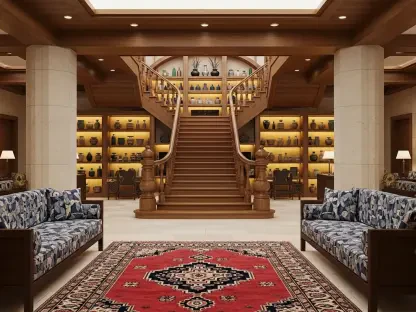
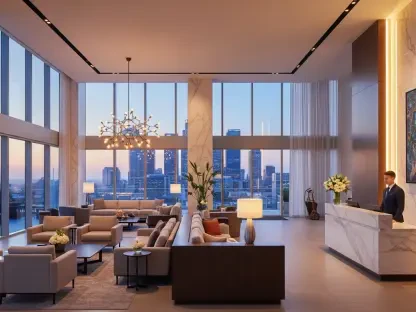
This technology enables both public and private spaces to transform their atmosphere based on the time of day, function, or desired mood. A lobby, for example, can seamlessly shift from a bright, active hub for check-ins during the day to a tranquil, intimately lit lounge in the evening. This ensures the ambiance always feels intentional and perfectly curated for its purpose, enhancing the guest’s perception of the space without any manual intervention.
A critical and increasingly important aspect of this is the use of IoT sensors to monitor and automatically manage air quality. These systems continuously track CO2, humidity, and airborne pollutant levels, adjusting ventilation to maintain a fresh and healthy environment. Given that high CO2 levels are proven to cause drowsiness and impair cognitive function, proactive air quality management directly impacts guest comfort and experience. This feature demonstrates a tangible commitment to guest health, a factor of growing importance to modern travelers.
Orchestrated Multi-Sensory Immersion
The most advanced applications of this technology use automation as a “conductor” to create a “symphony of the senses.” This approach moves beyond isolated functions to choreograph light, sound, visuals, and even scent, crafting immersive, narrative-driven moments that elevate the guest experience. It is the artful integration of these elements that transforms a simple room into a stage for curated experiences.
This is often delivered through pre-programmed “scenes” that guests can select via a tablet or app. A “Relax” scene might dim the lights to a warm glow, play calming ambient music, and activate a soothing scent through a connected diffuser. Conversely, a “Focus” scene could optimize lighting for work and employ sound-masking technology to minimize distractions. This allows guests to instantly tailor the room’s entire sensory environment to their specific needs, offering a level of personalization previously unimaginable.
Current Trends in Experience-Driven Design
The latest developments in hotel automation are centered on moving from simple convenience to the crafting of profound emotional and memorable experiences. The primary trend is the seamless integration of disparate systems—lighting, audio, climate, and window treatments—so they perform as a single, coordinated entity. The goal is to create a holistic environment where every element works in harmony to support the guest.
The focus of this trend is on the subtlety of the execution. The success of an automated system is often measured by its invisibility. The silent glide of a motorized shade, the imperceptibly smooth transition of a dimming curve, and the perfect synchronization of light and sound all contribute to a feeling of effortless comfort. When the technology becomes unnoticeable, it leaves only the feeling of intuitive luxury and deep personalization.
Real-World Applications in Leading Hotels
The most notable implementations of this technology showcase automation as a powerful tool for storytelling and for setting a specific tone from the moment a guest arrives. The Aria Resort & Casino in Las Vegas serves as a prime example, where a guest’s entry into their room triggers a perfectly choreographed welcome sequence. As the door opens, the curtains part to reveal the city view, lights activate to a welcoming level, and a personalized message appears on the television.
This single, impactful moment immediately establishes a high-tech, luxurious, and personalized atmosphere that defines the guest’s perception for their entire stay. It demonstrates that automation is not merely about function but about creating a narrative. This choreographed arrival sequence acts as the opening chapter of the guest’s story at the hotel, promising a stay that is both sophisticated and intuitively designed around their comfort.
Overcoming a Legacy Mindset Challenges to Adoption
The primary challenge facing the widespread adoption of this technology is not technical but conceptual. The hotel industry has traditionally viewed automation through the lens of operational efficiency, categorizing it as an expense related to energy management or building maintenance. Overcoming this legacy mindset to see automation as a creative design tool and a driver of guest experience is a significant hurdle that requires a shift in thinking from the earliest stages of a project.
A further challenge lies in execution. Ensuring the complex synchronization of multiple systems remains reliable and, most importantly, intuitive for the guest is paramount. Technology that is complicated to operate or prone to glitches becomes an obstacle rather than an enhancement. The system must feel natural and effortless to the user, avoiding any sense of being intrusive or overly complex, which would ultimately defeat its purpose of creating a seamless and comfortable environment.
Future Outlook the Rise of Truly Adaptive Environments
The future of automated guest experiences points toward the creation of truly living, adaptive spaces that are deeply attuned to the human condition. Future developments will likely focus on greater personalization through the integration of artificial intelligence and machine learning, allowing environments to anticipate guest needs and preferences without requiring explicit commands. A room could learn a guest’s preferred morning light level or evening temperature and adjust automatically.
The long-term impact of this trajectory will be the establishment of a new standard of luxury. This new benchmark will be defined not by static opulence but by how intuitively, effectively, and seamlessly a space supports its occupant’s physical and emotional well-being. The hotel room of the future will be a responsive partner in the guest’s journey, actively contributing to a more restful, productive, and memorable stay.
Conclusion Automation as the Heart of Modern Hospitality
This review establishes that integrating automation into the foundational design of a hotel transforms it from a mere utility into a powerful creative engine. Its current state demonstrates a profound capability to redefine luxury by making hotel environments more responsive, personal, and deeply connected to the human experience.
By focusing on human-centric wellness, dynamic ambiance, and multi-sensory immersion, automation crafts unforgettable experiences that enhance guest satisfaction. Furthermore, these intelligent systems contribute to ambitious sustainability goals and ultimately drive a stronger return on investment. The technology is no longer a peripheral feature but is becoming the very heart of modern hospitality design.