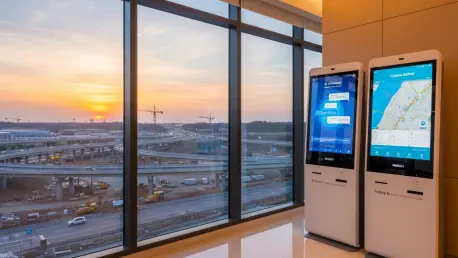

The landscape of American hospitality is currently being reshaped not by beachfront resorts or luxury spas, but by the hum of heavy machinery and the glow of massive server farms. This evolution signals a fundamental shift in how hotel performance is measured, as essential economic activity begins to outpace purely discretionary travel.
Recent second-quarter results from Wyndham Hotels & Resorts underscore this trend, showing a resilient 2% climb in domestic revenue per available room. While international markets struggle with a 6% decline, the United States remains a bright spot, anchored by a strategic focus on industrial regions and “drive-to” accessibility.
The Industrial Blueprint Behind Recent Hotel Performance Surges
Management recently raised its full-year guidance for global revenue, betting that domestic momentum will remain steady despite global volatility. This optimism is rooted in a fascinating divergence where domestic strength successfully compensates for international headwinds.
By focusing on markets less sensitive to the fluctuations of the luxury sector, the brand has created a protective buffer. The resilient performance from April through June suggests that the current domestic spike is more than a temporary anomaly for the organization.
Why Infrastructure Projects Are Redefining Modern Travel Demand
Traditional hotel demand often centers on cultural landmarks, but the modern growth narrative is being written across the industrial Midwest. States like Illinois, Indiana, Iowa, and Ohio have seen a significant influx of business due to large-scale transportation projects.
The construction of AI-related data centers and manufacturing hubs has turned these regions into essential nodes for business travel. This steady demand from contractors and engineers provides a reliable occupancy floor that persists even during broader economic shifts.
Analyzing Domestic Resilience and the Expansion of the Global Pipeline
Scaling to meet this demand, the organization expanded its system size by 4% year-over-year, adding approximately 18,000 rooms in a single quarter. This growth was driven by a strategic move toward higher-scale conversions that elevate the overall profile of the brand.
The opening of The Monarch under the Registry Collection serves as a prime example of this move into premium offerings. A robust development pipeline ensures that the company remains positioned to capture leisure traffic in key states like Texas and Florida.
Integrating Conversational AI to Capture the Modern Digital Traveler
Digital innovation has become a primary driver of guest acquisition, with 60% of travelers now using large language models for trip planning. To address this, the brand launched a native ChatGPT app to facilitate conversational search and streamline the booking process.
Accompanying this tech push is a total restructuring of the loyalty program, introducing a redemption system ranging from 5,000 to 45,000 points. This flexible framework aims to capture a higher volume of direct bookings and increase long-term guest value.
Strategic Frameworks for Maximizing Growth in an Evolving Hospitality Sector
Stakeholders successfully aligned their operations with the specific economic drivers that favored the domestic market. They prioritized “drive-to” accessibility and optimized room rates to account for the steady demand generated by industrial workers and infrastructure contractors.
Property owners leveraged the new tiered loyalty structure to attract both budget-conscious and premium travelers. Implementing conversational AI tools effectively reduced friction in the booking funnel, allowing hotels to convert high-intent traffic into confirmed stays more efficiently than previous methods permitted.