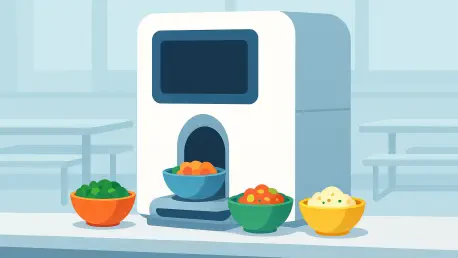

Healthcare and industrial workers often face a lack of nutritious food options during graveyard shifts when cafeteria kitchens are typically closed. This persistent challenge has historically left late-night staff and students at universities relying on sugary snacks or processed vending items, which rarely provide the sustenance needed for demanding roles. To address this discrepancy, Primepick, a New York-based technology startup, introduced MealMate, an advanced robotic kiosk that serves hot, chef-prepared meals in under seven minutes. By integrating high-end robotics with institutional foodservice, the company is redefining how people eat in environments where 24/7 access is a necessity rather than a luxury. These units are now appearing in nursing homes and manufacturing plants across major metropolitan areas, providing a reliable alternative to limited nighttime dining. The move toward automation in food service highlights a broader shift in logistics where precision and speed meet the culinary arts.
Technical Innovation: Engineering the Modern Dining Experience
The technical architecture of the MealMate system relies on a sophisticated internal mechanism engineered to handle food with extreme precision. Utilizing two high-performance robotic arms, the kiosk manages the entire transition of a meal from storage to delivery without human contact. Frozen meals are kept at a constant -18ºC within the unit, ensuring long-term freshness and safety before they are moved into industrial-grade microwave ovens for rapid heating. Once the cooking cycle completes, the robotics transfer the dish to a specialized warming cabinet where the order can be held for up to 30 minutes. This feature is particularly vital for medical professionals or factory workers who might be unexpectedly called away by an emergency or a shift delay. By maintaining the temperature and quality of the meal post-heating, the system ensures that the food remains appetizing and safe to eat whenever the customer is finally able to retrieve it from the pick-up window for consumption.
Operational efficiency is further bolstered by a proprietary software suite that manages everything from the user interface to inventory logistics. Unlike traditional vending machines that require a rigid planogram, these kiosks allow operators to restock meals in any available slot, with the system automatically identifying and updating the inventory list. This flexibility significantly reduces the time required for maintenance and restocking, allowing facilities to maintain high uptime without intensive labor costs. Additionally, the platform features advanced telemetry for real-time self-diagnosis, which alerts technicians to potential issues before they result in machine failure. These digital capabilities extend to integrated payment processing and loyalty programs, creating a seamless transaction environment for users. The scalability of the hardware also allows for various configurations, with units capable of holding between 90 and 285 meals depending on the specific traffic demands of the site.
Strategic Partnerships: Cultivating Quality through Local Integration
The most significant departure from conventional automated dining is the marketplace approach adopted by Primepick. Instead of relying on mass-produced, generic meals, the company collaborates with local restaurants, dark kitchens, and independent eateries to provide a diverse menu. This partnership allows the kiosks to offer a rotating selection of high-quality cuisines, ranging from authentic Asian dishes to traditional BBQ, which are prepared by chefs in professional kitchens before being blast-frozen for the machine. This model not only improves the nutritional value and taste of the food available to night-shift workers but also provides local businesses with a new distribution channel to reach audiences they could not otherwise serve. By acting as a bridge between the local culinary scene and institutional settings, the technology fosters a symbiotic relationship that benefits both the consumer and the community economy. This focus on real food addresses the common criticism of automated systems.
The deployment of these robotic units across hubs such as Chicago, Dallas, and Huntsville demonstrated that institutional dining could adapt to the needs of a 24/7 workforce. Facilities managers who prioritized these solutions successfully reduced the logistical burden of staffing a full-service kitchen during off-peak hours while simultaneously improving the dietary options for their staff. To maximize the benefits of such technology, organizations considered the strategic placement of kiosks in high-traffic zones and sought to integrate meal credits into existing employee benefit packages. As safety standards like NSF/ANSI 25 and UL certifications became the benchmark for reliability, early adopters moved to replace outdated vending infrastructure with these versatile systems. Future implementations focused on leveraging the data collected from these machines to better predict food preferences and minimize waste through localized supply chains. The transition toward integrated food service provided a clear path.