
The hospitality industry, long celebrated for its personal touch and human-centric service, is now standing at the intersection of tradition and a technological revolution powered by artificial intelligence. Far from a distant concept, major players like Marriott International are betting billions that AI will not just supplement but fundamentally redefine the guest experience, signaling a seismic shift across the entire sector. This analysis explores the current wave of AI adoption, from massive infrastructure investments to practical applications, while weighing executive optimism against valid consumer concerns and charting the future course for this transformative technology.
The Current Landscape of AI Adoption
The Billion-Dollar Bet on a Digital Future
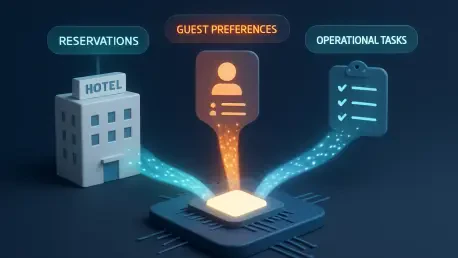
The scale of financial commitment from industry leaders underscores the strategic importance of this technological pivot. Marriott International is spearheading this charge with a planned $1.1 billion investment for 2026, dedicating over a third of this capital specifically to a sweeping digital and AI-driven transformation. This is not merely an upgrade but a foundational overhaul of its three most critical systems: central reservations, property management, and the Bonvoy loyalty platform.
This ambitious initiative is moving decisively from development to implementation. The company reports that a “meaningful number” of its hotels are set to go live with the new systems this year, marking a tangible transition toward a more intelligent and data-centric operational model. Such a significant, multiyear investment demonstrates a firm belief that the future of hospitality is inextricably linked with the power of sophisticated AI and modernized digital infrastructure.
AI in Action From Concept to Guest Services
Beyond foundational investments, AI is already making a noticeable impact on both back-of-house operations and guest-facing services across the industry. Marriott aims to leverage its immense global scale, diverse portfolio of properties, and massive customer base to capitalize on generative AI, looking to fundamentally alter the traditional customer acquisition model by creating more direct and personalized engagement.
This trend is not isolated to one company. Wyndham Hotels & Resorts, for example, has successfully deployed over 200 AI agents to manage and streamline its guest support services, handling inquiries with speed and efficiency. Similarly, Choice Hotels is utilizing AI copilots to accelerate its internal software development cycles and to enhance the employee onboarding process, demonstrating AI’s versatility in improving both external and internal functions. These real-world applications show that AI has moved beyond theory and is now an active tool for gaining a competitive edge.
Executive Perspectives and Consumer Apprehensions
C-Suite Vision as a Competitive Imperative
From the executive suite, the message is clear: embracing AI is no longer optional but a competitive imperative. Marriott’s CEO, Anthony Capuano, has articulated a vision where AI has the potential to fundamentally reshape the industry’s operational backbone. He views the company’s vast data resources and strong partner relationships as a unique advantage in harnessing the full power of this emerging technology.
Despite the significant investments and ambitious goals, industry leaders maintain a grounded perspective on the technology’s current maturity. Capuano employs a “players’ parking lot” analogy to describe the current state of AI, suggesting that even with all the activity, the industry is just at the very beginning of its journey. This sentiment reflects a broader consensus that while AI is a crucial tool for achieving new levels of efficiency, its ultimate potential is still largely untapped.
The Human Element Balancing Technology with Touch
In stark contrast to executive enthusiasm, a significant portion of consumers harbor reservations about the increasing role of technology in hospitality. A recent survey from Reputation highlights this apprehension, revealing that nearly two out of five consumers worry that the industry is at risk of losing its essential human element. This concern is the central counterpoint to the rapid push for automation and AI-driven services.
Consumer caution extends beyond the fear of impersonal service. Key apprehensions also include concerns over data privacy, the potential for service errors made by autonomous AI systems, and the anticipated difficulty in resolving complex or nuanced problems without direct human intervention. For the industry to succeed in its technological transformation, it must proactively address these legitimate fears and prove that AI can enhance, rather than diminish, the quality and personalization of the guest experience.
The Future Trajectory of AI in Hospitality
Projecting the Next Wave of Innovation
The foundational investments being made today are setting the stage for a future where AI’s role extends far beyond current applications. The next wave of innovation will likely focus on hyper-personalization, with AI curating unique guest itineraries in real-time based on stated preferences and past behavior. Furthermore, predictive analytics could revolutionize hotel maintenance by identifying potential equipment failures before they occur, while dynamic, AI-driven revenue management systems could optimize pricing with unprecedented accuracy.
Marriott’s strategic overhaul of its core systems is a prime example of future-proofing. By building a modern, data-rich foundation, the company is preparing to deploy more advanced AI applications that require seamless integration and access to vast datasets. This forward-looking approach ensures that as AI technology evolves, the infrastructure will be ready to support more sophisticated and impactful uses that will further differentiate the guest journey.
Navigating Key Opportunities and Challenges
The path forward for AI in hospitality is paved with both significant opportunities and formidable challenges. The primary benefits are clear: radical improvements in operational efficiency, unprecedented levels of service personalization, and enhanced employee productivity by automating routine tasks. These advantages promise not only a better guest experience but also a stronger bottom line for operators who successfully integrate these technologies.
However, the hurdles are equally substantial. Navigating complex data privacy regulations across different jurisdictions will be a critical challenge, as will managing the high upfront cost of system integration and development. Perhaps most importantly, the industry faces the urgent need to upskill its workforce, training employees not just to use new systems but to collaborate effectively with AI tools to deliver a superior, hybrid model of service.
Conclusion Redefining Service in the Digital Age
The hospitality industry’s journey into the age of artificial intelligence has been marked by bold financial commitments, tangible deployments in guest services and operations, and a clear divide between executive optimism and consumer caution. The current landscape revealed a sector in the midst of a foundational transformation, with major brands rebuilding their technological core to support a more intelligent and personalized future.
Ultimately, the central challenge that emerged was not whether to adopt AI, but how to integrate it strategically. The goal must be to augment the irreplaceable human touch that defines a great guest experience, using technology to empower employees and personalize service rather than replace them. This pivotal moment has set the stage for a new, hybrid model of service excellence, where the thoughtful fusion of human intuition and artificial intelligence will create the next chapter in hospitality.