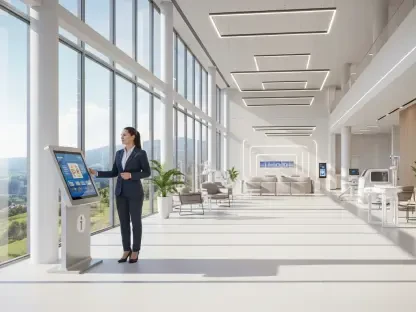

The modern traveler’s expectations have fundamentally reshaped the hospitality landscape, demanding a seamless, personalized, and hyper-efficient experience that traditional service models struggle to provide. In response, the global hospitality market is undergoing a profound digital transformation, with projections indicating substantial growth through 2032 as the industry pivots toward automation and sustainability. This evolution is not merely about adding gadgets to guest rooms; it represents a strategic overhaul of operations, driven by the need to enhance the guest journey while streamlining complex internal processes. At the forefront of this movement are leading technology firms like Cisco, Amazon, Siemens, IBM, and Oracle, which are developing the intelligent solutions that are becoming foundational to the sector’s growth and resilience. This shift signals a new era where data-driven insights and integrated systems are no longer a luxury but a critical component of competitive advantage and operational excellence.
The Strategic Imperative of Integrated Technology
The hospitality industry is strategically adopting integrated technology platforms to fundamentally redefine its operational capabilities and guest interactions. Operators across diverse segments, including hotels, resorts, cruise lines, and serviced apartments, are increasingly moving away from siloed systems toward holistic, intelligent platforms that automate key functions, optimize resource management, and ensure unwavering service quality. This digital pivot is proving essential for maintaining agility in a rapidly evolving marketplace where guest expectations are constantly shifting. The primary objectives are to harness real-time analytics for deep personalization of the guest experience and to navigate the increasingly complex web of regulatory compliance. As a result, a robust digital infrastructure, fortified by stringent data governance protocols, has emerged as a critical prerequisite for achieving operational flexibility, comprehensive oversight, and a sustainable competitive edge. This foundational layer supports everything from dynamic pricing to predictive maintenance, transforming reactive problem-solving into proactive, data-informed strategy.
This move toward comprehensive digitalization extends far beyond guest-facing amenities, penetrating the core of hospitality management and back-office functions. The emphasis is on creating a unified ecosystem where different technological components communicate seamlessly to provide a cohesive operational view. For instance, integrated property management systems can now link with energy management controls, security surveillance, and guest service applications to create a centralized command center. This allows for more efficient allocation of staff, smarter energy consumption based on occupancy data, and faster response times to guest requests or security alerts. Such integration is crucial for large-scale operations like resorts and cruise ships, where coordinating logistics and maintaining service standards across vast, complex environments presents a significant challenge. By leveraging an interconnected digital framework, hospitality businesses can not only enhance efficiency and reduce operational costs but also gather invaluable data to continuously refine their services and anticipate future guest needs.
A Convergence of Transformative Technologies
Fueling this industry-wide transformation is a powerful convergence of key technologies, each playing a distinct yet interconnected role in building the smart hospitality ecosystem. The Internet of Things (IoT) and Bluetooth Low Energy (BLE) are at the heart of this evolution, enabling a network of connected devices that facilitate everything from smart room controls and keyless entry to real-time asset tracking for housekeeping carts and maintenance equipment. Layered on top of this connected infrastructure, Big Data and advanced analytics serve as the central nervous system, processing vast streams of information to unlock actionable insights. These insights are crucial for personalizing marketing campaigns, tailoring in-stay services to individual guest preferences, and optimizing pricing strategies. Furthermore, sophisticated systems powered by Artificial Intelligence (AI), such as voice-activated assistants and facial recognition technology, are automating interactions at check-in, enhancing security protocols, and providing guests with instant, on-demand service, thereby elevating the entire experience.
The implementation of these advanced solutions is supported by flexible deployment models that cater to the diverse needs of the hospitality sector. Businesses can choose between scalable, cloud-based Software as a Service (SaaS) platforms and secure, on-premise systems, allowing them to select a solution that best aligns with their specific operational requirements, existing infrastructure, and risk management profiles. Cloud-based models offer the advantage of lower upfront investment, rapid scalability, and seamless updates, making them an attractive option for businesses looking to stay agile. In contrast, on-premise solutions provide greater control over data security and customization, which can be critical for luxury brands or organizations with stringent compliance mandates. This flexibility ensures that smart hospitality is not a one-size-fits-all concept but a customizable framework that can be adapted to fit any business model, from a boutique hotel to a global resort chain, empowering each to build its own unique technological foundation for future growth.
The Blueprint for Future-Ready Hospitality
The rapid adoption of integrated technologies has already laid the groundwork for a more resilient and guest-centric hospitality industry. Establishments that successfully wove together comprehensive guest management systems, advanced security protocols, and sophisticated energy management solutions found themselves better positioned to navigate market shifts. This holistic approach moved beyond isolated technological novelties and established a cohesive operational ecosystem. The ability to monitor assets in real time, personalize guest communications, and optimize resource consumption became a defining characteristic of market leaders. This strategic integration proved to be the critical differentiator, enabling these businesses to not only meet but anticipate the evolving demands of the modern traveler, ultimately forging a new standard for operational excellence and guest satisfaction that set the tone for the entire sector.