
The Lunar New Year has blossomed from a cherished regional holiday into a premier season for global travel, inviting the world to witness a vibrant tapestry of culture and tradition where time-honored customs are celebrated on an international stage. As families across Asia sweep away the past to welcome a brighter future, the air fills with the scents of steaming dumplings and sweet rice cakes, symbolizing reunion and hope. This festive period acts as a bridge connecting ancient spirits with modern dreams, a time when national tourism boards are actively curating these profound cultural experiences for an international audience. They are successfully transforming traditional celebrations into a major global phenomenon, turning what was once a quiet family affair into a period of significant economic activity and profound cross-cultural exchange. The festival has transcended its origins to become a powerful symbol of peace, joy, and a sense of global community, offering travelers a deeply immersive and authentic cultural journey unlike any other.
Where Spectacle Meets Ancient Spirit
China The Grand Stage of the Spring Festival
As the epicenter of the global Lunar New Year celebration, China’s Spring Festival, known locally as Chun Jie, unfolds on a scale that is nearly impossible to comprehend. The holiday triggers the world’s largest annual human migration, as hundreds of millions travel to be with family, a logistical feat facilitated by the nation’s expanding high-speed rail links. This mass movement is more than just a social phenomenon; it represents a powerful surge in the national economy, with consumption in retail, dining, and travel reaching astronomical figures. The Chinese government and the Ministry of Culture and Tourism have capitalized on this energy, promoting the festival as a premier tourism event. Foreign visitors are increasingly drawn to the country during this period, seeking to witness the grandeur firsthand. The sheer variety and opulence of the celebrations make it a compelling destination, where ancient traditions are performed with a modern, spectacular flair that solidifies China’s position as the grand stage for the Lunar New Year.
Beyond the sheer scale, the allure for international travelers lies in the diverse and vibrant local festivities that bring cities and towns to life. In Beijing, historic Temple Fairs serve as bustling hubs of cultural immersion, where visitors can experience traditional performances, admire intricate local crafts, and feel the rhythmic pulse of live drum shows. Further north, the city of Harbin hosts a world-renowned Ice and Snow Festival, a breathtaking winter wonderland that overlaps with the New Year period. Across the country, streets erupt with the energetic and colorful spectacle of Dragon and Lion Dances, believed to bring good fortune and ward off evil spirits. The entire celebratory period, which can last for weeks, officially culminates on the 15th day with the visually stunning Lantern Festival. During this event, thousands of decorative lanterns of all shapes and sizes illuminate public parks and historic districts, creating a truly magical atmosphere that symbolizes hope and the letting go of the past.
Vietnam The Golden Season of Tet
In Vietnam, the Lunar New Year, or Tet Nguyen Dan, is celebrated as the nation’s most sacred and significant period, representing a prime time for both domestic and international travel. The Vietnam National Authority of Tourism reports a substantial increase in arrivals during this season, as visitors seek out peaceful getaways in destinations like the pristine island of Phu Quoc or the cool mountain town of Da Lat. The government often extends the holiday to further encourage this cultural exchange, allowing more time for both celebration and exploration. Tet is a festival deeply rooted in nature and family, a connection symbolized by the abundance of flowers that adorn homes and public spaces. In the northern regions, delicate pink peach blossoms are the flower of choice, representing vitality and new beginnings, while the south favors the sunny yellow of apricot blossoms, symbolizing wealth and good fortune. This floral explosion transforms the entire country into a vibrant canvas of color and fragrance.
The festivities of Tet are steeped in unique rituals that offer a profound window into Vietnamese culture and spiritual beliefs. A key pre-Tet tradition is the Kitchen God (Ong Tao) Ceremony, where families perform a farewell ritual for the deity who has guarded their hearth all year. As part of this ceremony, they release golden carp into nearby rivers and lakes, believing the fish will transform into dragons and carry the Kitchen God to the Jade Emperor in heaven to report on the family’s conduct. On New Year’s Eve, major cities like Hanoi and Ho Chi Minh City host massive public countdowns and spectacular firework displays that light up the night sky. In contrast, rural villages provide a more intimate look at the nation’s heritage through traditional folk games such as human chess, wrestling, and bamboo swinging. This blend of ancient ceremony and modern celebration makes Tet a captivating experience that showcases the rich tapestry of Vietnamese life.
Heartfelt Rituals and Unique Adventures
South Korea The Respectful Traditions of Seollal
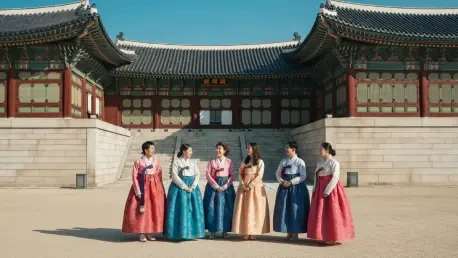
South Korea’s celebration of the Lunar New Year, known as Seollal, is defined by its profound focus on cherished family ties and deep respect for elders, traditions actively promoted to a global audience by the Ministry of Culture, Sports and Tourism. At the heart of Seollal is the significant ritual of Sebae, a heartfelt ceremony where children and younger family members perform a deep, formal bow to their elders. This act is a powerful expression of honor and gratitude, and in return, the elders bestow blessings for the new year and often give gifts of money in brightly colored silk pouches. Seoul emerges as a top destination for young international tourists during this period, drawn by the city’s dynamic mix of cutting-edge modern culture and its beautifully preserved ancient palaces. At historical sites like Gyeongbokgung Palace, visitors can witness traditional ceremonies firsthand, offering a vivid connection to the country’s rich dynastic past and the enduring values that shape Korean society today.
In a concerted effort to encourage cultural immersion, South Korean authorities have created innovative and engaging experiences for visitors during Seollal. Many of the grand palaces in Seoul offer free admission to anyone, local or foreign, who arrives wearing the traditional Korean attire known as the Hanbok, instantly transforming these historic grounds into a colorful and living museum. This initiative not only provides a stunning visual spectacle but also invites tourists to actively participate in the cultural fabric of the holiday. Furthermore, public museums and cultural centers host special events, including captivating performances of traditional percussion music and hands-on workshops. Tourists are also invited to join in traditional folk games, such as the popular board game Yut Nori, which is often played by families during the holiday, and the simple joy of kite flying. These thoughtful programs ensure that a visit during Seollal is not just an observation but a meaningful and interactive cultural exchange.
Mongolia The White Moon of the Steppe
Mongolia celebrates Tsagaan Sar, or the “White Moon,” a festival that highlights the profound and intimate connection between its people and the vast, snow-covered landscapes of the steppe. This unique setting is actively promoted by the Ministry of Environment and Tourism, which curates specialized winter tours that offer adventurous travelers a truly immersive cultural experience. These tours often lead to the legendary Gobi Desert, where visitors can stay in traditional felt dwellings known as gers, sharing meals and learning ancient nomadic customs directly from herder families. The celebration is not just a holiday but an affirmation of a way of life that has been preserved for centuries. It provides a rare opportunity to witness the resilience and hospitality of the Mongolian people against the starkly beautiful backdrop of their winter homeland, making for an unforgettable adventure that goes far beyond typical tourist experiences.
The festivities of Tsagaan Sar are marked by distinctive rituals that are deeply embedded in Mongolian nomadic heritage. One of the most important customs is the Zolgokh greeting, a formal embrace where a younger person supports the elbows of an elder as a powerful symbol of support and respect for the coming year. Families host elaborate feasts featuring a bounty of national dishes, most notably buuz (steamed dumplings filled with meat) and an array of dairy products, or “white foods,” which are central to the celebration. The holiday also features traditional games that test skill and strength, such as ankle-bone shooting and archery, showcasing the enduring legacy of the Mongol warrior spirit. Another fascinating aspect is the spiritual practice of the “New Year’s Path,” where people walk in specific, astrologically determined directions on the first day of the year to ensure good fortune. This ritual offers travelers a deep connection to the Mongolian spirit and its harmonious relationship with nature and the cosmos.
A Vibrant Fusion of Cultures
Indonesia The Harmonious Spirit of Imlek
In Indonesia, the Lunar New Year festival, known locally as Imlek, is celebrated as a “colorful fusion” that champions social harmony and reflects the nation’s multicultural identity. Once a suppressed holiday, Imlek is now a national celebration that showcases the rich contributions of the Chinese-Indonesian community. Jakarta’s vibrant Chinatown, Glodok, becomes a focal point of the festivities, transforming into a mesmerizing sea of red lanterns, bustling markets, and lively parades. The Ministry of Tourism and Creative Economy actively markets the event to attract tourists, particularly from across Southeast Asia, positioning Indonesia as a destination where diverse cultures coexist and enrich one another. The spirit of Imlek is one of inclusivity, where people from all backgrounds are invited to partake in the joyous atmosphere, making it a powerful symbol of the country’s motto, “Bhinneka Tunggal Ika” (Unity in Diversity).
The zenith of the celebration arrives 15 days after the new year with the Cap Go Meh festival, an event famous for its unique and powerful rituals. This is especially true in cities with significant Chinese communities like Singkawang in West Kalimantan, which hosts a celebration renowned for the Tatung Ritual. During this event, participants enter a trance-like state and perform incredible feats of physical endurance, such as piercing their cheeks with steel rods, which are believed to demonstrate divine protection and ward off evil spirits for the entire community. Alongside these intense spiritual displays, public squares host lively Lion Dance (Barongsai) competitions and large-scale food festivals. The spirit of cultural synthesis is perfectly encapsulated in the famous dish Lontong Cap Go Meh, a culinary masterpiece that blends Chinese and Javanese flavors, symbolizing the beautiful and harmonious integration that defines Indonesia’s celebration of Imlek.
A Unifying Global Phenomenon
Across the diverse landscapes of Asia, the Lunar New Year had evolved into a formidable pillar of the regional tourism industry, with each nation having successfully branded its unique cultural heritage for a global audience. The celebrations, while sharing the universal themes of family reunion, renewal, and hope, offered distinctly marketable experiences. China presented spectacle and grandeur on an epic scale, while Vietnam provided a look into sacred traditions deeply rooted in the natural world. South Korea emphasized heartfelt respect and immersive cultural participation, Mongolia offered a one-of-a-kind nomadic adventure on the winter steppe, and Indonesia celebrated a vibrant, harmonious fusion of cultures. This collective showcase did more than just boost national economies; it fostered a deeper global appreciation for Asia’s rich traditions. The warm glow of lanterns, seen from Beijing to Jakarta, ultimately became a unifying symbol of a shared human journey toward a brighter future, leaving travelers with lasting memories of kindness and connection.