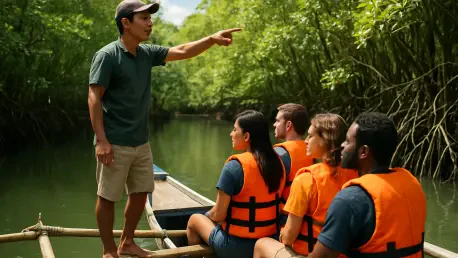

In a world where tourism often overlooks the very communities and ecosystems it relies on, a unique model of sustainable enterprise thrives in the municipality of Aloguinsan, Cebu. The Bojo River Cruise offers more than just a scenic boat ride; it represents a powerful fusion of environmental conservation, cultural preservation, and community empowerment. This initiative, managed entirely by local residents, transforms a simple journey along a 1.4-kilometer river into a profound educational experience. Visitors are invited to witness firsthand how a community, once dependent on fishing and farming, successfully transitioned to become award-winning guardians of their natural heritage. The project showcases a holistic approach to tourism where the river’s health, the local culture, and the economic well-being of the people are intricately connected, setting a benchmark for responsible travel. This journey down the Bojo River is an immersion into a living classroom, where every paddle stroke reveals a story of resilience, collaboration, and a deep-seated respect for nature.
1. The Genesis of a Community-Led Initiative
The foundation of the Bojo River experience lies in the remarkable story of the Bojo Aloguinsan Ecotourism Association (BAETAS), a community-driven organization that has redefined local livelihoods. Established in 2009 with funding from the local government, the project was envisioned as an alternative source of income for residents. The initiative began with an intensive four-month training program for 400 participants, a rigorous course that only 52 individuals successfully completed. These dedicated members, some of whom had not finished their formal education, were equipped with extensive knowledge of the local ecosystem, tour guiding, and sustainable business management. This empowerment has enabled them to operate the project with professionalism and a deep sense of ownership. Their dedication culminated in significant international recognition when, in 2015, BAETAS won the prestigious Best Community-Based Initiative Award in the Asia Pacific region, celebrating their unwavering commitment to sustainable ecotourism and community development.
The name “Bojo” itself is steeped in local history, derived from a Spanish word meaning coastal sailing or trading, which harks back to an era before currency was common. Long ago, the area near the river mouth served as a natural marketplace where farmers and fishermen bartered their goods. This historical context enriches the tour, connecting visitors to the region’s trading heritage. Before the cruise begins, guides conduct a basic orientation, sharing not only the history of their association but also the rich tapestry of local folklore. One prominent tale is that of Maria Tang-an, a mythical river fairy said to lend items to townsfolk for special occasions. This story, along with other local legends, sets a respectful and enchanting tone for the journey. Visitors are gently reminded to lower their voices, a practice that encourages attentiveness to the guide’s narration and minimizes disturbance to the serene environment and its mythical inhabitants.
2. Exploring the River’s Rich Ecosystem
The Bojo River extends approximately 1.4 kilometers from its source to the Tañon Strait, offering a tranquil one-hour cruise that is carefully timed with the tides. The river’s water is brackish, a unique mixture of freshwater from natural springs and saltwater intrusion from the sea. Despite this, the journey is exceptionally safe, as the waters are calm and free of crocodiles. The traditional boats, known as bancas, are designed for stability with bamboo outriggers, or katig, on both sides, ensuring a secure passage for all passengers. For added safety, wearing a life vest is mandatory throughout the entire duration of the cruise. These precautions allow visitors to fully immerse themselves in the surrounding natural beauty without concern. The reliance on tidal patterns means that prospective visitors should confirm the schedule in advance to ensure the cruise is available, a small detail that underscores the tour’s deep connection to the natural rhythms of the river environment.
As the cruise progresses, the intricate world of the mangrove forest comes into focus. The river is a sanctuary for 22 different mangrove species, each identified by guides using both local and scientific names—a testament to the knowledge gained through partnerships with university experts. Visitors learn about the fascinating adaptations of these trees, such as their breathing organs, called pneumatophores, which rise like small sticks from the mud and create bubbles during high tide. The leaves of the mangroves feature tiny holes, which are not caused by insects but are salt glands that expel excess salt. When these leaves fall, they become a vital food source for crabs and decompose to release nutrients for phytoplankton, which in turn feed juvenile fish. Mangroves also serve as critical wave barriers, protecting the coastline, and their complex root systems provide a safe nursery for fish eggs, sheltering young fish until they are mature enough to venture into the open sea.
3. Weaving Folklore and History into the Landscape
The narrative of the Bojo River is interwoven with poignant historical events and captivating local legends that bring the landscape to life. Guides share that the dense mangrove forests once served as a vital hiding place for locals during the Second World War. However, in the post-war years, the same forests faced a new threat as people began cutting down mangroves for daily use, leading to significant deforestation. Today, only a portion of the original forest remains, but a dedicated effort is underway to restore it to its former glory. Through replanting initiatives supported by private companies and non-profit organizations, the community is slowly healing the scars of the past and ensuring the long-term health of this vital ecosystem. This story of loss and restoration adds a powerful layer of meaning to the journey, highlighting the ongoing commitment of the community to conservation and their role as stewards of the river.
Further along the river, unique landmarks reveal more of the area’s rich cultural and historical tapestry. One such site is the “Forest of the Lost Monkey,” once home to a thriving population of macaques that declined in the 1990s due to hunting. Limestone cliffs along the river still bear the hollows that served as their habitats. Local lore recounts a tragic tale of two relatives who came to hunt monkeys but mistakenly shot each other, a story that many believe was the work of a protective spirit. Another factor in the monkeys’ disappearance was the fervent hunt for the legendary Yamashita Treasure, which was rumored to have been left behind by Japanese warships docked at the river mouth. Nearby, a striking cliff formation known as the “Cathedral Door” is pointed out as the former shrine of the diwata Maria Tang-an. It was here, stories say, that locals would leave requests for items written on banana leaves, which the fairy would grant within three days, until unreturned items led her to cease her offerings.
4. A Lasting Impression of Sustainable Tourism
The journey down the Bojo River offered a profound lesson in how tourism could be a force for positive change. It was clear that this was not merely a commercial enterprise but a deeply personal mission for the community members who served as its guardians. The guides, with their encyclopedic knowledge of mangrove species and local folklore, transformed a simple boat ride into an immersive educational experience. The seamless integration of conservation efforts, cultural preservation, and economic opportunity created a powerful and replicable model for sustainable development. The visit provided a newfound appreciation for the delicate balance required to maintain such an ecosystem and the immense dedication needed from the local community to protect it. The cruise ultimately left an indelible mark, demonstrating that the most meaningful travel experiences were often those that directly supported and celebrated the people and places being visited.