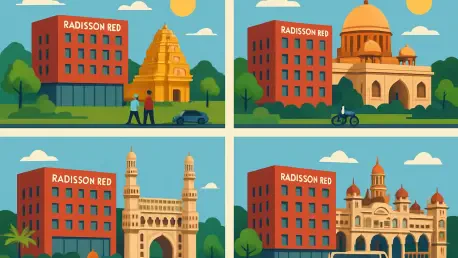

With a remarkable career spanning the travel, tourism, and events industries, Katarina Railko has become a pivotal voice in hospitality development. Her expertise lies in dissecting market trends and understanding the nuances of brand expansion, particularly within emerging cityscapes. Today, she joins us to explore the strategic thinking behind Radisson Hotel Group’s latest venture, the Radisson RED in Indore. We will delve into how a global lifestyle brand adapts to the unique pulse of a Tier II city, the critical role of long-standing partnerships in ensuring success, and how specific amenities are designed to create more than just a place to stay, but a vibrant community hub. Katarina will also offer her perspective on the operational shifts required when moving beyond Tier-I markets and share her forecast for India’s burgeoning lifestyle hospitality sector.
With a strategic focus on high-potential Tier II and III markets, how do you tailor the bold, lifestyle-driven Radisson RED brand for a city like Indore? Please elaborate on the steps taken to ensure the hotel’s design and services truly reflect the city’s youthful energy.
That’s the core challenge and the most exciting part of a project like this. You can’t just drop a cookie-cutter model into a city as dynamic as Indore. The process begins with deep immersion into the local culture. We see Indore not just as a “Tier-II market,” but as the new face of urban India—it’s aspirational and deeply connected. So, the design process for the 115 rooms wasn’t about imposing a generic modern look; it was about infusing bold accents and smart technology that resonate with an entrepreneurial spirit. We aimed for spaces that inspire interaction, not just rest. This philosophy extends to every service, from the curated menus in our restaurant to the dynamic setups for social gatherings, ensuring that the hotel feels less like a corporate chain and more like a natural extension of Indore’s own vibrant, forward-looking identity.
Your partnership with Radisson Hotel Group spans over two decades and now includes a second Radisson RED. How has this long-standing relationship influenced the development process in Indore, and could you share an anecdote where combining global expertise with local knowledge was key to a specific decision?
A twenty-year partnership builds an incredible amount of trust and a kind of shorthand in communication. It moves the relationship from being purely transactional to truly collaborative. For the Indore project, this meant we weren’t starting from scratch. Radisson Hotel Group brings this immense operational expertise and brand equity, and we, through our partners at Bestech, provide the deep-rooted local market knowledge. I recall a specific discussion about the menu at our all-day dining restaurant, The Red Table. The global team had a fantastic framework for an international menu, but our local partners insisted on integrating hyper-local dishes with a creative twist, like the Bhopali Murgh Rezala. It wasn’t just about adding an Indian dish; it was about celebrating a specific regional flavor profile. That decision, a direct result of blending global standards with local pride, has become a signature element that truly grounds the hotel in its location and delights guests.
The Radisson RED Indore features unique amenities like a rooftop infinity pool and creative menu items such as Bhopali Murgh Rezala. How do these specific offerings create a “vibrant, social, and connected experience,” and what metrics will you use to measure their success as community hubs?
These features are the building blocks of the experience we want to curate. They are intentionally designed to be more than just facilities; they are social catalysts. The rooftop infinity pool, RED Splash, isn’t just for swimming; with its panoramic city views, it’s a backdrop for everything from a relaxing afternoon to an exclusive evening event. It’s a place to see and be seen. Similarly, a dish like Bhopali Murgh Rezala at The Red Table becomes a conversation starter, a bridge between travelers and the local culture. Success for us isn’t just measured by room occupancy. We will be closely tracking non-guest footfall at our restaurant and bar, Off the Clock. We’ll look at the number of local events and social gatherings hosted in our indoor and outdoor venues and monitor social media engagement—are people tagging the hotel, sharing photos from the pool, talking about the food? When the hotel becomes a go-to destination for the city’s own residents, that’s when we know we’ve successfully created a true community hub.
Over half of Radisson Hotel Group’s portfolio is in tier-2 and tier-3 cities. What are the key operational differences and opportunities when launching a design-led hotel in a market like Indore compared to a tier-1 market, and how do you adapt your strategy accordingly?
The operational playbook definitely shifts. In a Tier-1 city like Delhi NCR, you are often competing on brand recognition and established corporate contracts. In a Tier-2 market like Indore or Bhopal, the opportunity is to become a market leader and a destination in your own right. The key difference is the importance of community integration. You have to build a local following from the ground up, so your marketing and launch strategy must be much more grassroots-focused. While a Tier-1 hotel might target large international conferences, in Indore, we focus on becoming the premier venue for local weddings, business meetings, and social celebrations. Operationally, this means empowering our local team to build relationships and being more flexible with our offerings to meet regional tastes. The opportunity is immense because in these high-growth cities, a bold, design-led hotel like Radisson RED doesn’t just cater to existing demand—it actually helps shape and elevate the city’s hospitality scene.
What is your forecast for the lifestyle hospitality sector in India’s Tier II cities?
My forecast is incredibly bullish. The growth we are seeing is not just a trend; it’s a fundamental shift in traveler expectations across the country. For years, aspirational design and experience-led hospitality were confined to major metro areas. Now, thanks to rising disposable incomes, increased connectivity, and a more globally-aware youth demographic in cities like Indore, Prayagraj, and Guwahati, the demand for more than just a bed is exploding. Travelers in these markets are seeking spaces that reflect their identity—vibrant, social, and tech-forward. I predict we will see a rapid acceleration of lifestyle brand entries into these cities, moving beyond the traditional, standardized hotel model. The players who succeed will be those who, like Radisson RED, can authentically blend a strong brand personality with a deep, respectful understanding of the local culture and energy. This is where the most exciting and innovative chapter of Indian hospitality is about to be written.