
The current paralysis of the American sky is no longer a mere political talking point; it has become a tangible crisis threatening the fundamental mobility of the United States. As the nation navigates the fifth week of a partial federal government shutdown, the aviation sector is witnessing a systemic failure that risks the safety of millions. With the Department of Homeland Security facing a total funding freeze, the essential services provided by the Transportation Security Administration and the Federal Aviation Administration are starting to dissolve. This analysis explores the urgent demands from an unprecedented coalition of airline executives and the escalating human cost of using critical infrastructure as a political bargaining chip.
A Legacy of Vulnerability: From Dysfunction to Crisis
To comprehend the gravity of the current situation, one must recognize the historical trend of weaponizing agency budgets during legislative deadlocks. Over the past decade, aviation funding has been increasingly tethered to unrelated political disputes, specifically those surrounding border security and immigration enforcement. This recurring pattern has fostered an environment where safety personnel are expected to perform high-stakes duties without immediate compensation. The resulting “resilience fatigue” among the workforce has made this specific stalemate particularly volatile, as employees are no longer willing to rely on the distant promise of back pay. Understanding this trajectory is vital to realizing that without structural reform, the nation’s air travel capability faces a permanent decline.
The High Cost of Political Deadlock
The Human Toll on Essential Personnel
The most immediate and heartbreaking aspect of this crisis is the financial distress experienced by the frontline workers who secure the airways. Unlike high-level corporate officers, the average security agent or air traffic controller does not possess the personal capital to sustain a month-long lapse in income. Reports from across the country indicate a massive exodus of talent, with hundreds of personnel resigning to find stable work in the private sector. The emotional and physical strain of choosing between a shift without pay and finding odd jobs to cover rent has led to high levels of absenteeism. This instability directly compromises the safety of the entire system as experienced hands are replaced by uncertainty.
Operational Gridlock at Major National Hubs
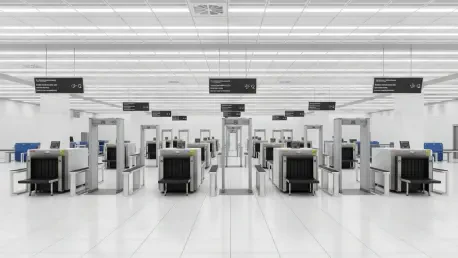
As the professional workforce thins out, the daily reality for the average traveler has shifted from minor inconvenience to total operational gridlock. Major transit hubs, such as Hartsfield-Jackson Atlanta and Houston’s William P. Hobby Airport, are seeing security wait times that have effectively doubled or tripled. Airlines are now forced to issue advisories for passengers to arrive many hours before their scheduled departures to ensure they can navigate the understaffed checkpoints. This friction is not just a nuisance for vacationers; it represents a massive economic drag on the tourism and hospitality sectors, especially during a season where nearly 171 million people are projected to travel.
Global Reputation and Regional Inconsistencies
The implications of this persistent shutdown extend to the international stage, damaging the reputation of the United States as a reliable global leader. While local communities in cities like Denver and Seattle have organized food drives for federal workers, these grassroots efforts highlight the lack of a functional national safety net. The shadow of upcoming international events, such as the FIFA World Cup and the nation’s 250th-anniversary celebrations, looms large over these failures. Industry experts caution that continued instability signals a lack of reliability to the world, potentially diverting billions in international revenue to more stable destinations that prioritize their infrastructure over partisan friction.
Looking Ahead: Legislative Shields and Industry Reform
The survival of the American airway depends on a shift away from reactive crisis management toward permanent, proactive stability. There is a growing momentum among industry leaders for the “decoupling” of essential worker pay from broader federal budget negotiations. Major carriers are currently advocating for three specific legislative measures: the Aviation Funding Solvency Act, the Aviation Funding Stability Act, and the Keep America Flying Act. These bills are designed to ensure that the individuals responsible for national security remain compensated regardless of the political climate in Washington. Such regulatory shifts would mark a landmark change in how the country protects its most vital transit networks.
Strategic Imperatives for a Resilient Airway
Navigating this complex landscape requires a multifaceted approach from both policymakers and private stakeholders. It is imperative that Congress begins to treat air traffic control and security operations as essential services that must remain funded under any circumstances. Best practices for airlines now include developing robust contingency plans that address long-term labor retention rather than just short-term delay mitigation. Businesses and frequent travelers should closely monitor the progress of these legislative initiatives, as they represent the only viable path forward for a system that can no longer withstand the pressures of recurring political turbulence.
Conclusion: Prioritizing Flight Over Friction
The industry leaders from United, Delta, and American Airlines took a necessary stand by highlighting the fragility of a system pushed to its limit. Stakeholders recognized that national security and economic stability were far too important to be used as leverage in legislative disputes. Moving forward, the focus shifted toward securing the passage of the “Keep America Flying” initiatives to prevent future lapses in safety and service. It became clear that protecting the workforce was the only way to ensure the long-term viability of the skies. Ultimately, the resolution of this crisis required a bipartisan commitment to treating the movement of people and goods as a non-negotiable national priority.