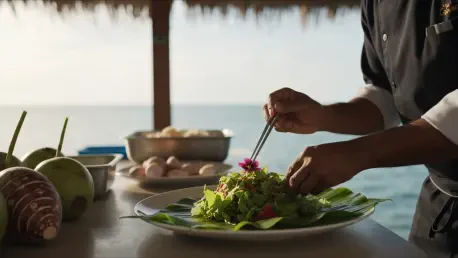

The Maldivian archipelago, a tapestry of turquoise waters and white sands, has long built its culinary reputation on the treasures of the deep sea. Yet, beneath the surface of this seafood-centric identity, a quiet revolution is taking root, challenging the notion that the soul of these islands can only be found in the ocean’s bounty. This shift poses a compelling question: can a culinary experience derived entirely from the soil genuinely represent the essence of an island nation defined by water?
Beyond the Catch of the Day: Redefining an Island’s Culinary Identity
The common perception of Maldivian dining is dominated by images of grilled fish and ocean delicacies. This narrative, while accurate, is incomplete. Historically, island life has depended just as much on terrestrial harvests like coconut, cassava, and taro. A new movement in the luxury resort sector is now bringing these heritage ingredients to the forefront, suggesting that the true flavor profile of the atolls is a delicate balance between land and sea.
This redefinition is not about replacing tradition but expanding it. By exploring the potential of plant-based ingredients, chefs are uncovering an unexpected harmony between contemporary culinary innovation and ancient island practices. This approach demonstrates that the nation’s culinary identity is far more diverse and resilient than often portrayed, offering a narrative that is both authentic and forward-thinking.
The Global Palate Meets Local Roots: Why Plant-Based is Making Waves in the Atolls
The rise of conscious consumption, marked by global movements like Veganuary, has significantly reshaped the expectations of modern travelers. Wellness tourism is no longer a niche market; it is a primary driver for luxury destinations. Visitors to the Maldives now seek experiences that are not only indulgent but also sustainable, healthful, and culturally immersive.
This evolving demand presents a unique opportunity for resorts to innovate while deepening their connection to local culture. Institutions like Nova Maldives are responding to this shift not as a fleeting trend but as a chance for profound cultural expression. They are integrating plant-based philosophy into their core offerings, recognizing that a truly authentic experience aligns with both global wellness values and local heritage.
Deconstructing a Maldivian Vegan Menu: A Taste of Tradition, Reimagined
A tangible example of this fusion is the limited-edition Veganuary menu crafted by Maldivian Chef Sobah at Nova. The menu is a masterclass in elevating humble, heritage ingredients. Cassava, young coconut, and indigenous greens are transformed from simple staples into sophisticated components of a modern plant-based dining experience, showcasing their inherent versatility and depth of flavor.
The three-course journey begins with a Kulhlhafilaa Faiy Salad, where local leaves are brightened with a zesty coconut-lime vinaigrette. The main course, a Dhandi Alu Riha, presents a rich and aromatic cassava curry simmered in freshly pressed coconut milk and island spices. For dessert, the Maldivian Classic Steamed Huni Hakuru offers a comforting sweetness, featuring young coconut steamed with honey and aromatic spices. This mindful culinary experience is complemented by a selection of vegan, alcohol-free cocktails such as the Grapefruit Grove and Dragon Fruit Cooler, underscoring a philosophy of using pure ingredients to create a holistic sense of place.
“Sharing the Soul of the Maldives”: An Insider’s Perspective on Culinary Authenticity
The philosophy guiding this initiative is articulated by General Manager Abdulla Aboobakuru, who emphasizes the importance of celebrating generational ingredients to “share the soul of the Maldives.” This perspective frames cuisine as more than just sustenance; it is a medium for storytelling, a way to convey the history, environment, and spirit of a nation through flavor and texture.
Capturing the “soul” of a nation’s cuisine involves a deep understanding of its roots. The decision to have a Maldivian chef like Sobah lead the culinary direction is crucial. Local leadership ensures that the reinterpretation of traditional recipes remains authentic, respecting established techniques and flavor profiles while presenting them in a contemporary format. It is this genuine connection that elevates the dining experience from a meal to a cultural immersion.
From Limited-Edition to Lasting Philosophy: Integrating Plant-Based Dining Year-Round
While initiatives like Veganuary provide a focused platform, the commitment to plant-forward dining at properties like Nova extends far beyond a single month. This approach is not a temporary marketing campaign but a permanent integration into the resort’s culinary identity, ensuring that plant-based options are accessible and appealing to all guests year-round.
This long-term strategy is evident across the resort’s diverse dining venues. For instance, the grill house, Flames, features a dedicated, year-round vegan menu that stands confidently alongside its traditional offerings. Similarly, the overwater teppanyaki restaurant, Mizu, offers tailored plant-based tasting menus, demonstrating that even specialized culinary experiences can be adapted to embrace this philosophy. This embedded strategy normalizes plant-based dining as a central, rather than an alternative, part of the luxury experience.
The successful integration of plant-based cuisine into the Maldivian luxury landscape demonstrated a powerful shift in culinary identity. By looking inward at its own agricultural heritage, the destination found a new way to articulate its soul, proving that authenticity and innovation could coexist beautifully. This evolution suggested that the future of island dining was not a choice between the ocean’s catch and the earth’s harvest, but a thoughtful celebration of both. The movement did more than cater to a global trend; it enriched the very definition of what Maldivian flavor could be.