
The convergence of artificial intelligence and robotics has officially moved from the realm of speculative fiction to a tangible and strategic asset for the global tourism industry, a transformation vividly demonstrated at the inaugural First National Cultural Tourism Industry Robot Tech Fun Festival in Shenzhen, China. This landmark event was not merely a showcase of novel gadgets; it was a powerful statement on the current state of hospitality, illustrating how automated solutions are now essential for businesses aiming to enhance operational efficiency, navigate economic pressures, and deliver the kind of unforgettable experiences that modern travelers demand. Serving as a microcosm of a much larger global movement, the festival highlighted how robotic innovations are becoming central to creating more resilient, engaging, and profitable tourism ecosystems.
The New Imperative of Automation in Hospitality
The widespread integration of robotics into the tourism and hospitality sectors is no longer a choice but a strategic imperative, driven by a confluence of global economic pressures that includes persistently rising labor costs and significant, ongoing staffing shortages. Businesses within this highly competitive landscape are increasingly recognizing automation as a direct and effective solution to these fundamental challenges. Robotic systems are being deployed to handle repetitive and time-consuming tasks with precision and consistency, from mixing complex beverages to serving desserts, thereby optimizing workflows and ensuring uninterrupted 24/7 service availability. This technological shift allows human employees to be redeployed to roles that require complex problem-solving, empathy, and high-value personal interactions, ultimately elevating the overall quality of guest services. By automating the mundane, the industry is not replacing its workforce but rather empowering it to focus on what humans do best: creating genuine connections and providing nuanced, personalized care.
Beyond addressing critical operational efficiencies, robotics are fundamentally redefining the nature of the customer experience itself, transforming routine transactions into memorable, entertaining events. The true innovation lies not just in the function of these machines but in their capacity to engage and delight. A robotic arm meticulously crafting intricate latte art or a mixology unit preparing a cocktail with a flourish of synchronized lights becomes a form of entertainment, a “wow factor” that captivates visitors and resonates deeply with younger, tech-savvy demographics. This blend of service and spectacle creates novel, shareable moments that guests are eager to capture and post on social media, generating powerful organic marketing and turning a simple refreshment stand into an “influencer hotspot.” The consistency and quality delivered by these automated systems also contribute significantly to higher customer satisfaction, as they eliminate the variability of human error and ensure every product meets a precise standard of excellence, every single time.
China’s Leadership in the Robotics Revolution
China has decisively positioned itself at the vanguard of the global robotics revolution, emerging as a dominant force in both the development and the large-scale deployment of advanced AI and automation technologies. This remarkable ascent is the result of a concerted national strategy, underpinned by substantial government investment in research and development, a technologically enthusiastic consumer base that readily embraces innovation, and a robust, world-class manufacturing ecosystem capable of turning sophisticated prototypes into market-ready products at scale. The Shenzhen festival served as a powerful testament to this national commitment, providing a premier platform to showcase cutting-edge advancements, benchmark industry progress, and set the trajectory for future innovation. The event made it unequivocally clear that China is not merely participating in the technological transformation of tourism but is actively leading the charge, establishing new standards for what is possible in automated guest services.
Among the constellation of innovators present, Anno AI Robotics distinguished itself as a pivotal player driving this industry-wide transformation. Recognized as a “specialized, refined, distinctive, and innovative” national high-tech enterprise, the company has rapidly built a formidable reputation since its founding in 2017. Specializing in the research, development, and production of desktop robotic arms and their application in AI-powered smart retail, Anno AI has amassed an impressive portfolio of over 70 national patents. Its global footprint is equally significant, with its solutions deployed in over 100 cities across China and in more than 70 countries and regions worldwide. At the festival, Anno AI was presented not simply as a manufacturer of machines, but as a comprehensive provider of integrated, intelligent retail solutions meticulously designed to meet the unique demands of the cultural tourism industry, proving its role as a key architect of the future of automated hospitality.
Spotlight on Innovation: Anno AI’s Robotic Solutions
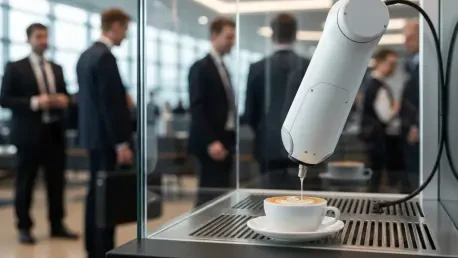
The Anno AI Robot Latte Art Printing Coffee Kiosk stood out as a flagship innovation, demonstrating how automation can elevate a simple beverage purchase into a captivating artistic experience. Promoted as the world’s first enclosed, single-arm robotic kiosk capable of creating detailed and intricate latte art, this machine masterfully produces a perfect, artistically decorated coffee in just 90 seconds. It achieves this by leveraging a high-precision robotic arm combined with intelligent visual capture and sophisticated machine learning algorithms that meticulously replicate the complex techniques of a professional human barista. Beyond its signature art, the kiosk offers a full menu of hot and cold coffees, flavored lattes, juices, and chocolate drinks, all ordered and paid for through a streamlined mini-program. Encased in a sleek, modern chassis, the unit functions as a self-contained “premium coffee shop,” maximizing per-square-meter efficiency while acting as an irresistible attraction for social media engagement, drawing in crowds with its mesmerizing performance.
Further showcasing the company’s versatility, the Anno AI Robot Bartending Kiosk brought theatrical flair and unerring precision to the world of automated mixology. This self-service “mobile bar,” occupying a minimal footprint of just three square meters, crafts a professional-grade cocktail in a remarkable 45 seconds. The system supports up to 12 different base liquors and can produce over 50 distinct cocktail flavors, offering guests extensive customization options to tailor their drinks perfectly. The experience is enhanced by a dazzling display of vibrant lighting that is synchronized with the robotic arm’s fluid movements, turning the preparation process into a visually stunning show. Equally important is its commitment to hygiene; the kiosk incorporates a 24-hour automatic cleaning, preservation, and sterilization cycle, ensuring impeccable safety standards and boosting consumer confidence. This blend of speed, variety, entertainment, and safety makes it an ideal solution for high-traffic tourist venues, lounges, and event spaces looking to offer a unique and efficient beverage service.
A New Model for Tourism Retail
The innovations showcased at the Shenzhen festival did more than just present new tools; they articulated a new, holistic vision for the future of retail within the tourism industry. The core concept underpinning Anno AI’s entire product line—”One Machine, One Premium Shop”—encapsulated this shift perfectly. This idea demonstrated that a single, compact, and fully automated kiosk could replicate not only the function but also the quality and ambiance of a full-scale, premium establishment, whether it be a specialty coffee house, an upscale cocktail bar, or a gourmet ice cream parlor. This model represented a powerful paradigm shift, enabling venues to deploy high-quality food and beverage services in a fraction of the space and with significantly lower operational overhead. The festival proved that this concept was not a distant goal but a current, deployable reality that offered a clear and compelling roadmap for modernizing visitor services.
Ultimately, the technologies unveiled at the event provided industry professionals with a definitive look at the future of their businesses. It became evident that embracing robotics was an essential strategy for maintaining a competitive edge, enhancing visitor satisfaction, and future-proofing operations against economic uncertainties. The key takeaways were unambiguous: automated systems offered a direct solution to persistent challenges like labor costs and staffing shortages while simultaneously improving service consistency and hygiene standards. Furthermore, these robotic kiosks transformed standard transactions into the kind of engaging, interactive, and shareable experiences that generate invaluable organic marketing and boost guest satisfaction. By enabling 24/7 operation in high-traffic areas, these systems also unlocked new and continuous revenue streams, solidifying their role as indispensable assets for the next generation of travel destinations worldwide.