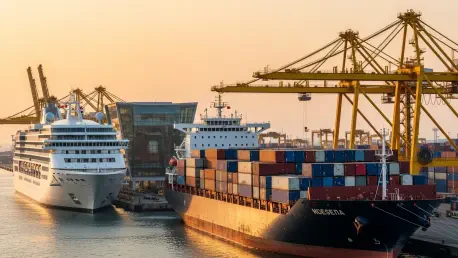

The global maritime industry functions as a sophisticated dance between two giants that rarely move to the same rhythm: the relentless flow of industrial trade and the meticulously planned world of luxury travel. While a massive container ship carries the raw materials necessary for the modern economy, a vessel like the Norwegian Sun carries the dreams of thousands of vacationers seeking cultural enrichment. These two sectors often converge in the same geographic corridors, such as the bustling waters of Southeast Asia, where the competition for limited port space creates a fascinating study in operational priority and economic dominance.
Understanding the Maritime Dual-Track: Commercial Trade and Leisure Travel
Commercial shipping serves as the essential circulatory system of international commerce, responsible for moving vast quantities of raw materials and containerized goods. This sector is defined by its scale and its ties to global supply chains, where any delay can ripple through manufacturing centers and retail markets worldwide. In this high-stakes environment, efficiency is the primary currency, and vessels are often viewed as logistical units rather than individual entities.
Cruise tourism, in contrast, is an industry built entirely on the passenger experience, hospitality, and destination exploration. For major players like Norwegian Cruise Line (NCL), the success of a voyage is measured by the quality of shore excursions and the ability to provide seamless access to historical or natural landmarks. While both industries depend on the ocean, their objectives are fundamentally different: one prioritizes the integrity of the cargo, while the other prioritizes the satisfaction of the traveler.
Key locations in this analysis highlight the tension between these tracks. Phu My Port in Vietnam stands as a critical industrial hub near Ho Chi Minh City, characterized by heavy traffic and high industrial utility. Meanwhile, Sihanoukville in Cambodia has emerged as a vital maritime gateway in the Gulf of Thailand, offering an alternative for cruise diversions. Understanding the Southeast Asian maritime network is crucial for seeing how these industrial and tourism interests frequently intersect and, at times, collide.
Operational Dynamics and Priority in Shared Maritime Spaces
Berthing Priority and Infrastructure Requirements
At multi-use facilities like Phu My, the hierarchy of docking is clearly defined by economic necessity. Commercial cargo ships often receive berthing priority because their presence is tied to strict delivery windows and regional economic stability. Because these vessels move the goods that fuel local industries, port authorities tend to favor them over leisure traffic. This reality means that a ship like the Norwegian Sun must wait for a gap in the industrial schedule, which is not always available in a region experiencing rapid growth.
Furthermore, the physical requirements for each vessel type differ significantly. While a cargo ship needs cranes and expansive storage yards, a cruise ship requires passenger-centric infrastructure. This includes secure gangways, sophisticated customs and immigration facilities, and dedicated terminals capable of handling thousands of tourists simultaneously. If a port is at capacity with industrial traffic, it often lacks the specific resources needed to safely disembark cruise passengers, leading to unavoidable itinerary changes.
Economic Impact and Real-Time Decision-Making
The economic drivers of these two sectors influence how port managers make decisions under pressure. Commercial shipping success is measured by turnaround efficiency and the sheer volume of cargo processed. In contrast, cruise tourism generates revenue through shore excursions and local hospitality spending. When the Norwegian Sun faced congestion at Phu My, the decision-making process shifted from cultural tourism to logistical redirection, illustrating a classic “berth space” competition where trade volume dictated the outcome.
As trade volumes in Southeast Asia continue to climb through 2026 and beyond, the lack of dedicated cruise terminals remains a significant technical challenge. Leisure vessels must remain incredibly agile, employing real-time course corrections to secondary hubs when primary ports are occupied. This flexibility allows cruise lines to salvage a vacation experience by pivoting to locations like Sihanoukville, even when the original industrial destination becomes inaccessible due to the sheer density of global trade.
Destination Characteristics and Passenger Experience
A major point of comparison lies in the “product” each sector delivers to the world. For commercial shipping, success is binary: the cargo must arrive intact and on time. For cruise tourism, success is subjective and depends on whether a destination meets the high expectations of the traveler. The diversion from Vietnam to Cambodia transformed the passenger experience entirely, replacing the high-energy, urban exploration of Ho Chi Minh City with a nature-focused coastal escape.
This shift underscores the difference between industrial maritime hubs and emerging tourism centers. While commercial ships are drawn to ports near manufacturing centers and major inland transport links, cruise lines seek out locations with developed hospitality infrastructure and recreational appeal. Sihanoukville, with its proximity to the pristine islands of Koh Rong, represents the type of destination that can provide a high-quality alternative when industrial corridors become too crowded for leisure operations.
Challenges and Limitations in Maritime Integration
The primary obstacle in balancing these two sectors is the widening infrastructure gap in high-growth regions. Many Southeast Asian ports were originally designed for industrial efficiency, leading to “maritime twists” where cruise itineraries are sacrificed to maintain the flow of cargo. This creates a logistical ripple effect, requiring cruise lines to coordinate new shore excursions and local operators in alternative destinations with almost no notice, a task that tests the limits of maritime management.
Beyond the logistics of the ship itself, there is a significant financial and administrative burden associated with these shifts. Cruise lines must process automatic refunds for canceled excursions and manage the expectations of thousands of guests who may have booked the trip specifically for one location. Additionally, the captain’s responsibility to prioritize safe navigation and docking remains paramount; if port conditions are suboptimal due to overcrowding, the safety of the vessel always takes precedence over the adherence to a printed itinerary.
Comparative Synthesis and Strategic Recommendations
The analysis of recent maritime movements in Southeast Asia revealed that while commercial shipping remains the engine of regional wealth, cruise tourism is essential for diversifying local economies. The redirection of the Norwegian Sun demonstrated the impressive agility of the cruise industry but also confirmed the undeniable dominance of trade-focused operations in shared spaces. As industrial corridors become more congested, the need for a strategic separation of cargo and leisure traffic has become more apparent to ensure both sectors can thrive without interference.
Moving forward, stakeholders in the cruise industry would be wise to increase investment in dedicated terminals to bypass the limitations of industrial ports entirely. For travelers, the most effective strategy involves maintaining a flexible mindset and viewing the itinerary as a guideline rather than a rigid contract. Utilizing comprehensive travel insurance and researching secondary ports, such as Sihanoukville, allowed passengers to find value in the unexpected. Choosing smaller or more maneuverable vessels may also offer a higher degree of resilience, as these ships can often access specialized ports that larger, industrial-reliant vessels cannot reach. These proactive steps ensured that the complexities of global trade did not diminish the spirit of international exploration.