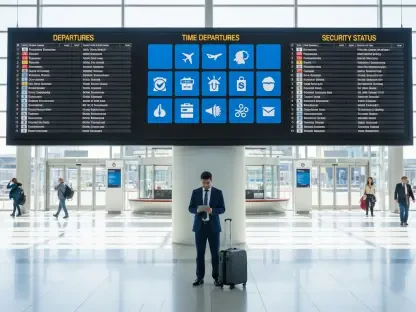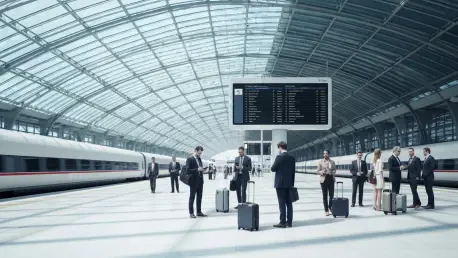

Thousands of holiday travelers, many with plans for New Year’s celebrations, found themselves stranded in a state of utter chaos after Eurostar abruptly canceled all its services between London and continental Europe. The sudden shutdown was triggered by a critical infrastructure failure deep within the Channel Tunnel, transforming bustling international terminals into scenes of confusion and despair at one of the busiest times of the year. For countless passengers, carefully laid plans for reunions, vacations, and celebrations were derailed in an instant, replaced by the stark reality of an indefinite wait and the frantic search for information that was slow to materialize. The incident served as a dramatic reminder of the fragility of modern, interconnected transport networks, where a single technical fault can cascade into a logistical nightmare affecting people from all corners of the globe. As crowds swelled and frustration mounted, the crisis underscored the profound human cost of such large-scale disruptions.
A Cascade of Failures Shuts Down a Vital Link
The root cause of the widespread disruption was a severe technical problem that struck at the heart of the Channel Tunnel’s operations: a critical failure in the overhead power supply. This intricate electrical system is the lifeblood of the cross-channel rail link, providing the high-voltage current necessary to propel the high-speed trains that connect the United Kingdom with mainland Europe. Without a stable and continuous power source, the electric locomotives are rendered completely inoperable, bringing all rail traffic to an immediate and unavoidable standstill. The failure highlighted a significant vulnerability in the infrastructure, demonstrating how a single point of failure within this complex system could effectively sever the vital artery for thousands of daily passengers. This electrical outage was not a minor glitch but a catastrophic breakdown that instantly paralyzed the entire network, leaving trains on both sides of the channel with no path forward and no power to proceed, setting the stage for a day of unprecedented travel chaos.
Compounding the initial power outage, a secondary and equally disruptive incident occurred when a LeShuttle train, the service responsible for transporting cars, trucks, and other vehicles, broke down and became immobilized inside the tunnel. This mechanical failure turned a critical power issue into an insurmountable physical obstruction. With a disabled train blocking one of the main running tunnels, the logistical bottleneck became absolute. Even if power had been partially restored, the presence of the stationary train would have made passage impossible. The combination of a powerless rail line and a massive, unmovable object created a perfect storm of operational failure. This dual crisis presented an immense challenge for engineers and crisis managers, who were forced to contend with two distinct and complex problems simultaneously within the confined and inaccessible environment of the subsea tunnel, ensuring that any resolution would be slow and methodical, prolonging the misery for travelers waiting anxiously for updates.
Official Response and Widespread Confusion
In the face of the escalating crisis, Eurostar’s initial response was both swift and absolute, designed to prevent further congestion at its already overwhelmed terminals. The company took the decisive step of suspending all its services for the remainder of the day and issued a stark, unambiguous warning to its customers across all communication channels: “Please do not come to the station.” This directive was echoed by staff on the ground at London’s St Pancras International, who were tasked with the difficult job of informing bewildered and frustrated crowds that there would be “nothing at all” running for the rest of the day. This clear and final message, while intended to manage the situation, left no room for hope for those who had already arrived, turning the station concourse into a vast waiting room filled with people suddenly stripped of their travel plans and left with no immediate alternatives. The company’s focus shifted from operations to crisis management, with staff distributing water bottles as a small gesture of support amid the growing sense of helplessness.
As the day wore on and engineers worked tirelessly within the tunnel, the official advice from Eurostar began to evolve, though it offered little immediate comfort to the thousands of displaced passengers. By mid-afternoon, the company announced that the Channel Tunnel had “partially reopened” and that a very limited number of services might begin to resume. However, this glimmer of hope was heavily qualified. With the core overhead power supply issue still unresolved, the operator strongly reiterated its primary guidance, urging all passengers to postpone their journeys to a different date. The company’s website warned that any trains that did manage to depart would be “subject to severe delays and possible last-minute cancellations,” painting a picture of continued uncertainty. For those still clinging to hope at the station, a public announcement at King’s Cross St Pancras delivered the final blow: the few trains scheduled to run were already fully booked, leaving no capacity for anyone holding a ticket for a canceled service. This mixed messaging, combining a partial reopening with strong advice not to travel, only deepened the confusion and frustration for passengers desperate for a clear path forward.
The Human Cost of a System Breakdown
Behind the operational announcements and logistical chaos lay countless stories of profound personal disruption and dashed dreams. The sudden cancellations had a devastating impact on travelers like Charles Nduka-Eze and his family of nine, who had traveled from Nigeria for a long-planned European holiday. They were on an early morning train to Paris, with the highlight being a dream trip to Disneyland for the children. When their train was unexpectedly turned back to London, their meticulously arranged vacation collapsed. Having already checked out of their London hotel and prepaid for their entire stay in Paris—including accommodation, river cruises, and park tickets—they found themselves stranded in a city with no place to stay and a significant financial loss looming over them. Mr. Nduka-Eze described the situation as a “complete disaster,” a sentiment that captured the emotional and logistical turmoil faced by a family left adrift, their cherished holiday memories replaced by uncertainty and immense stress.
The disruption’s ripple effect was felt most acutely by international travelers with complex, interconnected itineraries that were now at risk of completely unraveling. Talea Uluakiola and his family, visiting from New Zealand, saw their grand European tour thrown into jeopardy before it had even truly begun. Their canceled 9:30 AM train to Paris was the critical first leg of a multi-country adventure planned to include New Year’s Eve celebrations and subsequent trips to Brussels, Amsterdam, and Germany. He described the ordeal as an “absolute nightmare,” criticizing the lack of practical support and the impracticality of the official advice to simply rebook when no alternative trains or flights were available at such short notice. Faced with the potential cost of thousands of dollars for last-minute flights, their once-in-a-lifetime holiday was on the brink of collapse. Similarly, the cancellations extinguished the spark of smaller, personal celebrations, such as the surprise New Year’s trip to Paris that John Paul had planned for his partner. After five frustrating hours on a train that ultimately returned to its starting point, their romantic plans were unceremoniously put “on hold.”
Broader Consequences and a Call for Accountability
The failure’s impact extended far beyond Eurostar’s passenger manifest, halting all rail traffic through the tunnel and affecting a wide range of travelers. LeShuttle services, which cater to those traveling with personal vehicles, were also completely suspended, leaving cars, buses, and trucks queued up on both sides of the channel. This created another layer of distress for families and individuals who were now trapped in their vehicles for hours on end. The plight of these travelers was poignantly highlighted by the story of a dog named Rilo, who was stuck inside a car on a disabled LeShuttle train for hours without access to food or water, a small but powerful symbol of the widespread discomfort and anxiety caused by the shutdown. This broader paralysis of the cross-channel link demonstrated that the tunnel’s vulnerability was a matter of national and international importance, affecting not just tourism but also commerce and personal travel for thousands who rely on the route daily.
The widespread disruption quickly drew a response from the political sphere, where the focus shifted from the immediate logistical challenges to the pressing issues of passenger rights and corporate accountability. Shadow Transport Secretary Richard Holden labeled the situation “incredibly frustrating” and called on government authorities to collaborate closely with Eurostar and its international partners to resolve the situation and get stranded passengers to their destinations. Critically, he emphasized the need to “ensure they are properly compensated for the disruption,” bringing the question of financial redress to the forefront of the public conversation. This call for action reflected a growing sentiment among the affected travelers that the operational failure should not result in their financial ruin. The incident had laid bare the significant consequences of infrastructure failure, and the ensuing debate centered on how to ensure that passengers, who had borne the brunt of the chaos through no fault of their own, were treated fairly in the aftermath.