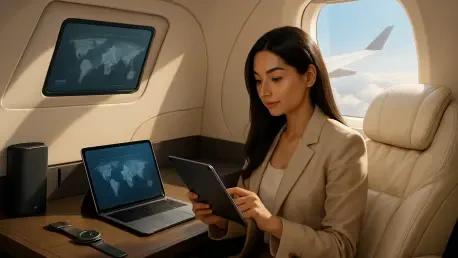

The modern definition of luxury has migrated from the tangible opulence of gilded lobbies to the silent efficiency of invisible technological systems that anticipate a traveler’s needs before they are ever voiced. In the current landscape of 2026, high-net-worth individuals are no longer impressed by the mere presence of high-end gadgets; instead, they demand a seamless integration of services that eliminates the historical friction of global transit. This shift represents a transition toward a comprehensive technological ecosystem where privacy, security, and extreme personalization are the primary metrics of a successful journey. By leveraging sophisticated artificial intelligence and biometric data, the industry has managed to strip away the logistical burdens that once plagued international movement. The result is a travel experience that feels less like a series of disjointed steps and more like a continuous, effortless flow through time and space. Consequently, the focus has shifted from the physical assets one carries to the digital infrastructure that supports every decision, ensuring that the traveler remains in a state of perpetual ease throughout the trip.
Artificial Intelligence: The Rise of the Living Itinerary
Artificial intelligence has fundamentally altered the role of the travel advisor, moving the industry away from static planning toward a model of dynamic, predictive management. These advanced AI platforms utilize deep-learning algorithms to process vast amounts of personal data, preferences, and historical behaviors to create what is now known as a living itinerary. Unlike the traditional human concierge who operates within the constraints of office hours and manual bookings, these digital systems monitor global variables in real time. If a private flight is delayed by ten minutes or a preferred dining venue suddenly becomes unavailable due to a private event, the AI compensates instantly. It identifies the disruption and secures an alternative that aligns with the traveler’s established profile, often before the individual is even aware that a problem existed. This proactive capability ensures that the cognitive load of decision-making is almost entirely removed, allowing the traveler to focus on the purpose of their journey rather than the mechanics of the movement.
This shift toward automated bespoke planning does not merely replace human interaction but enhances it by providing a level of precision that was previously unattainable. The algorithms used in 2026 are capable of recognizing subtle patterns in a traveler’s mood and health, suggesting adjustments to the schedule that prioritize wellness or productivity based on biophysical feedback. For instance, if wearable data indicates a high level of fatigue after a transcontinental flight, the digital concierge might automatically suggest a spa session or a quiet evening meal rather than a high-energy social engagement. This level of service represents a new frontier in personalization, where the technology acts as a silent guardian of the traveler’s time and energy. By analyzing real-time data from thousands of sources, these systems ensure that every recommendation is relevant to the current context, making the travel experience feel uniquely tailored to the individual’s immediate needs rather than a pre-determined, rigid plan that fails to account for the unpredictable nature of global travel.
Frictionless Transit: Biometrics and Digital Connectivity
The physical act of moving through international borders has been completely reimagined through the widespread implementation of advanced biometric identification systems. In premium airline hubs and private aviation terminals, the necessity of carrying physical documentation like passports, visas, and boarding passes has been rendered obsolete for the elite traveler. Facial recognition and high-resolution iris scanning allow for a seamless transition from the terminal entrance to the aircraft cabin without a single pause at a traditional checkpoint. These systems are integrated into the global security infrastructure, ensuring that identity verification happens instantaneously and discreetly. This innovation is not just about the speed of transit; it is about preserving the dignity and composure of the traveler. By removing the administrative hurdles and the “fumble factor” associated with paperwork, technology has transformed the airport from a high-stress environment into a quiet, background process that facilitates movement rather than obstructing it with outdated protocols.
Parallel to the physical ease of movement is the absolute requirement for uninterrupted global connectivity, which has been solved through the universal adoption of eSIM technology. In 2026, the frequent international traveler no longer deals with the inconvenience of local SIM cards or the unreliability of public Wi-Fi networks. Instead, digital-first connectivity allow users to pre-load local data profiles for multiple destinations simultaneously, ensuring that their devices are online the very moment the aircraft wheels touch the runway. This instant-on capability is vital for maintaining access to encrypted communication channels, cloud-based business environments, and real-time navigation systems. Because these profiles are managed digitally, there is no physical hardware to swap, reducing the risk of data loss or device damage. The ability to transition between global networks without a lapse in service ensures that the traveler remains tethered to their personal and professional lives with the same level of reliability they would expect in their home city, regardless of their geographical location.
Intelligent Asset Security: The Integration of Smart Logistics
The evolution of luxury travel hardware has turned every piece of luggage into a sophisticated smart asset that provides constant transparency and security. High-end suitcases are now routinely equipped with integrated GPS tracking, cellular connectivity, and digital locking mechanisms that synchronize directly with the owner’s primary mobile device. This level of integration allows the traveler to monitor the precise location of their belongings in real time, from the moment they leave the hotel room to their arrival in the cargo hold and back again. For individuals transporting high-value items or sensitive business documents, this digital visibility offers a level of peace of mind that was historically unavailable. The luggage itself has become an active participant in the security protocol, sending immediate alerts if a bag is moved outside a pre-defined geofence or if a digital lock is tampered with. By merging physical durability with digital intelligence, these tools ensure that the movement of personal goods is as secure and visible as the traveler’s own movement.
Looking back at the advancements achieved, the travel industry successfully established a new standard where technology serves as the invisible architect of tranquility. Stakeholders in the luxury sector prioritized the development of interoperable systems that allowed disparate technologies—AI, biometrics, and smart hardware—to function as a single, cohesive unit. Travelers who adopted these integrated solutions found that the most valuable commodity was no longer the destination itself, but the recovery of their own time and mental space. As the industry moves forward, the focus must remain on refining the accuracy of these predictive systems and ensuring that the privacy of biometric data is maintained with absolute integrity. Those who invested in these seamless digital infrastructures realized that the ultimate luxury was the total removal of friction from the human experience. The successful transition to this model proved that when technology is implemented with precision, it does not clutter the journey but instead clears the path for a more meaningful and productive global existence for every traveler.