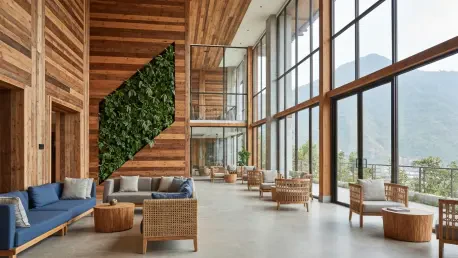

With a storied career in travel, tourism, and large-scale events, hospitality expert Katarina Railko has a unique lens on the forces shaping the luxury market. We sat down with her to discuss one of the most anticipated openings: Sofitel Rishikesh Narendra Nagar. The project promises a fascinating blend of Sofitel’s signature French art de vivre with the profound spiritual heritage of Rishikesh, the world’s Yoga Capital. Our conversation explored how this ambitious resort plans to harmonize these distinct cultures, redefine wellness in a destination saturated with it, and balance vibrant celebrations with serene retreats, all while championing sustainability through a powerful local partnership.
Sofitel is known for its French zest, while Rishikesh is the Yoga Capital of the World. How will you tangibly blend these identities in guest experiences? Please describe a specific design choice or service ritual that will bring this unique “French-Himalayan” harmony to life.
The key is in creating a sensory dialogue between the two worlds. Imagine arriving not just to a check-in desk, but to a welcome ritual where you’re offered a chilled, saffron-infused herbal tea—a nod to Indian tradition—served in elegant French glassware. For design, think of a guest room where the clean, contemporary lines of Sofitel furniture are upholstered in rich, locally woven textiles with Himalayan motifs. The architecture itself will be mountain-inspired, but the interior flow, the use of light, and the scent signature throughout the property will evoke that classic French sense of refined, heartfelt luxury. It’s about ensuring every detail, from the serene sound of flowing waters in the gardens to the art on the walls, tells a cohesive story of this unique “French-Himalayan” harmony.
In a destination celebrated for wellness, the new resort will offer a large spa and curated yoga programs. How will these offerings stand out from established local ashrams? Detail one unique wellness program and explain how it integrates authentic regional practices with Sofitel’s luxury standards.
While local ashrams offer profound, rustic authenticity, Sofitel will deliver a different kind of transformation—one steeped in sophisticated comfort and personalized luxury. Our distinction will lie in the seamless integration of ancient wisdom with modern wellness science. For example, we might offer a signature “Ganges Rejuvenation” program. This wouldn’t just be a yoga class; it would be a multi-day journey beginning with a private, guided meditation session on a terrace overlooking the river valley, followed by a personalized yoga practice. The experience would then transition into our 623-square-meter Sofitel Spa for a bespoke therapy using local Himalayan botanicals, all delivered within a serene, state-of-the-art environment. It’s about elevating regional practices to a standard of luxury that caters to a global traveler seeking both spiritual connection and five-star service.
With over 2,000 square meters of event space, the resort will host both weddings and wellness retreats. How will you manage the logistics and atmosphere to ensure a vibrant wedding doesn’t disrupt a tranquil retreat? Describe the practical steps your team will take to segment these experiences.
That’s a critical operational challenge, and the solution is rooted in thoughtful design and meticulous planning. With over 2,000 square meters of event space, we have the luxury of physical separation. The vibrant wedding celebrations, with their music and energy, will be hosted in our elegant indoor ballrooms and dedicated outdoor lawns, which can be acoustically buffered and are situated away from the main accommodation wings and wellness areas. Meanwhile, wellness retreats will have their own tranquil zones, perhaps closer to the spa and meditation gardens. We’ll implement staggered schedules and create distinct guest flows, ensuring a retreat guest seeking silence isn’t crossing paths with a boisterous wedding party. It’s about creating two parallel, yet equally luxurious, universes within the same eight-acre property.
The project incorporates Accor’s Planet 21 and Gaia 2.0 sustainability frameworks. Can you outline two key sustainable design or operational features being built into the resort? How will these initiatives be made visible to guests to enhance their stay, rather than just being background processes?
Sustainability here is not an afterthought; it’s foundational. Under Accor’s Planet 21 and Gaia 2.0 frameworks, two key features stand out. First, we are implementing advanced energy efficiency systems in the new-build design, from high-performance insulation inspired by mountain architecture to smart lighting that minimizes consumption. Second, a significant focus is on local sourcing for our interiors to reduce our carbon footprint and support the community. To make this visible, we won’t just put a small card on a nightstand. Guests might find a ‘sustainability story’ on their in-room tablet, detailing how the wood for their headboard was responsibly sourced from a nearby region or how the water in the gardens is recycled. We could even offer guided ‘eco-tours’ of the property, showing guests the tangible results of our commitment, turning it from a background process into an integral part of their luxury experience.
This project continues a long-standing relationship between Accor and the Dangayach Group. Beyond financing, what specific expertise does each partner contribute to the resort’s development? Please share an anecdote that illustrates how this collaboration solved a key challenge or created a unique feature.
This partnership is a perfect example of global expertise meeting deep-rooted local wisdom. Accor brings its formidable global distribution network, the power and prestige of the Sofitel brand, and exacting operational and sustainability standards like Planet 21. The Dangayach Group, with over five decades of experience in India across hospitality and real estate, contributes invaluable on-the-ground knowledge. They understand the nuances of the local market, the supply chain, and the cultural landscape. I recall a discussion during the initial design phase where the architectural team was planning the orientation of the main building. It was the Dangayach Group’s insight into local building traditions and understanding of the Himalayan microclimate that led to a subtle shift in the layout, maximizing the panoramic mountain views for nearly all 160 rooms while also optimizing natural light and airflow, which directly supported Accor’s energy efficiency goals. It was a moment where local heritage directly enhanced a global luxury standard.
What is your forecast for the luxury wellness tourism market in India over the next decade?
The trajectory is incredibly strong, and it’s moving towards holistic, highly curated experiences. The next decade won’t just be about visiting a spa; it will be about transformative journeys that integrate physical wellness, spiritual growth, and cultural immersion. We’re going to see a surge in demand for destinations like Rishikesh, but with the expectation of world-class luxury and impeccable service. Projects like Sofitel Rishikesh are not just following a trend; they are setting the new benchmark. India’s rich heritage in wellness is its greatest asset, and as this is paired with global hospitality brands, the country is poised to become one of the world’s most sought-after destinations for travelers seeking renewal, not just a vacation.