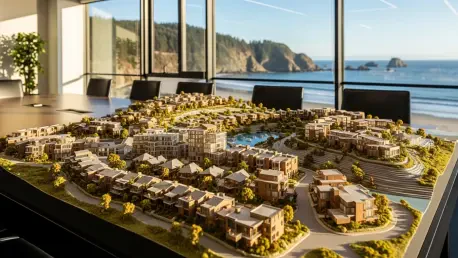

A contentious proposal to develop a key parcel of land next to Ucluelet’s cherished Big Beach has brought the community to a crossroads, pitting the promise of modern housing and amenities against the preservation of what some call a sacred natural space. The formal application, which seeks to build a hotel, pub, and housing complex, is not just a plan for new construction; it is an attempt to rectify a decades-old, bizarre zoning bylaw that has left the land in limbo. This has ignited a fierce debate among the town’s elected officials, forcing a community to confront its identity and decide whether this new vision represents progress or a profound misstep.
The Vision for Big Beach
A Solution to a “Crazy” Past
The entire debate surrounding the 6,394 square-meter lot is framed by its peculiar and long-standing zoning, a legal relic established over two decades ago that mandates the construction of an enormous 20,000 square-foot pub. This provision is universally regarded as impractical and wholly undesirable by everyone involved, from the landowners to the municipal council. The owner’s representative, Nigel Gray of MacDonald Gray Consultants, did not mince words when he labeled this existing zoning requirement as “crazy.” It has been described as a “bizarre fever dream” that no one in the community actually wants to see realized, effectively sterilizing a prime piece of real estate for years. This strange mandate has created a unique situation where any development proposal is not just an opportunistic venture but also a necessary correction to a significant planning error from the past, offering a path away from an unfeasible and unwanted future.
The new development plan is therefore positioned as a sensible and pragmatic alternative to this historical absurdity. After first introducing a similar concept in March 2024, the development team returned nearly two years later to present a formal and detailed application to the council on December 9. This revised project is presented not merely as a new commercial and residential opportunity, but as a long-overdue solution to the unusable zoning that has stymied any reasonable use of the property. By seeking to replace the mega-pub bylaw, the developers are framing their project as a collaborative effort to bring functionality and value to a piece of land that has been effectively frozen in time by an impractical and universally disliked regulation. The narrative is one of moving forward from a “bizarre” past into a more thoughtfully planned and community-oriented future that reflects current needs and realities.
A Modern “Village” Concept
The formally submitted project proposes a multifaceted development composed of four distinct buildings, carefully arranged to create what the planners describe as a “village-like collection.” This integrated complex is designed to serve a variety of community and visitor needs. The key components of the proposal include a modest 12-unit hotel to accommodate tourists, a 232 square-meter pub and bistro intended as a social hub, a five-unit resort condominium building, and a 12-unit residential apartment building exclusively for long-term rentals. This mix of uses aims to create a dynamic environment that caters to residents, local workers, and visitors alike. The scale of each element is presented as being more in keeping with the character of Ucluelet than the monolithic structure mandated by the old zoning, suggesting a more nuanced and community-focused approach to developing the site.
The architectural vision, articulated by Paul Copeman of DHKI Architects, is for a “coherent composition” that celebrates West Coast modern design. The plans feature expressive rooflines and materials intended to harmonize with the existing community aesthetic, rather than imposing a foreign style on the landscape. A significant emphasis is placed on pedestrian access, with clear connections to the street and the public walkway leading to Big Beach. To minimize the development’s surface footprint and preserve a sense of open space, parking is planned to be located either underground or under the buildings. The pub and bistro element is strategically positioned on the north corner of the site, adjacent to the Ucluelet Community Centre, in an effort to “activate that corner” and create a vibrant public space. This component is designed to feature a large deck offering ocean views, further integrating the development with its prized natural setting.
Promised Community Benefits
A central theme presented by the developers is the project’s potential to deliver substantial and tangible benefits to the Ucluelet community. Foremost among these is the provision of much-needed housing through the construction of a 12-unit apartment building. This structure would contain “micro residential units” specifically designed to offer lower-cost housing options for local employees and residents, directly addressing a critical need in a town where affordable living space is scarce. The developers have signaled their commitment to this aspect of the project by indicating that the residential component would likely be the first phase of construction to be completed, ensuring that the community sees a direct benefit early in the development process. This focus on housing is a key part of the argument that the project is not just for tourists, but is fundamentally about supporting the local workforce.
Beyond the crucial housing component, the developers have outlined other significant contributions. A major point highlighted by Nigel Gray is the dedication of 20 percent of the property—a significant portion of the land—back to the district. This land would be used to expand the adjacent and highly valued Big Beach Park, permanently protecting more green space for public enjoyment. Furthermore, the plan includes extensive landscaping and the creation of a natural buffer between the new buildings and the existing parkland, aiming to soften the transition and maintain the area’s natural feel. While the five proposed townhomes in the resort condominium building would be privately owned and rented as tourist accommodations when not in personal use, the overall package of benefits—housing, parkland expansion, and thoughtful landscaping—is presented as a compelling case for community support.
A Council Divided
Cautious Optimism and Scrutiny
The reaction from Ucluelet’s council to the detailed proposal was far from unanimous, exposing a clear divide in perspective and an overarching sense of caution. Mayor Marilyn McEwen maintained a neutral, procedural stance throughout the discussion, acknowledging the long gap since the initial pitch and later highlighting the proposed 12-unit long-term rental building as a tangible community benefit in response to criticism. In contrast, Councillor Mayco Noel expressed a more cautiously optimistic viewpoint. Recognizing that the land has been underutilized for a long time, he commented that the developers had “pulled something nicely together” and had “checked a lot of boxes.” His overriding sentiment was that the ultimate decision should rest with the public, repeatedly stating, “Let’s get it out to the public for feedback,” signaling a desire for community consensus to guide the process.
This measured optimism was tempered by a more detail-oriented and scrutinizing approach from other members of the council. Councillor Jennifer Hoar, for example, raised a specific technical point concerning a discrepancy in the plan. She noted that the land’s current zoning allows for five short-term rental units, yet the proposal was seeking approval for a 12-unit hotel, a detail that would require careful consideration and likely a variance. This focus on the finer points of the application indicated that some on the council were approaching the project with a high degree of diligence, unwilling to overlook potential conflicts with existing regulations. The varied responses, from procedural neutrality to cautious support and detailed scrutiny, painted a picture of a council grappling with a complex proposal that offers both appealing benefits and potential challenges, with no easy consensus in sight.
An Accusation of “Sacrilege”
In stark contrast to the measured and cautious tones of his colleagues, Councillor Mark Maftei articulated a position of unequivocal and “vehement” opposition to the project in its entirety. While making it clear his comments were not a personal attack on the developers, he did not mince words, stating it was “difficult for me to conceive of a project that I would more vehemently oppose.” His critique was multifaceted, arguing that the project is fundamentally “ill-conceived,” situated in the “wrong location,” and represents something that “Ucluelet doesn’t need.” He cast serious doubt on the economic viability of a new pub, suggesting that information he received from the owner of the town’s existing brewpub indicated that the local market might not be able to support another such establishment, raising the specter of a failed business venture.
Councillor Maftei’s greatest fear, as he explained it, was the potential for the project to stall after the land had been cleared, leaving an ugly and permanent scar on the landscape without delivering any of its promised benefits to the community. His most passionate defense, however, was reserved for the sanctity of the location itself. He described Big Beach as the “absolute crown jewel of urban wilderness” and a deeply valued community asset that should be protected at all costs. From this perspective, he characterized the proposal to build a “slap-dash, short term rental, brewpub” in such a pristine and cherished location as nothing short of “sacrilegious.” He summarily dismissed the housing benefit noted by the mayor as an insufficient justification, retorting, “I literally can’t think of a worse place to build 12 units of anything,” firmly cementing his position as the project’s most outspoken opponent.
The Path Forward
Ultimately, the council meeting concluded with the development proposal successfully clearing its initial hurdles, despite the profound opposition voiced by Councillor Maftei. The council voted to pass the project through its first and second readings, a critical step that moves the application into the next phase of the municipal review process. Maftei was the sole dissenting vote, underscoring the deep division on the council but not preventing the project’s advancement. This decision has officially initiated a 60-day referral period, during which the application and all its supporting documents will be reviewed by the Ucluelet First Nation, neighboring governments, and other relevant agencies. This period will allow key stakeholders to provide formal input and raise any concerns they may have about the project’s potential impacts on the region.
The completion of this referral period will set the stage for what multiple councillors emphasized will be the most critical step in determining the project’s ultimate fate: a formal public hearing. This hearing will provide the community with a direct platform to voice their support, opposition, and concerns to the council before a final decision is made. The developers’ vision for a vibrant, mixed-use village at Big Beach, born from the need to replace an outdated and impractical zoning bylaw, now hinges on its ability to navigate this rigorous public process. The project’s future had been placed squarely in the hands of the Ucluelet community, whose collective voice would ultimately decide whether this development would be welcomed as progress or rejected as an unacceptable intrusion.