
Located in a former post office district, this new boutique expansion prioritizes atmosphere and intimacy to distinguish itself in the competitive Belgian luxury hospitality market. This expansion of the 1898 brand, which officially welcomed its first guests on September 1, signals a departure from standard upscale accommodations. Managed under the vision of Damien Brunin, the property is not merely a place to sleep but an exercise in world-building. By repurposing a historic townhouse in the heart of Ghent, the developers have crafted a “spellbound” environment that intentionally blurs the line between historical reality and the atmospheric richness found in fantasy literature. This approach addresses a growing demand among modern travelers for experiences that prioritize emotional resonance over sterile efficiency. As the hospitality industry evolves from 2026 to 2028, such properties are becoming anchors for urban revitalization, proving heritage sites offer a unique narrative.
A Sensory Journey Through Gothic Design
Immersive Aesthetics: The Power of Visual Storytelling
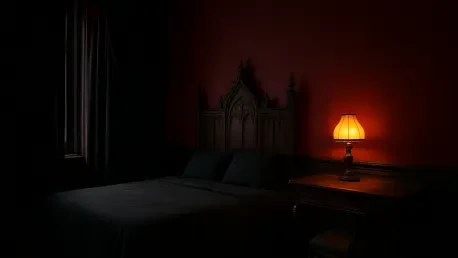
The interior design of the property serves as a deliberate antithesis to the bright, clinical aesthetics of modern high-end hotels. Instead, the design team opted for a palette dominated by “midnight black” woodwork and deep crimson tones, which together create a moody and contemplative atmosphere. This aesthetic choice is not intended to be somber but rather to evoke a sense of timeless wonder and mystery. Heavy, floor-to-ceiling drapery and plush carpets provide a sense of acoustic isolation, allowing the outside world to fade away the moment a guest steps inside. Industrial elements, including wrought-iron accents that pay homage to 19th-century engineering, are seamlessly integrated into the decor. This marriage of industrial grit and plush comfort creates a “haunt-like” environment that feels both exclusive and welcoming, catering to a demographic that values individuality and theatricality in their choice of lodging while maintaining high standards of modern luxury.
Olfactory Identity: Scent as a Narrative Anchor
Beyond visual appeal, the hotel utilizes a bespoke olfactory identity to ground guests in its unique narrative. A signature fragrance named “Freyr,” after the Norse deity of abundance, is diffused throughout the common areas. This scent, which features a complex blend of patchouli, amber, vetiver, and myrrh, acts as a psychological anchor, reinforcing the property’s magical identity through sensory memory. This commitment to detail ensures that the “spell” of the atmosphere remains unbroken by modern scents or industrial cleaners. Complementing this is the meticulous use of lighting and sound; shadow and light are balanced to highlight architectural details while keeping the overall mood intimate. The sensory experience is designed to be cohesive, where every touchpoint—from the texture of the wall coverings to the subtle background acoustics—works in concert to maintain a high level of immersion. This holistic approach to sensory branding represents a significant trend in the luxury sector.
Architectural Magic and Secret Spaces
The Art of Discovery: Navigating Theatrical Layouts
Connected to its neighbor, 1898 The Post, the Porter’s House acts as a theatrical playground where the architecture itself encourages exploration. Guests encounter a series of playful oddities, such as concealed entryways that are operated by hidden buttons, fostering a sense of secrecy and exclusivity. Perhaps the most striking feature is a double stairwell designed as an optical illusion; it disorients the visitor in a way that makes ascending or descending feel like part of a choreographed performance. These architectural “easter eggs” ensure that the act of moving through the building is an engaging activity rather than a functional necessity. This playfulness extends to the room layouts, where the use of space is often unconventional to accommodate the original 19th-century footprint of the townhouse. By embracing these quirks, the hotel provides a sense of discovery that is rare in modern construction, where standardized layouts often dominate for the sake of cost-efficiency.
Tailored Luxury: Integrating Wellness and Specialized Amenities
The guest rooms are masterpieces of personalized luxury, specifically curated for special occasions and travelers seeking a dramatic setting. Notable amenities include advanced wet rooms featuring twin rainforest waterfall showers and private terraces equipped with copper ice-plunge baths, allowing for a secluded wellness experience during the winter months. To maintain the immersive historical atmosphere, modern conveniences such as integrated climate control and high-speed connectivity are cleverly hidden within the vintage decor, ensuring the “spell” of the 19th-century setting remains unbroken. The hotel’s status is further reinforced through its partnership with Guerlain, an exclusive French beauty house that typically limits itself to one partner per city. This commitment to elite standards extends to the culinary experience at “The Kitchen,” where an extensive breakfast of approximately 80 items moves away from rigid menus toward a more bespoke, buffet-style preference.
A New Vision for Narrative Luxury
Strategic Insights: Lessons for the Boutique Hospitality Sector
For hospitality developers and designers, the 1898 Porter’s House provided a blueprint for integrating heritage preservation with modern luxury. One key takeaway was the importance of exclusive partnerships, such as the collaboration with Guerlain, which added a layer of prestige to the boutique experience. Additionally, the move away from rigid dining menus toward a more bespoke selection demonstrated a preference for flexibility among high-end guests. Future projects considered how hidden technology and specialized wellness features, like the copper ice-plunge baths, were integrated without breaking the historical illusion. By prioritizing atmospheric consistency and sensory depth, developers were able to create a product that resonated on a deeper level. This approach suggested that the future of luxury lay in the ability to deliver intimate, story-driven environments that offered a departure from the ordinary, proving that narrative-driven design was a sustainable strategy.
The Future of Immersion: Shifting Trends in High-End Travel
The success of this property underscored a broader shift in the hospitality industry toward “narrative luxury.” Travelers in the current landscape were increasingly seeking accommodations that offered a distinct personality and a break from the predictable nature of global chains. The fusion of heritage architecture with whimsical, fantasy-inspired elements represented a move toward more evocative and dramatic spaces that prioritized mood and individuality. This trend was expected to grow from 2026 to 2030, as boutique hotels increasingly competed on the basis of their story rather than just their basic amenities. By creating a “world within a world,” the hotel offered a sanctuary for those who wished to escape the digital noise of the modern era. This model proved that properties could achieve elite status by focusing on specific thematic niches, appealing to the intellectually curious who viewed travel as a form of cultural and emotional exploration.