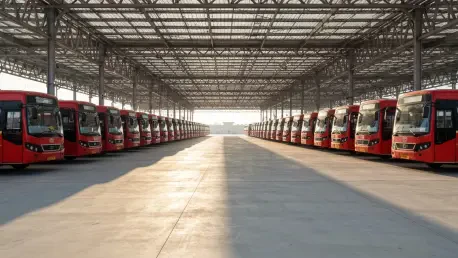

As millions of residents and visitors across Karnataka finalize their travel arrangements for the beginning of the new year, a significant shadow of uncertainty looms over the state’s public transportation network, threatening to bring daily life to a grinding halt. A high-stakes labor dispute between the state government and its transport employees is rapidly escalating, making a massive, statewide bus strike in the first week of January appear all but inevitable. Employees of the Bangalore Metropolitan Transport Corporation (BMTC) and the Karnataka State Road Transport Corporation (KSRTC) are mobilizing for a large-scale shutdown following the collapse of multiple rounds of negotiations. Even talks helmed by senior ministers failed to produce a resolution to the long-standing demands from the workforce. With communication at a standstill and patience worn thin, a consensus has emerged among union leaders that drastic action is the only remaining option, setting the stage for a confrontation that could paralyze a system relied upon by lakhs of commuters every single day.
Deep-Seated Frustration Fuels Mobilization
At the heart of this impending industrial action is a deep-seated and simmering frustration among transport staff who feel their legitimate concerns have been systematically ignored by the administration. The core demands, centered around crucial issues like comprehensive wage revisions and the improvement of service benefits, are not new developments but rather the culmination of a protracted struggle. Despite previous protests and repeated attempts to engage in constructive dialogue, workers believe their appeals have fallen on deaf ears, leading to a profound sense of neglect. In response to this perceived government inaction, transport unions have initiated a robust and coordinated mobilization campaign. Union representatives are actively distributing pamphlets and conducting a series of strategic meetings across depots throughout the state. The goal is to unify the workforce and prepare for what is being described as a “much larger and more organized agitation” than any seen in recent years, signaling a significant escalation in their fight for better working conditions and fair compensation.
Widespread Disruption on the Horizon
The potential fallout from this organized shutdown represented a scenario of widespread public disruption with significant economic and social consequences. A complete halt of government-run bus services would have immediately and severely impacted the daily lives of countless commuters, particularly in densely populated urban centers like Bengaluru, where the BMTC and KSRTC networks form the backbone of the public transit system. The strike action, had it proceeded, would have left lakhs of people stranded, affecting their ability to travel to work, school, and access essential services. The sudden absence of this critical infrastructure would have created a cascade of problems, from severe traffic congestion as people turned to private vehicles, to overwhelming the limited capacity of alternative transport options. This situation ultimately highlighted the critical dependency of the state’s population on its public transport employees and served as a stark lesson on the severe societal costs incurred when labor disputes of this magnitude are allowed to reach a breaking point.