
Katarina Railko brings a wealth of specialized knowledge to the hospitality sector, having honed her expertise through years of navigating the complex intersections of travel, tourism, and large-scale entertainment events. As a prominent voice in the industry, she has played a pivotal role in analyzing how global brands adapt to shifting market demands, from the rise of experiential luxury to the operational intricacies of branded residences. In this conversation, we explore the strategic maneuvers behind recent record-breaking growth across Europe, the Middle East, and Africa, examining how historical conversions, midscale expansion, and major acquisitions are reshaping the regional landscape.
Conversions and adaptive reuse projects now account for nearly half of new regional signings. How does this strategy impact development timelines compared to ground-up builds, and what specific design hurdles do collection brands face when retrofitting unique historical structures like those found in Luxembourg or Krakow?
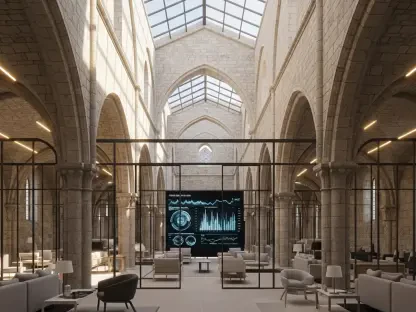
Adaptive reuse is a powerful tool because it allows us to enter prime, high-barrier markets much faster than a traditional ground-up construction, which can often be stalled by zoning or long-term excavation. By utilizing existing shells, we can significantly shave months or even years off the initial development phase, which is crucial when we are looking at 230 new signings in a single year. However, projects like the H15 Palace in Krakow or the Marriott Hotel Alfa in Luxembourg present unique architectural puzzles where we must integrate modern luxury standards into rigid, historic footprints. We often have to navigate centuries-old structural constraints, such as non-standard room dimensions or protected facades, while ensuring the property still delivers the seamless digital and physical experience guests expect. It requires a delicate balance of preservation and innovation to turn a storied building into a functional, high-performing hotel asset.
The luxury segment recently reached a record of 40 signed deals, with St. Regis and EDITION leading the expansion. What specific guest demographics are driving this high-end demand in emerging markets like Tashkent, and how do you maintain service consistency across such diverse geographic locations?
The surge in luxury demand is being propelled by a new generation of high-net-worth travelers who prioritize cultural immersion and “new frontier” destinations over traditional hubs. In markets like Tashkent, we are seeing a mix of intrepid luxury tourists and a booming corporate sector that demands the sophisticated infrastructure provided by brands like JW Marriott. To maintain consistency across 40 new luxury signings, we rely on a rigorous global training framework that translates core brand values into local cultural contexts. Whether it is a resort in Bodrum or a city hotel in Jeddah, the goal is to ensure that the “anticipatory service” synonymous with St. Regis feels authentic to the location while meeting our uncompromising global benchmarks. This consistency is what allows us to successfully integrate nearly 24,000 new rooms into the portfolio without diluting the prestige of the brands.
Branded residential deals in the Middle East and Africa have seen a 70% increase in the pipeline since late 2023. What unique operational challenges arise when managing permanent residences versus traditional hotel rooms, and how do these properties influence the long-term value of the surrounding local real estate?
Managing a branded residence, such as the Dubai Beach EDITION or the Ritz-Carlton Residences in Cairo, requires a shift from transient hospitality to long-term community management. The operational challenge lies in providing 24/7 personalized service for permanent owners while maintaining the exclusivity and privacy of a home environment. These 60 pipeline projects represent a commitment to lifestyle longevity, where the brand acts as a guarantor of quality and security for the homeowner. Beyond the walls of the property, these developments act as massive value anchors, often lifting the price per square foot for the entire surrounding neighborhood. When a globally recognized name enters a market like Al Reem Island, it signals a level of maturity and stability that attracts further investment and high-end retail development.
Midscale brands like Four Points Flex by Sheraton are expanding rapidly across Germany, Austria, and Italy. What are the core logistical requirements for launching midscale and extended-stay brands like StudioRes, and how do these offerings compete with established local boutique providers in mature European markets?
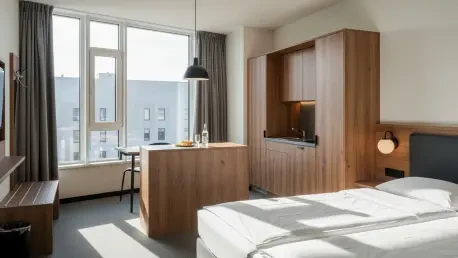
The launch of Four Points Flex, which saw 23 openings in 2025 alone, is built on a model of efficiency and high-speed conversion. For midscale and extended-stay brands like StudioRes, the logistical priority is a streamlined operating model that reduces overhead while maximizing the utility of every square meter. We compete with local boutique providers by offering the massive reach of our loyalty programs and a level of standardized reliability that independent hotels often struggle to match at scale. In mature markets like Germany and Italy, travelers are increasingly looking for value-driven stays that don’t sacrifice modern essentials like high-speed connectivity and functional design. By bringing 4,300 rooms online in this segment, we are providing a dependable, branded alternative that bridges the gap between budget lodging and full-service hotels.
Recent acquisitions, such as the citizenM brand, have contributed significantly to a 7.8% net room growth across the region. How does the integration process for a newly acquired brand work within your existing digital platforms, and what specific metrics determine the long-term success of these portfolio additions?
Integrating a brand like citizenM is a complex technical feat that involves migrating thousands of rooms and guest profiles into our centralized digital ecosystem within a single quarter. The process ensures that these 19 new properties immediately benefit from our global distribution systems and reservation engines, allowing for a seamless transition for loyal guests. We measure long-term success through a combination of RevPAR growth, owner satisfaction, and the speed at which the new inventory is adopted by our existing loyalty member base. Achieving a 7.8% net room growth is only the first step; the true metric of success is seeing these acquired properties outperform their local competitors once they are fully plugged into our operational “motherboard.” It is about taking an already successful brand and amplifying its reach through our massive global infrastructure.
Saudi Arabia and the United Arab Emirates remain among the highest growth markets for new signings. What specific infrastructure or tourism trends are fueling this concentration of development, and how are you adapting your staffing models to meet the rapid increase in room inventory in these regions?
The growth in Saudi Arabia and the UAE is fueled by massive national “Vision” projects and a strategic shift toward becoming global tourism and transit hubs. With high-profile signings like the St. Regis Jeddah Corniche and projects in the Red Sea, we are seeing a literal transformation of the landscape through unprecedented infrastructure investment. To keep pace with this rapid expansion, we are moving away from traditional hiring toward large-scale talent incubation programs that develop local workforces. This localized staffing model is essential not just for filling thousands of new roles, but for ensuring that the guest experience is rooted in the hospitality traditions of the region. As we add more inventory, our ability to scale human capital becomes just as important as our ability to sign new development deals.
What is your forecast for the EMEA hospitality market?
I anticipate that the EMEA market will see a continued blurring of the lines between living, working, and traveling, driven by the expansion of branded residences and midscale extended-stay models. We are moving toward a period where flexibility is the primary currency, and brands that can offer a high-quality experience across various price points—from the 100th Moxy hotel to ultra-luxury resorts—will dominate the landscape. I expect the pipeline of 113,000 rooms to continue growing as investors seek the security of established global platforms in an increasingly volatile economic environment. Ultimately, the region is poised for a “flight to quality,” where the most adaptable and digitally integrated portfolios will capture the lion’s share of both corporate and leisure travel demand.