
In a remarkable shift for a region long celebrated for its sun-drenched coastlines, the Turkish province of Mugla has successfully redefined its global appeal, drawing an unprecedented 1.3 million visitors to its museums and archaeological sites in 2025. This achievement, confirmed by officials in early January, marks a watershed moment, shattering previous records and firmly establishing the province as a premier destination for cultural and historical tourism. The surge represents more than just a successful year; it signifies the triumphant result of a concerted strategy to unlock the region’s vast repository of ancient history, moving beyond seasonal tourism to cultivate a year-round appreciation for its rich Carian, Lycian, Byzantine, and Ottoman heritage. This strategic pivot, fueled by ambitious government projects and a growing international appetite for authentic historical experiences, has not only diversified the local economy but has also cast a global spotlight on Mugla’s role as a crucial custodian of world history.
A Strategic Shift Toward Heritage
The Heritage for the Future Initiative
A key catalyst behind this transformation was the “Heritage for the Future” project, a government-led initiative that fundamentally altered the landscape of archaeological work in the region. Previously, excavations at Mugla’s numerous historical sites were largely seasonal endeavors, limited to a few months a year. This program boldly extended the excavation season at twelve key locations to a year-round operation. This single change had a cascading effect, turning dormant historical sites into dynamic centers of continuous discovery. The constant activity provided a steady stream of new findings, from intricate mosaics to previously unknown structures, which in turn generated sustained international media and academic interest. This approach also fostered a more stable employment environment for local communities, creating year-round jobs for skilled laborers, conservation experts, and support staff. By transforming these sites into living laboratories of history, the initiative ensured that there was always something new for repeat visitors to see and for global audiences to learn about, effectively making Mugla’s ancient past a subject of present-day fascination and a powerful engine for tourism.
This year-round operational model was complemented by a far more sophisticated and targeted international promotional strategy. Recognizing that the modern cultural tourist is well-researched and seeks deep, authentic experiences, authorities moved beyond generic travel advertising. Instead, they forged partnerships with international universities, sponsored academic symposiums, and collaborated with documentary filmmakers to showcase the scientific importance of the work being done in Mugla. Digital outreach campaigns highlighted specific new discoveries in real-time, targeting niche audiences interested in classical history, archaeology, and Byzantine art. By focusing on the narrative of discovery, these campaigns positioned Mugla not just as a place to see ruins, but as a place to witness history being actively uncovered. This approach successfully attracted a new demographic of travelers, those who are more inclined to travel in the off-season and are more invested in the educational aspects of their journeys, aligning perfectly with the goal of establishing a sustainable, 12-month tourism calendar that values preservation and scholarship alongside visitor experience.
Economic and Cultural Ramifications
The economic implications of this strategic shift have been profound, effectively breaking the region’s long-standing dependency on the summer tourism season. The transition to a 12-month cultural tourism model has created a more resilient and diversified local economy. Hotels, restaurants, and tour operators that once faced a dramatic drop in business during the autumn and winter months now see a more consistent flow of visitors. According to Provincial Director of Culture and Tourism Huseyin Toprak, Mugla stands as a national leader in archaeology, with its landscape dotted by over 1,000 known ancient settlements and 25 active excavation sites. The year-round work at these locations provides stable, skilled employment and stimulates a host of ancillary industries, from transportation and logistics to specialized conservation services. This economic stability reduces the seasonal unemployment that has historically challenged coastal communities and fosters a greater sense of investment in the preservation of the local heritage, as its economic value becomes undeniable to residents.
Beyond the immediate economic benefits, the initiative has yielded significant cultural and academic rewards that enhance Mugla’s international standing. The continuous unearthing of artifacts and architectural remains from civilizations like the Carians and Lycians provides invaluable new data for historians and archaeologists worldwide, solidifying the province’s role as a critical hub for the study of ancient Anatolia. This influx of scholarly interest leads to international collaborations, academic publications, and traveling exhibitions that carry the story of Mugla’s heritage to a global audience. The new discoveries enrich the collections of local museums and provide compelling new narratives for tour guides, enhancing the overall visitor experience. This creates a virtuous cycle: as Mugla’s reputation as a center for serious archaeological research grows, it attracts more scientific investment and more intellectually curious tourists, further cementing its identity as a world-class cultural destination where the past is not only preserved but is also a vibrant part of the present.
Highlighting the Premier Attractions
Stars of the Archaeological Landscape
Among the dozens of historical sites, the ancient city of Knidos emerged as the most-visited archaeological destination in 2025. Perched dramatically on the tip of the Datca Peninsula, its historical significance as a thriving center of art, science, and commerce in the Hellenistic period is palpable. The city’s unique terraced layout, with an upper and lower town connected by a grand staircase, offers visitors a stunning journey through its past. The year-round excavations have likely contributed to its popularity by continuously revealing new facets of daily life in the ancient port, from residential quarters to workshops and public buildings. Visitors are drawn not only to its famous landmarks, such as the ruins of the Temple of Aphrodite and its well-preserved amphitheater, but also to the sense of ongoing discovery. The ability to see archaeologists at work and to learn about the latest findings transforms a simple visit into an engaging, real-time historical exploration, making Knidos a prime example of how active research can dramatically enhance the appeal of a heritage site for the modern traveler.
In a compelling contrast to the classical grandeur of Knidos, the historic “ghost village” of Kayakoy ranked as the second most popular archaeological site, captivating visitors with its more recent and poignant history. Once a thriving community of Anatolian Greeks, the village was abandoned in the 1920s, leaving behind hundreds of stone houses, chapels, and schools in a state of haunting preservation. Walking through its silent, cobbled streets offers a powerful, atmospheric experience that speaks to themes of displacement and the passage of time. The appeal of Kayakoy lies in its ability to evoke a deep emotional connection with the past. Its popularity demonstrates the breadth of Mugla’s historical offerings, proving that the region’s narrative extends far beyond ancient ruins. By promoting sites like Kayakoy alongside classical cities, Mugla successfully catered to a wider range of interests, attracting not only those fascinated by antiquity but also visitors drawn to social history, architectural heritage, and the powerful human stories embedded in the landscape.
Museums Setting New Standards
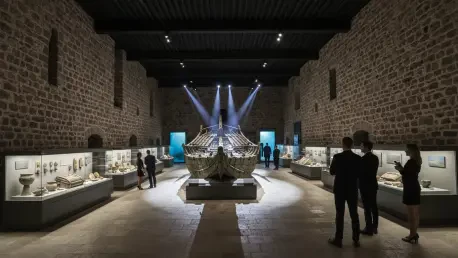
In the museum category, the Bodrum Underwater Archaeology Museum, uniquely situated within the formidable walls of Bodrum Castle, attracted the highest number of visitors. As Türkiye’s only institution dedicated exclusively to underwater archaeology, it offers a captivating glimpse into the maritime history of the Aegean. Its world-renowned collection features remarkably preserved shipwrecks, including the famous Uluburun shipwreck from the Bronze Age, along with their diverse cargoes of glass, copper ingots, and precious artifacts. These exhibits provide a tangible link to ancient trade routes and the lives of the mariners who navigated them thousands of years ago. A highly successful “night museum” initiative further boosted its appeal, allowing visitors to explore the castle and its collections under dramatic evening lighting. This innovative approach not only extended operating hours but also created a distinct, more atmospheric experience, attracting both first-time guests and local residents and proving to be a major draw for the public throughout the year.
Following closely in popularity was the Marmaris Museum, another institution that benefits from its historic setting within Marmaris Castle. While smaller than its Bodrum counterpart, its well-curated exhibits provide a comprehensive overview of the region’s history, from antiquity through the Ottoman era. The museum’s success underscores the effectiveness of the province-wide strategy to elevate all its cultural institutions, ensuring that visitors have high-quality experiences beyond the most famous sites. The combined success of these museums, along with the broader network of archaeological parks, illustrates a cohesive and well-executed vision for cultural tourism. By improving access, introducing innovative programs like night openings, and continually refreshing exhibits with new findings from the ongoing excavations, Mugla has transformed its museums from static repositories into dynamic centers of learning and engagement, solidifying their role as essential pillars in the region’s tourism economy.
A New Chapter in Cultural Legacy
The record-breaking visitor numbers of 2025 were not merely a statistical anomaly but represented the successful culmination of a deliberate and visionary strategy that redefined Mugla’s identity on the global stage. This landmark year was the moment the province decisively pivoted from a reputation built primarily on seasonal coastal resorts to one founded on its profound and accessible historical heritage. The strategic implementation of year-round excavations, coupled with targeted international promotion and innovative museum programming, laid a durable foundation for a new, sustainable tourism model. This achievement demonstrated that a deep investment in cultural preservation and scholarly research could yield immense economic and reputational dividends, establishing a blueprint for other historically rich regions to follow. The groundwork established in 2025 cemented Mugla’s status not just as a vacation spot, but as a vital, year-round hub for discovering and understanding the layered history of Anatolian civilizations.