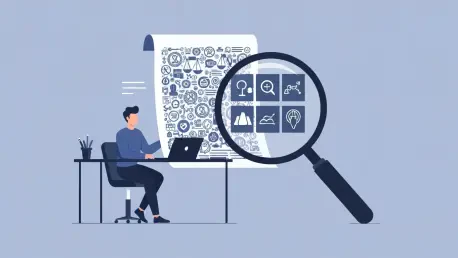

That seemingly straightforward 35% discount for a summer hotel getaway is considerably more than a simple marketing offer; it represents the front door to a sophisticated legal framework that dictates how your personal data will be handled and what you are permitted to do on a website. This guide provides the tools to look behind the curtain of promotional content, demystifying the complex policies that govern nearly every click, scroll, and transaction in the digital world. By understanding these rules, you can move from being a passive user to an informed digital citizen.
The Hidden Contract Understanding the Rules Behind Every Click
Every interaction online, from accepting a cookie banner to signing up for a newsletter, constitutes a form of tacit agreement. A promotional offer for a discounted hotel stay is not merely a commercial transaction; it is intertwined with data privacy stipulations and content usage rights that most users overlook. This unseen legal architecture is designed to protect the website’s commercial interests while complying with a patchwork of regulations. The key to digital literacy is recognizing that these interactions are never without conditions.
Understanding this hidden contract is crucial because it governs the fundamental exchange of the modern internet: user data for service access. The convenience of a personalized feed or a targeted discount comes at the cost of providing information about your habits, preferences, and identity. Deconstructing the policies behind these offers reveals the true nature of this bargain. It allows you to assess whether the value of the service offered is worth the data you are implicitly agreeing to share, shifting the balance of power back toward the user.
The Digital Handshakes Evolution From Simple Terms to Complex Data Ecosystems
In the early days of the internet, a website’s “Terms of Service” was a relatively simple document outlining basic rules of conduct. However, the digital landscape has since transformed into a complex ecosystem fueled by data. The rise of data monetization, where user information becomes a valuable commodity, has driven the evolution of these policies from straightforward guidelines into dense, multi-layered legal documents. This shift was accelerated by the proliferation of sophisticated tracking technologies, such as cookies and pixels, that allow for granular monitoring of user behavior across the web.
This expansion of data collection practices did not go unnoticed. Legislative bodies around the world responded with landmark regulations like the General Data Protection Regulation (GDPR) in Europe and the California Consumer Privacy Act (CCPA). These laws imposed new obligations on companies regarding data handling, transparency, and user consent. Consequently, modern website policies are a complex fusion of a company’s commercial ambitions, its legal duties to comply with these regulations, and the frameworks established to manage user rights.
A Step by Step Guide to Decoding Website Policies
Step 1 Analyzing the Gateway The Promotional Offer
Look Past the Savings Connecting an Offer to Data Collection
A promotional discount is often the primary vehicle for securing user consent to a website’s policies. While the immediate appeal is the financial saving, the company’s objective extends to data acquisition. The act of claiming an offer typically requires agreeing to terms that permit the collection and use of your personal information for marketing, analytics, and advertising. This connection is rarely advertised but is almost always present in the accompanying disclaimers or linked policy pages.
To properly analyze this gateway, it is essential to locate the fine print associated with any offer. Look for hyperlinks to “Terms and Conditions,” “Privacy Policy,” or other disclosures. These documents will outline how the data you provide to receive the discount will be used. It is in these sections that the website makes the explicit, though often buried, connection between the promotional benefit and the data collection it enables, setting the stage for all subsequent interactions.
Identify the Trade Off What Your Agreement Implicitly Grants
The core of the agreement is a trade-off: you receive a tangible benefit, like a reduced hotel rate, and in exchange, you grant the website a license to use your data. This permission is not limited to the single transaction. By accepting the offer, you implicitly grant the company the right to place cookies on your device, track your browsing activity on their site, and use this information to build a profile for targeted advertising.
This implicit grant has long-term implications. The data collected from this initial interaction can be aggregated with information from other sources, creating a detailed and valuable user profile. This profile is then used to fuel future marketing campaigns and business analytics. Understanding this trade-off is the first step toward making a conscious decision about whether the convenience or savings offered is worth the breadth of permissions you are providing.
Step 2 Interpreting Your Data Privacy Controls
The Illusion of Anonymity Opted Out Doesnt Mean Invisible
Many websites now feature privacy controls that allow users to “opt out of the sale or sharing” of their personal information. While this sounds comprehensive, it operates within a very specific legal definition. Activating this option typically prevents a company from selling your directly identifiable data, such as your name and email address, to third-party data brokers. However, it does not stop the website itself from collecting your data for its own purposes.
This creates an illusion of anonymity where a user believes they have become invisible to tracking, but in reality, data collection continues unabated. The website can still gather information about your on-site behavior, preferences, and interactions. This data is then used internally for what are classified as primary business functions, including serving personalized content and interest-based advertisements directly from the company.
Follow the Data How Cookies and Trackers Fuel the Business Model
The primary mechanisms for this ongoing data collection are cookies, pixels, and other tracking technologies. When you visit a site, these small files are placed on your device, acting as unique identifiers that monitor your activity. They record which pages you visit, how long you stay, and what links you click, creating a detailed log of your digital footprint on that platform.
This tracked data is the engine of the modern digital business model. It powers analytics platforms that help companies understand user engagement and optimize their services. More importantly, it fuels their advertising revenue streams. By understanding your interests through your browsing history, the website can serve highly targeted ads, which are more valuable to advertisers and more likely to result in a conversion, thus generating income for the platform.
Connecting the Dots When Non Identifiable Data Becomes Personal
Websites often describe the data collected via cookies as “non-identifiable” because the cookie itself does not contain your name or contact information. It contains a unique string of characters assigned to your browser. This distinction, however, can be misleading. While the cookie ID is anonymous in isolation, it is easily linked to your personal identity.
The connection is made the moment you log in, make a purchase, or submit a form with your personal details. At that point, the website can associate the entire browsing history stored with that cookie ID to your specific account. What was once a collection of anonymous data points becomes a rich, identifiable profile of your preferences and behaviors, effectively erasing the line between non-identifiable and personal data.
Step 3 Understanding Content Ownership and Your Usage Limits
The Golden Rule Personal Non Commercial Use Only
A fundamental principle of website terms of service is the protection of intellectual property. All content on a site, including text, images, graphics, and code, is considered proprietary unless explicitly stated otherwise. As a user, you are granted a limited, revocable license to access and view this content for “personal, non-commercial use only.” This clause is the cornerstone of content ownership.
This rule strictly defines the boundaries of acceptable use. It means you can read an article for your own information or view images for personal enjoyment. However, it prohibits you from reproducing, distributing, or using the content for any commercial purpose. For instance, you cannot copy an article to your own monetized blog or use a website’s product photos in your own e-commerce venture without explicit permission, as doing so would infringe on the owner’s copyright.
The Digital No Trespassing Sign Prohibitions on Bots and Scrapers
To enforce content ownership, nearly all websites include clauses that expressly forbid the use of automated systems to access their content. Tools like robots, web crawlers, and scrapers are designed to systematically and rapidly extract large amounts of information from a website. These prohibitions function as a digital “No Trespassing” sign, legally barring automated data harvesting.
The rationale behind this prohibition is twofold. First, high-volume automated requests can place a significant strain on a website’s servers, potentially degrading performance for legitimate human users. Second, and more critically, scraping allows third parties to steal a site’s most valuable asset: its content. This could include anything from flight prices and product listings to news articles and user reviews, all of which a competitor could repurpose.
Protecting the Asset How Usage Restrictions Safeguard a Sites Revenue
Ultimately, these strict usage restrictions are in place to protect a website’s revenue and business model. The content on a site is the product of significant investment in time, expertise, and resources. If that content could be freely copied and republished elsewhere, the original site would lose its unique value proposition, leading to a decline in traffic and, consequently, advertising or subscription revenue.
By legally defining how content can be used and prohibiting automated extraction, a company safeguards its competitive advantage. These terms ensure that the website remains the authoritative and primary source for its information, forcing users and competitors to engage with the platform on the company’s terms. This control is essential for maintaining the site’s market position and ensuring its long-term financial viability.
Your Policy Navigation Checklist Key Principles at a Glance
Synthesizing these complex topics into a few core principles can help clarify the rules of engagement. This checklist serves as a quick reference for navigating the digital landscape with greater awareness.
- Offers Have Strings Attached: Promotions are entry points for data collection and policy agreement.
- Privacy Choices are Nuanced: Opting out of data sales is not the same as opting out of all tracking.
- Content is Not Free-Use: Assume all content is proprietary and protected unless explicitly stated otherwise.
- Automated Access is Prohibited: Websites actively forbid scraping to protect their intellectual property and business model.
The Bigger Picture Your Role in the Digital Economy
Website policies should not be viewed as static legal documents but as the terms of an ongoing negotiation between user convenience and corporate data strategy. Every time you use a service, you are participating in a value exchange where your data and attention are the currency. The intricate rules outlined in these policies are designed to maximize the value of that currency for the service provider, often at the expense of user privacy or control.
Understanding these terms empowers you to make more deliberate and informed decisions within this data-driven world. It transforms the act of clicking “accept” from a mindless habit into a conscious choice. By knowing what data is being collected and how content can be used, you can better evaluate whether a service’s benefits are worth the permissions you are granting, allowing you to engage in the digital economy on your own terms rather than on terms dictated to you.
The digital landscape continues to evolve, with new technologies presenting both opportunities and challenges. The integration of artificial intelligence into data collection and analysis, for example, promises to make these systems even more sophisticated. AI may be used to create more personalized user experiences, but it could also enable more pervasive tracking and more complex methods of policy enforcement, further shifting the dynamics of the digital negotiation.
Becoming a Savvy Digital Consumer Your Path Forward
The journey through the dense text of website policies ultimately revealed that true digital literacy was about more than just navigating interfaces; it was about understanding the foundational rules that govern them. It became clear that every online action, no matter how small, was a form of agreement, carrying with it significant implications for personal data and content rights. This knowledge provided the framework for a more conscious and controlled digital existence.
With this understanding, users were equipped to take proactive steps. They learned to critically evaluate the terms of new services before committing and to actively manage privacy settings within their browsers and applications. By applying these analytical skills to their own online activities, they moved beyond being passive consumers of digital content and became informed participants who could confidently navigate the complexities of the modern internet.