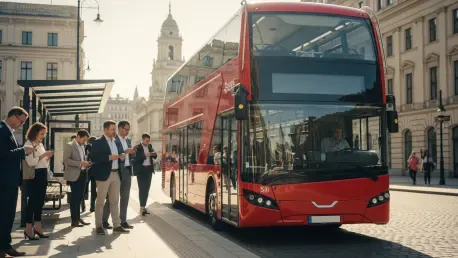

A highly successful initiative providing free park and ride bus travel, credited with significantly reducing city-center traffic, now faces an uncertain future as its March expiration date looms, prompting a strong call for its extension from transport leaders. Implemented on October 29 to coincide with Oxford’s new congestion charge, the program has demonstrated remarkable efficacy in shifting commuter habits towards public transportation. Luke Marion, the managing director of the Oxford Bus Company, is now championing the continuation of the free service, initially proposing an extension through the end of August and ideally for the entire duration of the congestion charge trial. The core of his argument rests on compelling data from the scheme’s initial months, which revealed a dramatic and positive impact on ridership and traffic flow. The debate now centers on whether this short-term success can be translated into a long-term, sustainable transport solution for the city, balancing proven benefits against future financial planning and council oversight.
A Resounding Success Story
The statistical evidence from the program’s first two months paints a clear picture of its overwhelming success and immediate impact on public transport usage. Data collected showed an impressive 44.6% growth in park and ride journeys across Oxford Bus Company services, a figure that represents 119,172 additional trips and an influx of over 10,800 new weekly users when compared to the same period in the previous year. The effect was not uniform across all locations, with the Redbridge park and ride facility emerging as a particular success story, experiencing a staggering 63% surge in usage. This substantial increase in passenger volume directly demonstrates the public’s willingness to embrace park and ride options when financial barriers are removed. The figures provide a powerful, data-driven argument for proponents of the extension, who see the initiative not as a temporary promotion but as a vital tool in reshaping the city’s transportation landscape for the better, making a tangible difference in daily commuter patterns.
This surge in ridership has translated directly into noticeable improvements in traffic congestion and the reliability of the city’s bus network. Luke Marion highlighted that the reduction in private vehicle journeys has had a tangible effect on traffic flow, particularly along the historically congested Abingdon Road. With fewer cars on the road, bus services have been able to operate with greater punctuality and efficiency, creating a positive feedback loop where improved service quality further encourages the use of public transport. The initiative, which is funded by surplus revenue generated from the new congestion charge, has effectively demonstrated a model where a levy on city-center driving directly finances a more appealing and effective alternative. The success of this synergy underscores the potential for integrated transport policies to achieve significant environmental and logistical goals, making the case for the program’s extension a matter of both public convenience and strategic urban planning.
The Economic and Strategic Imperative
Beyond the immediate traffic benefits, advocates for the extension emphasize the crucial role of long-term planning for Oxford’s vibrant visitor economy. Luke Marion has argued that a commitment to continue the free park and ride service, especially through the busy summer tourist season, would provide essential clarity and stability for both visitors and local businesses. A predictable and cost-free travel option into the city center is a significant draw for tourists, who might otherwise be deterred by the complexities and costs of navigating a new city. By confirming the program’s continuation, the council would send a clear, welcoming message to visitors, thereby supporting the local hospitality sector, retailers, and attractions that depend heavily on seasonal tourism. This perspective is echoed by Independent city councillor David Henwood, who also supports the extension, suggesting that the necessary funding is readily available from the revenue generated by congestion charge fines, making it a financially viable as well as strategically sound decision for the city’s economic health.
As the March deadline approached, the discussion reached a critical point, with the Oxfordshire County Council adopting a more measured and cautious position. Andrew Gant, the cabinet member for transport management, confirmed that the council was actively monitoring the program’s usage data and its wider effects on the city’s transport network. While the initial results were promising, the council’s official stance was to await the conclusion of the current trial period before making any long-term commitments. The council acknowledged it was considering how best to allocate the income generated from the congestion charge for the period following March 2026, but it stopped short of guaranteeing that the funds would be used to prolong the free travel offer. This created a tension between the immediate, data-backed success celebrated by transport operators and the council’s more deliberative, long-range planning process, leaving the future of this popular and effective program in a state of deliberation.