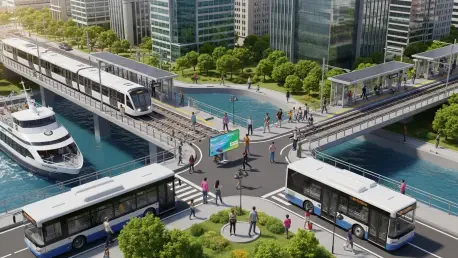

The fundamental success of an international vacation often hinges on the invisible efficiency of a destination’s transportation network rather than its famous landmarks or culinary offerings. In the contemporary travel landscape of 2026, the traditional reliance on expensive taxis and unpredictable rideshare applications has begun to fade as global infrastructure reaches new heights of sophistication. Data from the most recent Travel & Tourism Development Index suggests that travelers are increasingly prioritizing destinations where the ground infrastructure is so robust that the need for a private vehicle is entirely eliminated. This shift is not merely about cost savings; it is about the psychological freedom that comes from navigating a foreign city with the same level of confidence as a local resident. When a country successfully integrates its trains, buses, and ferries into a single, intuitive ecosystem, the guest experience is transformed from a series of logistical hurdles into a seamless journey of discovery and cultural immersion.
Switzerland and Japan: The Gold Standards of Integration and Rail Culture
Switzerland has established itself as the global benchmark for multi-modal coordination by prioritizing the synchronization of different transport types over mere high-speed travel. The Swiss Travel Pass serves as the primary engine for this convenience, granting visitors unlimited access to a dense web of intercity trains, local buses, and even lake-bound ferries. This “continuous motion” philosophy ensures that a traveler arriving at a train station finds a departing bus or boat timed to the minute, creating a flow that feels organic rather than scheduled. Furthermore, the inclusion of entry to over 500 museums within the transit credential turns the entire nation into a unified tourism park. In this environment, the reliability of the network is so absolute that hiring a taxi to reach a remote Alpine village or a city center gallery is often viewed as an unnecessary and less efficient alternative to the state-sponsored grid.
Building on the concept of systemic reliability, Japan offers a different but equally compelling model through its deeply ingrained “rail culture” that dictates the rhythm of daily life and tourism. The Japan Rail Pass remains the definitive tool for international visitors, providing access to a network that spans from the ultra-fast Shinkansen bullet trains to the smallest regional lines in rural prefectures. What distinguishes the Japanese experience is the extreme precision of its operations; a delay of even a few minutes is considered a significant anomaly. This level of punctuality allows tourists to plan complex itineraries involving multiple transfers with total peace of mind. While taxis are readily available in major hubs like Tokyo or Osaka, they are increasingly relegated to a niche role for those with specialized needs, as the rail system provides a faster, more predictable, and culturally authentic way to navigate the country’s diverse geography and urban landscapes.
Efficiency and Seamless Payments in Singapore and the Netherlands
Singapore serves as a masterclass in how a compact, highly developed city-state can leverage disciplined design to maximize the utility of every square inch of its transit network. The Mass Rapid Transit and bus systems are engineered to align perfectly with major tourist zones, shopping districts, and the iconic hawker centers that define the local culinary scene. By utilizing the Singapore Tourist Pass, visitors can bypass the stress of calculating individual fares, moving through the city with a sense of financial and logistical ease. The infrastructure is characterized by exceptional clarity, featuring widespread English signage and real-time digital displays that make the system intuitive even for those visiting for the first time. Because the trains run with such high frequency and are climate-controlled against the tropical heat, the convenience of public transit often surpasses that of a taxi, which must contend with the city’s strict traffic management systems.
In contrast to the physical design focus of Singapore, the Netherlands has prioritized the digital layer of transportation by removing nearly all friction from the payment process. The nationwide implementation of the OVpay system represents a significant technological leap, allowing tourists to use standard contactless debit or credit cards to check in and out of every tram, bus, and train in the country. This innovation eliminates the need for specialized transit cards or the often-confusing process of purchasing paper tickets from automated kiosks. Consequently, a traveler can enjoy a morning coffee in Amsterdam and spontaneously decide to visit the museums of The Hague or the architecture of Rotterdam without any prior logistical preparation. By making the payment infrastructure invisible and universal, the Dutch have ensured that the public network is the most elegant and logical choice for any visitor, leaving traditional car services as a redundant backup for the vast majority of itineraries.
Germany and Denmark: Regional Accessibility and 24/7 Connectivity
Germany’s approach to transit excellence is defined by its massive geographic breadth and the successful simplification of regional travel through innovative ticketing models. The introduction of the Deutschlandticket has standardized the visitor experience, providing a flat-rate structure that covers local and regional transport across the entire nation. This means a tourist in Berlin can use the same logic and credentials to navigate the U-Bahn as they would the S-Bahn in Munich or the tram networks in Hamburg. This consistency removes the “information overload” that often plagues travelers moving between different federal states, each with its own local transit authority. While the high-speed rail lines still require specific bookings, the local networks are so comprehensive and reliable that they serve as the default mode of transport. The availability of diverse transit options at every hour ensures that visitors feel connected to the heart of German culture without needing to rely on private car services.
Denmark, specifically its capital Copenhagen, has solved one of the most persistent challenges in tourism by providing a transit system that never truly sleeps. The 24/7 operation of the Copenhagen Metro ensures that the “last mile” problem is non-existent, whether a traveler is returning from a late dinner or heading to the airport for a pre-dawn flight. The integration of airport transfers into the standard City Pass further streamlines the arrival experience, allowing guests to move from the terminal to their hotel in minutes without ever engaging with a taxi queue. This commitment to constant availability creates a sense of security and freedom, as the city’s geography is always accessible regardless of the time. By addressing the specific pain points of late-night mobility and airport connectivity, the Danish system has successfully removed the primary reasons tourists typically feel forced to use taxis, making the metro and bus network a permanent and dependable utility for the modern explorer.
South KoreHigh-Tech Usability and Urban Speed
South Korea rounds out this elite group of nations by blending high-tech payment solutions with an incredibly dense urban infrastructure that often outperforms surface traffic. The T-money card system is the gold standard for usability, designed to be easily acquired and topped up by international visitors without the requirement of a local bank account or complex registration. This card functions as a universal key for subways, buses, and even some convenience stores across the entire country, making the transition between different cities feel routine and stress-free. In sprawling metropolises like Seoul, the subway network is built with such depth and connectivity that it effectively bypasses the heavy congestion found on the streets above. For a tourist, this means that taking the train is not just a cheaper option, but frequently the fastest way to reach a destination during peak hours.
The effectiveness of the South Korean model is further enhanced by the integration of digital tools and real-time data accessibility for non-Korean speakers. Navigation applications provide precise arrival times and carriage-specific information, allowing visitors to navigate the subterranean world of Seoul’s metro with total precision. This technological empowerment ensures that public transit remains the primary mode of discovery for international guests, as it offers a level of speed and reliability that taxis, stuck in the ebb and flow of city traffic, simply cannot match. Ultimately, the success of these seven nations illustrates that when a government invests in the intersection of physical infrastructure and digital simplicity, the resulting transit network becomes a powerful asset for the tourism industry. These systems have moved beyond being mere alternatives to car travel; they have become the preferred way to experience the world, offering a future where the journey is as effortless as the destination itself. In 2026, the global standard for travel was defined by these nations that prioritized the movement of people over the convenience of the private vehicle.