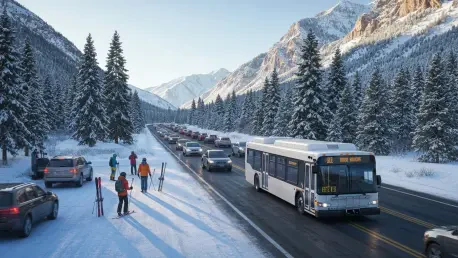

Imagine setting out for a crisp winter day in Big Cottonwood Canyon near Cottonwood Heights, Utah, only to find yourself trapped in a snarl of traffic, with 1,000 to 1,200 cars per hour clogging the narrow road. This isn’t a rare frustration—it’s the reality for countless visitors to this beloved outdoor escape, where congestion has reached a breaking point during peak times. The Utah Department of Transportation (UDOT) has stepped forward with an ambitious new plan, detailed in a recent environmental assessment, to address these mounting challenges along state Route 190 from Fort Union Boulevard to Brighton. Rather than chasing the effortless drives of decades past, the focus is on crafting reasonable travel times for the next 25 years as Utah’s population booms and outdoor recreation surges. With travel delays projected to double by 2050 without action, the urgency couldn’t be clearer, and UDOT’s $258.4 million strategy offers a pragmatic path forward.
This isn’t just about moving cars through a scenic canyon; it’s about reimagining how access to nature can coexist with skyrocketing demand. The plan, which shares $114 million in costs with a parallel effort for Little Cottonwood Canyon, blends innovative transit solutions, infrastructure upgrades, and traffic management to ease the strain. UDOT recognizes that relying solely on personal vehicles in such a confined mountain setting is unsustainable. Instead, the emphasis lies on creating a balanced system that prioritizes accessibility while safeguarding the canyon’s environmental value. As the phased rollout begins with design work this year and targets completion by 2028 or 2029, there’s a sense of cautious optimism that meaningful change is on the horizon, even as hurdles like funding gaps loom large.
Revamping Canyon Travel
Enhancing Public Transit for Smoother Journeys
Big Cottonwood Canyon’s traffic woes call for a bold shift, and UDOT is betting big on public transit to lead the charge. Partnering with the Utah Transit Authority (UTA), the agency plans to overhaul bus service from Fort Union Station in Midvale to Brighton, where trips currently take 36 minutes with a 30-minute frequency. The vision is to slash wait times to 10-15 minutes during winter by the decade’s end, with an even tighter 5-7 minute interval by 2050. Dedicated bus lanes, including a specialized “bus-only transitway” on Wasatch Boulevard and a priority lane near Brighton Loop Road, could trim travel down to just 25 minutes. This isn’t merely about speed—it’s about reliability, ensuring that visitors have a viable alternative to sitting in gridlock as personal vehicle delays threaten to spiral out of control.
Moreover, this transit push reflects a deeper understanding of the canyon’s unique constraints. Unlike sprawling urban corridors, mountain roads can’t simply be widened without sacrificing natural beauty or safety. By prioritizing buses over more asphalt, UDOT aims to cut through congestion without altering the canyon’s character. The shorter travel times could be a game-changer for skiers and hikers who often face unpredictable delays during peak winter months. If successful, this approach might not only ease frustration but also encourage a cultural shift toward public transit in recreational areas, setting a precedent for other high-traffic natural destinations across the state facing similar pressures.
Infrastructure as a Backbone for Change
Beyond transit, UDOT is laying the literal foundation for better canyon access through strategic infrastructure upgrades. A centerpiece of this effort is a proposed 1,750-space parking structure, or mobility hub, near Fort Union and Wasatch boulevards. This facility is designed to consolidate parking and steer visitors toward buses, reducing the flood of cars winding up the canyon. Additionally, new indoor bus stops with amenities like restrooms and lockers are slated for Solitude Mountain Resort and Brighton Resort, offering a more comfortable experience for riders braving winter conditions. These upgrades signal a commitment to making public transit not just practical but appealing.
Equally important are the safety-focused enhancements at popular trailheads and campgrounds. Spots like Cardiff Fork and Spruces Campground will gain platforms and pedestrian crossings, addressing long-standing concerns for hikers and skiers navigating busy roadside areas. These improvements aren’t flashy, but they’re essential for protecting vulnerable users in a place where nature and traffic often collide. By weaving together parking solutions and safety measures, UDOT is tackling congestion from multiple angles, ensuring that infrastructure supports both the practical needs of visitors and the canyon’s role as a cherished escape. The challenge lies in executing these plans without disrupting the very experience they aim to preserve.
Balancing Access and Growth
Traffic Management Through Innovative Tolling
With canyon roads maxing out at about 1,000 cars per hour before grinding to a halt, UDOT is turning to a creative yet potentially divisive tool: tolling. A variable-price toll system, eyed for implementation near Solitude during winter, would adjust fees based on real-time traffic levels to keep vehicles moving. Exemptions are being considered for canyon residents and employees, softening the impact on locals. Set to launch by the end of the decade, this strategy isn’t about punishing drivers but nudging them toward alternatives like buses or carpooling. It’s a direct response to the hard limits of a narrow mountain pass where expansion isn’t an option.
However, tolling carries risks of public pushback, especially among frequent users who view the canyon as a backyard rather than a destination. UDOT’s challenge will be to communicate the bigger picture—how reducing personal vehicle use preserves access for everyone in the long run. This measure ties into a broader trend of demand management in high-traffic recreational zones, where financial incentives can shape behavior more effectively than pleas for change. If paired with reliable transit options, tolling could redefine how the canyon is experienced, prioritizing flow over unchecked freedom to drive at peak times. The success hinges on striking a balance that feels fair to all.
Engaging the Community for a Shared Vision
UDOT knows that no plan, however well-crafted, can succeed without public buy-in, and they’re opening the door wide for community input on this canyon strategy. Events like the open house on December 17 and an online meeting on December 18 at Canyon View Elementary offer direct ways for residents and recreationists to weigh in. Feedback will be accepted until January 9 of next year, with a final decision expected by spring 2026. This timeline, stretching from initial design this year to potential construction completion by 2029, builds in space for dialogue, ensuring the plan isn’t just imposed but shaped by those it affects most.
Furthermore, this engagement process isn’t mere formality—it’s a recognition of the canyon’s dual role as both a public resource and a personal refuge. Past transportation projects in similar areas have stumbled without community support, and UDOT appears determined to avoid that pitfall. Whether it’s concerns over tolling or excitement for faster bus rides, every voice could tweak the outcome. As funding gaps still loom over the $258.4 million price tag, public enthusiasm might even sway lawmakers to close those shortfalls. Looking back, this outreach laid a critical foundation, paving the way for a plan that reflected not just data, but the lived experiences of canyon users.