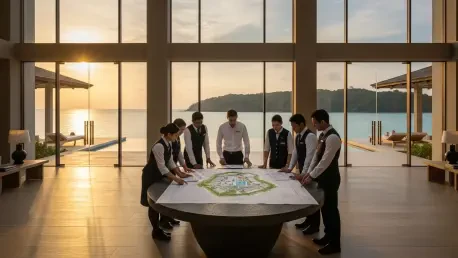

With over three decades of refined expertise spanning thirteen countries, the landscape of global hospitality has become a familiar canvas for this industry veteran. Having held leadership roles at prestigious brands like InterContinental and Six Senses, the transition into the Vice President of Operations for the Americas at Virgin Hotels Collection marks a significant evolution in a career defined by operational excellence and strategic growth. This conversation explores the intricacies of balancing high-energy urban environments with the serene exclusivity of private island retreats, the strategic mechanics of property turnarounds, and how linguistic diversity serves as a bridge for innovative leadership. We delve into the methodologies of maintaining service standards across borders and the importance of fostering a culture of “next thinking” to drive the future of the guest experience.
Managing luxury operations across 13 countries requires significant cultural adaptability. How do you approach the transition from traditional luxury brands to more lifestyle-focused portfolios, and what specific operational frameworks do you prioritize to ensure consistency across such diverse global markets?
Transitioning from established luxury institutions to a lifestyle-centric brand like Virgin requires a shift from rigid formality to what I call “heartfelt service.” Over my 30 years in the industry, I have learned that while the brand identity changes, the core framework of operational excellence remains rooted in local nuances. I prioritize a management style that empowers local teams to infuse their cultural DNA into the guest experience while maintaining strict global standards for safety and quality. By drawing on my experience across 13 different nations, I implement protocols that encourage staff to anticipate needs rather than just reacting to them. This ensures that whether a guest is in a bustling metropolitan hub or a quiet coastal town, the service feels both seamless and authentic to the location.
Overseeing both urban hotels and exclusive private retreats like Necker Island presents unique logistical challenges. What strategies do you use to elevate service standards in high-traffic city environments compared to secluded estates, and how do you measure success when balancing guest expectations across these distinct property types?
The contrast between a high-traffic city hotel and an ultra-exclusive retreat like Necker Island or Branson Beach Estate is profound, requiring two very different operational lenses. In urban environments, success is often measured by the precision of efficiency and the ability to provide a sanctuary amidst the chaos of the city. Conversely, on a private island, the luxury lies in the total immersion of the environment, where the logistics of supply chains and staff housing must be invisible to the guest. I focus on elevating standards by tailoring the “remarkability” factor—in a city, that might mean a seamless check-in under sixty seconds, while on an island, it means a curated sunset dinner that feels spontaneous but took weeks of planning. We track success through a blend of traditional KPIs and guest sentiment scores that prioritize emotional connection over simple satisfaction.
Property openings and operational turnarounds often involve high-pressure deadlines and cultural shifts. Can you walk through your step-by-step process for identifying performance gaps in a struggling hotel and the specific metrics you track to ensure a successful, long-term revitalization of the guest experience?
When I step into a property that requires a turnaround, my first action is a deep-dive audit into both the financial data and the “human” data of the team culture. I look for gaps where service standards have slipped into complacency, often using guest feedback loops and performance relative to the local comp set. The process involves re-training the leadership team to adopt a “guest-first” vision, ensuring that every employee understands how their specific role impacts the overall bottom line. I track specific metrics like staff retention rates and guest satisfaction scores to gauge if the internal culture shift is taking hold. Long-term revitalization is only possible when we move beyond temporary fixes and instill a permanent mindset of innovation and accountability.
Innovative leadership often hinges on the ability to communicate across linguistic and cultural barriers. How has being fluent in four languages influenced your ability to inspire international teams, and what practical steps do you take to foster “next thinking” among staff to drive operational growth?
Being fluent in Spanish, English, French, and Italian is much more than a tool for translation; it is a gateway to building trust and empathy with diverse workforces. When you speak to a team member in their native tongue, you break down the hierarchy and create a space where they feel truly seen and heard, which is essential for driving high-level performance. To foster “next thinking,” I implement cross-departmental workshops where staff are encouraged to pitch unconventional ideas that challenge traditional hospitality norms. This approach, which earned me the Next Thinking GM Award, empowers frontline employees to be the architects of the guest experience. By celebrating these small innovations, we build a culture where everyone is constantly looking for ways to optimize operations and exceed expectations.
What is your forecast for the evolution of luxury hospitality in the Americas?
The future of luxury in the Americas is shifting toward hyper-personalization and experiential exclusivity, where guests no longer just want a beautiful room, but a story to tell. We will see a greater convergence of lifestyle and luxury, where the playfulness of a modern brand meets the sophisticated service of a private estate. Sustainability will move from a secondary consideration to a core operational requirement, as travelers become more conscious of their footprint in delicate ecosystems like the Caribbean. Ultimately, the winners in this market will be those who can provide a bold, guest-focused approach that feels both remarkably modern and deeply human.