
Cairo’s hospitality sector is experiencing an unprecedented surge, with hotel occupancy rates nearing capacity and room prices reaching historic highs, fundamentally reshaping the city’s tourism landscape. The recent wave of intense demand, which saw prices escalate dramatically during the peak winter season, is directly linked to a renewed global interest in Egypt’s cultural treasures, catalyzed by the landmark opening of the Grand Egyptian Museum. This single event has ignited a tourism firestorm, pushing the city’s accommodation infrastructure to its limits and signaling a new era for its travel industry. The effects are palpable across the board, from the most opulent five-star suites overlooking the Nile to charming boutique hotels near ancient sites, all of which are reporting booking levels not seen in years. This phenomenon is more than just a seasonal spike; it represents a significant and potentially lasting shift in Cairo’s standing as a premier global destination, forcing industry stakeholders to rapidly adapt to a new, much higher baseline of tourist traffic and expenditure.
The Unprecedented Surge in Demand and Pricing
A Closer Look at the Luxury Market
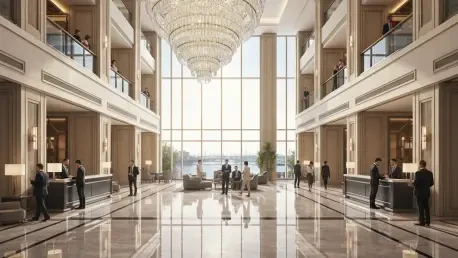
The most dramatic evidence of Cairo’s hospitality boom can be found within its luxury hotel segment, where prices have soared to astonishing new heights. An analysis of booking platforms during the recent peak season revealed rates that shattered previous records, exemplified by a single suite at the Nile Ritz-Carlton being listed for approximately $12,000 for one night. This trend was not an isolated incident but rather the pinnacle of a market-wide escalation. A survey identified the city’s most expensive accommodations, with the Steigenberger Pyramids Cairo leading the charge at a nightly rate of 89,300 Egyptian pounds per person. Following closely were other prestigious properties, including The St. Regis Cairo and the Hilton Cairo Grand Nile, both commanding around 60,600 pounds. Even world-renowned hotels like the Four Seasons Cairo at Nile Plaza and the historic Marriott Mena House, with its iconic views, saw their rates climb to 45,100 pounds and 38,000 pounds, respectively. These figures represent more than just holiday inflation; they reflect a fundamental recalibration of value in a market experiencing overwhelming demand.
This surge in the luxury sector is underpinned by a significant year-over-year price increase of 30% to 50% across Greater Cairo’s high-end properties. The primary driver is an influx of international tourists, drawn in large part by the allure of the newly opened Grand Egyptian Museum, who are competing fiercely for a limited supply of premium rooms. This intense competition has allowed luxury hotels to command unprecedented rates, a clear indicator that the city is attracting a more affluent travel demographic. The near-constant occupancy levels, which consistently surpassed 90% and were projected to hit full capacity, created a seller’s market where price elasticity was tested and proven to be remarkably high. This environment has not only boosted revenues for existing hotels but has also sent a strong signal to global hospitality brands about the robust health and future potential of Cairo’s luxury tourism market, validating it as a destination capable of sustaining premium pricing.
The Ripple Effect Across the Hospitality Sector
While the spotlight often falls on the staggering prices of five-star hotels, the tourism boom has created powerful ripple effects that have energized the entire hospitality ecosystem in Cairo. The overwhelming demand has extended far beyond the luxury market, benefiting boutique hotels and smaller establishments throughout the city. In particular, properties located in strategic proximity to key archaeological sites have experienced a remarkable renaissance, reporting their highest occupancy levels in the last five years. These smaller-scale hotels have seen their occupancy rates climb above 80%, a significant achievement for a segment that often faces stiff competition. Nightly rates in this category have settled into a range of $60 to $90 per person, providing a more accessible yet still profitable alternative for travelers. This demonstrates that the influx of visitors is diverse, comprising not only high-net-worth individuals but also a broad base of cultural tourists eager to explore the city’s heritage.
The widespread nature of this demand has prompted a strategic conversation among industry insiders and policymakers about the need to expand and diversify the city’s accommodation portfolio. With smaller hotels and serviced apartments experiencing such high occupancy, there have been growing calls to streamline the licensing procedures for these types of properties. Experts argue that simplifying the regulatory framework would enable a quicker response to the growing tourist demand, preventing potential bottlenecks and ensuring that Cairo can comfortably host an ever-increasing number of visitors. This move is seen as crucial for nurturing a more resilient and inclusive tourism sector, one that offers a wider range of choices for different budgets and travel styles. By empowering smaller operators, the city can better absorb the current surge while laying the groundwork for sustainable, long-term growth in its vital tourism industry.
Future Outlook and Industry Expansion
Responding to Sustained Growth
In response to the sustained high demand and the clear indicators of a long-term trend, the international hospitality industry is actively planning for significant expansion within the Egyptian capital. Major hotel management companies are no longer viewing the current situation as a temporary peak but as the new standard for tourism in Cairo. Consequently, these global brands are aggressively seeking opportunities to add new properties to their portfolios, aiming to increase the overall room capacity to meet both current and future needs. This proactive stance reflects a deep confidence in the enduring appeal of Cairo as a top-tier destination. The focus is not merely on building new hotels but on strategically placing them to capitalize on the city’s rich cultural and historical assets. This expansion is a direct answer to the market’s call for more rooms, driven by the understanding that the existing infrastructure, while robust, may soon be insufficient to accommodate the projected growth in visitor numbers.
The current inventory of hotel rooms in the Greater Cairo area, which includes both Cairo and Giza, provides a clear context for this expansionary drive. The region currently hosts a total of 29 five-star hotels, which collectively offer 13,251 rooms. While this is a substantial number, the recent surge, with occupancy rates consistently pushing past 90%, has highlighted a potential capacity ceiling. The prevailing sentiment among industry analysts is that more inventory will be essential to absorb future growth without causing unsustainable price inflation or turning away potential visitors. The opening of the Grand Egyptian Museum has been repeatedly identified as the primary catalyst, providing a powerful and lasting attraction that ensures a steady stream of tourists for years to come. This has solidified the business case for investment, assuring hotel developers and operators that the demand for new, high-quality accommodations in Cairo is not speculative but a tangible reality.
A Transformative Catalyst for Tourism
The events of the recent tourism season clearly demonstrated that the inauguration of the Grand Egyptian Museum acted as a powerful and transformative catalyst for Cairo’s hospitality industry. This single development triggered a chain reaction that resulted in unprecedented booking levels, record-setting prices, and near-total occupancy, particularly during the peak winter period. The direct correlation between the museum’s opening and the surge in visitor numbers confirmed its status as a game-changing asset for Egyptian tourism. The phenomenon was comprehensive, elevating the performance of the entire sector, from elite luxury suites to modest, historically-sited establishments. This period was not merely a successful season; it was a fundamental market shift that redefined visitor expectations and the city’s capacity to meet them.
Looking back, it became evident that this boom represented more than a temporary economic windfall; it marked a strategic repositioning of Cairo on the world stage. The city’s brand evolved from that of a venerable, historic destination to a high-demand, premium hub capable of competing with other global capitals for luxury travelers. The sustained high occupancy and premium rates proved that Cairo could support a more upscale tourism model, which in turn attracted further investment and development interest. The hotel boom was ultimately not just about filling rooms but about elevating the international perception and economic potential of the city. This shift laid a new foundation for the future of tourism in Egypt, promising a more resilient and prosperous industry built upon its unparalleled cultural heritage.