
On the serene waters of Norway’s Trondheim Fjord, a groundbreaking initiative is quietly shaping the future of maritime transport, exploring the intricate balance between sophisticated technology and the fundamental human experience. The Frostabåten project, utilizing a semi-autonomous electric ferry as its real-world testbed, moves beyond simple engineering to address a much more complex question: in an age of accelerating automation, what is the evolving role of the human operator, and how will passengers adapt to a vessel where critical tasks like navigation and system monitoring are handled by intelligent systems? This initiative serves as a living experiment, probing the very nature of trust, comfort, and interaction between people and machines on the open water, setting a course for a new paradigm in public transit that must be as reliable and reassuring as it is technologically advanced. It is a deep dive into the human factors that will ultimately determine the success or failure of autonomous transportation.
A New Era of Maritime Travel
The Flying Boat on the Fjord
At the core of this ambitious project is the Candela P-12, a vessel that has earned the nickname “flying boat” for its revolutionary design and performance. This all-electric hydrofoil represents a significant technological leap in marine engineering. As it accelerates, a set of computer-guided underwater wings lifts the entire hull out of the water, allowing it to glide smoothly above the waves. This dramatic reduction in hydrodynamic drag is the key to its exceptional efficiency, enabling it to consume up to 80% less energy than conventional ferry hulls of a similar size. The result is a vessel that can cruise almost silently at a brisk 25 knots, creating virtually no wake and providing a remarkably stable and quiet ride for its passengers. This innovation is more than just an engineering feat; it redefines the fundamental relationship between a vessel and the water, paving the way for a new generation of sustainable and high-performance marine craft. The technology promises to make waterborne transport a more viable and environmentally friendly option for a wide range of applications.
This cutting-edge technology is not being developed in a vacuum but is poised to deliver tangible benefits to the Trondheim Fjord region. The Candela P-12’s remarkable energy efficiency makes it a game-changer for public transportation, enabling the establishment of new, fast, and emission-free ferry routes that were previously considered economically or logistically unviable for larger, more conventional vessels. A prime example is the planned route connecting the rural Frosta peninsula with the bustling city of Trondheim, which the P-12 can traverse in a mere 25 minutes, drastically reducing commute times for residents. For a region characterized by its intricate coastline and scattered communities, this capability unlocks immense potential. It offers a sustainable solution for connecting smaller population centers, reducing reliance on road transport, and fostering greater regional integration for commuters, tourists, and local businesses alike, all while minimizing the environmental impact on the fjord’s delicate ecosystem.
Designing the Passenger Journey
While the vessel’s technical prowess is central to the project, an equally significant focus is placed on the human element of the journey. A dedicated team of researchers from NTNU’s Department of Design is conducting a comprehensive study to understand, anticipate, and ultimately shape the passenger experience from end to end. As part of a master’s thesis project titled “Designing Passenger Touchpoints for an Autonomous Ferry Service,” students Ane Solbakken-Melleby and Michelle Lous adopted a holistic perspective. Their work meticulously maps the entire travel process, beginning from the very first thought a person has about booking a trip, through the process of arriving at the terminal, boarding the vessel, the journey itself, and all the way to their final destination. This deep investigation delves into how passengers emotionally and practically respond to a novel travel paradigm where the familiar presence of a visible crew may be diminished, seeking to identify potential points of friction, anxiety, or confusion in a semi-automated environment.
The ultimate goal of this intensive design research extends far beyond ensuring a comfortable ride; it is about seamlessly integrating the Frostabåten service into the broader public transportation network. The project’s success hinges on creating a connected, intuitive, and fluid journey for every traveler. This requires a systems-level approach that considers not only the experience aboard the vessel but also all the surrounding touchpoints. This includes the clarity and accessibility of digital booking platforms, the physical design and wayfinding of the port terminals, the ease of transitioning between the ferry and other modes of transport like buses or trains, and the consistency of information provided across all stages of the journey. By focusing on creating a frictionless and predictable experience, the research aims to build a foundation of trust and reliability that will encourage public adoption and ensure that this new form of autonomous maritime transport is perceived not as a novelty, but as a dependable and integral part of everyday life.
Bridging the Gap Between Humans and Technology
The Digital Crew and Building Trust
A pivotal insight emerging from the passenger-focused research is the concept of a “digital crew.” The study revealed a strong consensus that in an environment where a human crew is not consistently visible or accessible, the physical and digital surroundings must effectively step into those roles to provide guidance, deliver information, and build a sense of security. Thoughtful design, therefore, becomes the passengers’ primary point of contact and reassurance. The research identified several foundational elements as essential prerequisites for passenger comfort and confidence. These include impeccably clear signage throughout the terminals and vessel, intuitive wayfinding that leaves no room for confusion, and a boarding process that is engineered to be as simple and hassle-free as possible. These seemingly basic design considerations take on elevated importance in an autonomous context, as they form the first line of defense against uncertainty and create a predictable framework that allows passengers to feel in control of their journey from the very start.
Building upon this foundation, the study identified dynamic information as a critical tool for actively fostering trust between the passenger and the autonomous system. The presence of clear, real-time displays showing the vessel’s intended route, its current operational status, and essential safety instructions plays a crucial role in demystifying the technology and reassuring passengers that the system is functioning as intended. A core principle that emerged was the paramount importance of consistency; when interactions across all touchpoints—from the mobile app to the onboard screens—are predictable and reliable, passenger uncertainty is significantly reduced. The research also acknowledged that public perception and trust in autonomous technology vary widely. It concluded that the most effective strategy to bridge this trust gap is a strong, continuous flow of information across the entire customer journey. By strategically identifying specific moments where passenger anxiety or trust needs are highest, design interventions can be precisely targeted to provide timely reassurance, forming a key part of a long-term strategy to normalize and encourage the adoption of autonomous travel.
The Augmented Human Operator
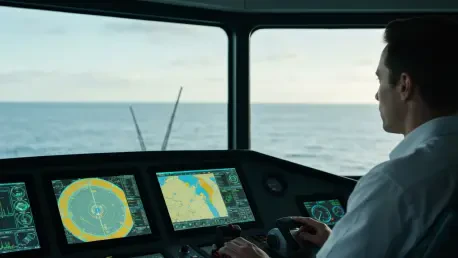
It is a critical and frequently emphasized point that despite its array of advanced systems, Frostabåten is not a crewless or fully autonomous vessel. A highly trained human operator remains at the helm at all times, retaining ultimate command and responsibility for the safety of the vessel and its passengers. The autonomous functions, which include sophisticated navigation support, continuous energy optimization algorithms, and advanced situational awareness tools, are designed to function as an intelligent co-pilot. Their purpose is not to replace the human operator but to augment their capabilities, reduce cognitive load, and enhance decision-making. This collaborative human-machine partnership aims to elevate the standards of safety and operational efficiency, proving especially valuable in the challenging and often unpredictable conditions of Nordic winters, where ice, fog, and rough seas demand the highest levels of vigilance and skill. The system acts as a powerful assistant, freeing the operator to focus on the most critical tasks.
To further explore and refine this crucial human-machine collaboration, researchers from NTNU and the Shore Control Lab are implementing a system to stream high-quality, low-latency video from the vessel directly to a land-based control room. This “digital bridge” allows researchers and support personnel to see exactly what the onboard operator sees in real time, creating an invaluable resource for both research and operational support. This setup enables a thorough investigation into future possibilities for remote monitoring and the development of new, more effective methods of providing shore-based assistance to the operator during complex or unexpected scenarios. By improving overall situational awareness through this shared visual link, the project is pioneering a hybrid operational model that combines the irreplaceable expertise of an onboard human with the analytical power and oversight of a remote support team, creating a robust and multi-layered approach to maritime safety.
A Collaborative Vision for the Future
The Frostabåten project was never conceived as an isolated endeavor; it served as a dynamic, collaborative test arena for Norway’s entire autonomous maritime community. The initiative brought together a diverse network of partners, including innovative technology companies, human-centric designers, leading academic researchers, and experienced maritime operators. Key organizations such as the Ocean Autonomy Cluster and Maritime Robotics played an instrumental role in uniting these stakeholders, fostering an environment of shared learning and collective problem-solving. This collaborative model provided invaluable, real-world insights into how autonomous functions could be introduced into public-facing operations safely, gradually, and in a manner that delivered clear benefits to all stakeholders, from the passengers and operators to the wider community. It transformed the project from a simple technology trial into a comprehensive exploration of the social, regulatory, and operational dimensions of maritime automation.
Ultimately, the overarching ambition of the project was to leverage the vast body of knowledge it generated to establish a scalable, replicable model for emission-free, fast ferry routes. The data and insights gathered from this floating laboratory, which documented everything from hydrofoil performance in rough seas to the intricate psychology of passenger trust, solidified a blueprint for the future of coastal and inland waterway transport. This model was designed to serve the diverse needs of commuters, tourists, and remote coastal communities, first within Norway and with the potential for international application. The project successfully demonstrated how a synergistic approach, blending cutting-edge technology with a deep understanding of human factors, could pave the way for the next generation of public transit. It was a foundational step that confirmed Norway’s position at the forefront of global autonomous maritime innovation, proving that the journey was, indeed, only the beginning.