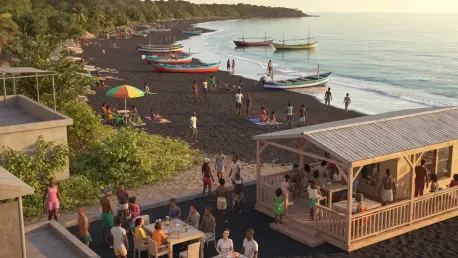

For a nation whose identity is inextricably woven into the brilliant turquoise of the Caribbean Sea, the stark reality that over 99 percent of its 1,022-kilometer coastline is sealed off from its own people presents a crisis of profound national significance. This is not merely an issue of recreational inconvenience; it is a deepening schism in the soul of Jamaica, pitting a lucrative, foreign-dominated tourism model against the fundamental birthright of its citizens. The battle for the beaches has become a battle for the island’s future, questioning who truly benefits from its world-famous natural beauty and what it means to be Jamaican when paradise is enclosed by a concrete wall.
The Vanishing Coastline When Paradise is Placed Behind a Wall
The numbers themselves are staggering, painting a picture of near-total exclusion. According to data compiled by the Jamaica Beach Birthright Environmental Movement (JaBBEM), a mere 0.6% of the island’s expansive shoreline remains public and freely accessible. This statistical reality manifests physically across the island in the form of high concrete walls topped with barbed wire, imposing gates manned by private security, and signs that declare a blunt message to locals: “Private Property, No Trespassing.” What was once a communal space for fishing, family gatherings, and spiritual practices has been systematically transformed into a partitioned commodity.
This enclosure is not limited to a few exclusive coves but represents a comprehensive takeover of the nation’s most prized natural asset. From the famed white sands of Negril to the tranquil bays along the north coast, the most desirable stretches of beachfront have been absorbed into the footprints of sprawling all-inclusive resorts and luxury residential developments. For generations of Jamaicans who lived and worked by the sea, the coast was an extension of their community. Now, they find themselves looking at their own heritage through fences, effectively rendered strangers in their own land as the coastline vanishes from public life.
A Tale of Two Jamaicas The Tourist Dream vs The Local Reality
A profound paradox lies at the heart of this crisis. Globally, Jamaica is marketed as the quintessential beach destination—an open, sun-drenched paradise where the sea is the main attraction. Millions of visitors arrive annually, drawn by images of pristine, accessible shorelines. Yet, this idyllic marketing narrative masks a starkly different reality for the island’s own population. The “no problem” ethos advertised to tourists stands in jarring contrast to the growing frustration and disenfranchisement of Jamaicans who are systematically denied access to the very beaches that form the bedrock of their national brand and cultural identity.
This disconnect is more than a simple matter of access; it strikes at the core of Jamaica’s post-colonial journey. The struggle over the coastline is a modern manifestation of historic battles over land, resources, and economic sovereignty. The privatization of beaches is leading to a tangible erosion of culture, as generations-old fishing traditions are disrupted and communal seaside rituals become impossible to practice. Consequently, the loss of the coast raises fundamental questions about national identity: if Jamaicans cannot connect with the sea that surrounds them, what part of their heritage is being irrevocably lost in the pursuit of foreign exchange?
The Anatomy of Inaccessibility Deconstructing the Crisis
The legal foundation for this widespread privatization is a relic of Jamaica’s colonial past: the 1956 Beach Control Act. Enacted six years before the island gained its independence from Great Britain, this law establishes that the state owns the coastline and, critically, stipulates that there is no inherent public right for citizens to access or use the beach without a license. This anachronistic piece of legislation has served as the primary legal tool for successive governments to sell or lease vast tracts of coastal land to private developers, providing a veneer of legality to the dispossession of the Jamaican people from their natural heritage.
This legal framework is propelled by a dominant economic engine—the all-inclusive tourism model. With the industry projecting a record 4.3 million visitors this year and plans for an additional 10,000 hotel rooms by 2028, the demand for exclusive, private beachfronts has soared. However, this model creates a significant economic paradox. Studies reveal that as much as 60% of the $4.3 billion in annual tourism revenue leaks out of the country, flowing to foreign-owned hotel chains and overseas suppliers. This creates a destructive cycle where an industry meant to enrich the nation simultaneously fuels the enclosure of public land while exporting the majority of its profits.
The tangible impact of this crisis is devastatingly clear in communities like Steer Town, near the popular Mammee Bay Beach. For generations, local fishermen launched their boats from its shores, and families gathered on its sands. Today, a concrete wall erected by a luxury resort blocks all access, severing the community from its primary source of livelihood and social cohesion. Fishermen who once earned a living from the sea are now cut off, their traditional practices rendered obsolete. This case study illustrates that the cost of a private beach is not just measured in lost recreation but in the destruction of local economies and the unraveling of the social fabric that holds coastal communities together.
Voices from the Sand The Fight for a Birthright
In the face of this growing disenfranchisement, a powerful and organized resistance has taken root. Formed in 2021, the Jamaica Beach Birthright Environmental Movement (JaBBEM) has emerged as the leading voice in the fight to reclaim the coastline, galvanizing public anger into a focused campaign for legal and legislative reform. The organization frames the issue not as a request for privilege but as a demand for the restoration of a fundamental birthright, arguing that access to the sea is integral to Jamaican citizenship.
This fight is being waged on multiple fronts, most notably in the nation’s courts. JaBBEM is currently pursuing five major legal cases to secure public access at key sites across the island, including Mammee Bay Beach, the historically significant Bob Marley Beach, and Providence Beach, where a major resort development is planned. The legal battle is underpinned by a profound sense of cultural urgency. As Marcus Goffe, a lawyer for JaBBEM, starkly warns, “When you cut off Jamaicans from the sea, from traditional fishing practices and livelihoods, you’re killing the community.” His words capture the immense stakes of the struggle, which aims to protect not just physical access but the very soul of Jamaican coastal life.
The movement is fueled by the passion of community activists who have experienced the loss firsthand. Their personal stories transform the legal arguments into a human drama of resistance. For them, this is a fight for cultural preservation, environmental stewardship, and justice for future generations. They organize protests, educate their communities, and stand as custodians of public memory, recalling a time when the beach was a shared space for all. Their persistence has elevated the issue to the national stage, forcing a long-overdue conversation about the true cost of the current tourism model.
Reclaiming the Shoreline A Blueprint for Responsible Tourism
For international visitors who care about the destinations they frequent, this struggle presents a clear opportunity to become part of the solution. The most powerful tool a traveler possesses is their economic choice. Activists are urging tourists to “vote with their dollar” by consciously bypassing the exclusionary all-inclusive resorts that drive privatization and instead supporting businesses that foster community integration and respect public access. This requires a small amount of research but can have a significant positive impact on the local economy and the fight for the beaches.
There are numerous attractive and sustainable alternatives for the conscious visitor. One can choose to stay at locally-owned hotels situated on public beaches, such as the Charela Inn on Negril’s famous Seven Mile Beach, which remains one of the island’s most beloved public coastlines. Another option is to explore community-centric destinations like Treasure Beach on the south coast, known for its welcoming atmosphere, locally-run guesthouses, and stunning public black-sand shores. These experiences offer a more authentic connection to Jamaican culture and ensure that tourist dollars directly benefit local families.
Furthermore, the rise of the sharing economy provides even more avenues for responsible travel. Opting for a Jamaican-run Airbnb or a boutique guesthouse near a cherished public gem, like the beautiful Winnifred Beach in Portland, supports grassroots entrepreneurship. By choosing these alternatives, travelers not only enjoy a more immersive and genuine Jamaican experience but also send a powerful message to the wider industry that tourism can—and should—be a force for empowerment, not displacement.
The determined campaign fought by Jamaican citizens and their allies was never just about securing a place to swim or fish. It stood as a profound act of defining a nation’s identity in the face of overwhelming economic pressures. The struggle posed a fundamental question: would Jamaica’s most precious natural asset be treated as a communal heritage, accessible to all who call the island home, or would it be sold off as a private luxury for a select few? The outcome of these efforts, driven by both legal challenges on the island and the ethical choices of visitors from abroad, ultimately determined the future of paradise for its own people.