
Across Asia a surge of headline attractions has put a fresh question on the table: will 2026 finally shift global travel away from checklist sightseeing and toward immersive, story-led journeys that keep visitors engaged longer and moving across borders. Industry leads, academics, and on-the-ground operators agree that a pivot is underway, yet they disagree on what will actually convert curiosity into itineraries: iconic intellectual property, participatory arts districts, climate-proof family anchors, or slow-travel networks that disperse crowds.
This roundup assembles views from destination strategists, museum planners, route designers, airline commercial teams, and family-travel reviewers to map where consensus forms and where it fractures. The goal is simple: clarify what to expect from Asia’s 2026 slate, translate expert insight into practical takeaways, and identify the trade-offs that will define traveler experience, spend, and stay length over the next cycle.
Why 2026 matters, and what experts think it means
Observers broadly agree that the lineup landing in 2026 crystallizes a regional shift from passive observation to active participation. The typical frame is that Asia is no longer selling a skyline photo and a shopping day; it is selling narrative environments—museums as social classrooms, parks as lived-in story worlds, and trails as cultural connectors. This matters now because booking windows, ticket lotteries, and opening calendars already influence routing and inventory decisions this year.
However, there is pushback on the idea of a single model. Some specialists argue that intellectual-property immersion drives early demand spikes but fades unless layered with learning and community. Others see arts participation as the longer-burning fuel, claiming that workshops, rehearsals, and public programs create reasons to return that rides cannot easily match. A third camp points to weather resilience and logistics, noting that climate-proof venues and seamless transport links often matter more to families than the art of the set piece.
Inside the marquee openings: what different voices highlight
Pokémon Park OsakIP power with logistical strings attached
Theme-park analysts paint Osaka’s Pokémon Park as the quintessential nostalgia engine, engineered for repeatable photo moments and shared story beats across zones like Pokémon Forest, Sedge Town, and Gym shows. They expect demand to outstrip supply early, with the lottery-based ticketing that started in November shaping not only visit dates but also stopovers in Tokyo for franchise tie-ins.
Yet veteran planners warn that the park’s success will hinge on pacing and queue choreography, not just the charm of a walkable universe. Family reviewers love the climate control of indoor segments and the predictability of timed entries, but they worry about fairness perceptions if lotteries overshadow day-of options. Airline revenue managers add that Kansai-forward itineraries will likely extend stays by a night or two, especially when bundled with fandom experiences elsewhere in Japan.
West Kowloon Arts Harbour: from audience to participant
Cultural programmers celebrate Hong Kong’s West Kowloon as a day-to-night arts ecosystem where rehearsal watching, maker workshops, and open public spaces soften the barrier between spectator and creator. They argue that this resets the city’s narrative beyond commerce, positioning it as a creative lab with theater at its core and urban scenery as a stage.
Skeptics counter that programming cadence will make or break stickiness. If workshops cluster on weekends or after hours, midweek visitors could still default to passive viewing. Hospitality leaders respond that a maturing restaurant scene and waterfront strolls can fill gaps, but they press for calendar transparency and packageable experiences that lock in participation before arrival.
Saadiyat Island Abu Dhabi: a campus for learning-led repeat visits
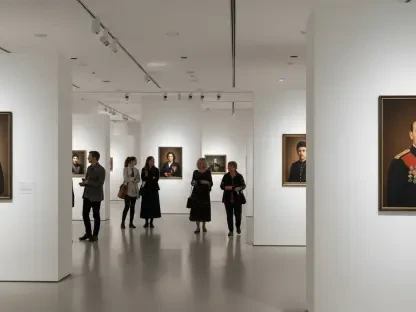
Museum advisors describe Saadiyat’s trio—Zayed National Museum, Natural History Museum Abu Dhabi, and Guggenheim Abu Dhabi—as a social-educational campus designed for layered visits. Rotating installations, flexible galleries, and plazas stitched to dining and performance venues are seen as a formula for durable engagement across multiple trips.
Meanwhile, Gulf-focused travel planners stress the network effect: Abu Dhabi gains when visitors fold the island into regional circuits that include Dubai, AlUla, or Doha. Their one caveat is service consistency at scale, arguing that seamless transfers, clear wayfinding, and on-site facilitation will determine whether the campus converts culture-curious travelers into advocates.
Dingdian Park Beijing: climate-proof family anchor with citywide spillovers
Family-travel specialists applaud Dingdian Park’s scale—roughly 70,000–73,000 square meters of indoor play, themed hotel, and retail—calling it a weather-proof stay-and-play engine that reduces planning stress. They see it as a magnet for multigenerational trips, with predictable comfort trumping seasonal uncertainty.
Urban development observers focus on the east-side uplift. They anticipate improved transport, lodging variety, and retail growth along the Tongzhou corridor, arguing that the park’s integration with a pedestrian street and commercial promenade encourages two- and three-night stays. Some caution that authenticity could suffer if supporting neighborhoods become purely transactional, urging balanced zoning and local vendor inclusion.
Dongseo Trail South Koreslow travel as a dispersal strategy
Trail designers and conservation groups frame the 849-kilometer Dongseo route as an antidote to overtourism, distributing travelers across 90 villages and 44 campsites. They highlight structured segments that accommodate day hikers and multi-day trekkers, asserting that rural communities gain from predictable, paced flows rather than flash-in-the-pan surges.
Contrasting voices flag maintenance and service variability. Without consistent signage, gear rental options, and luggage transfers, international uptake could lag. Rail and bus planners counter that well-timed connections and village partnerships can close the gap, and they advocate for digital wayfinding that layers culture stops onto scenic legs.
Design choices that shift behavior and spend
Experience designers coalesce around a simple ideimmersion over observation. Walkable narrative universes, participatory arts labs, and village-linked trails generate agency, and agency lengthens dwell time. The most effective spaces ask visitors to do something—craft, forage, rehearse, battle in a Gym—rather than just look, trusting that co-creation deepens memory.
Marketing strategists emphasize dual optimization: camera and heart. Set pieces must read instantly in photos while carrying emotional weight in person—nostalgia at Osaka, creative pride at West Kowloon, awe and curiosity on Saadiyat, comfort and play in Beijing, quiet accomplishment on the Dongseo Trail. When both align, word of mouth accelerates, and trip extensions follow.
Routing and industry strategy: where plans converge and diverge
Airline and rail planners see 2026 driving multi-country storylines: Osaka–Hong Kong–Abu Dhabi–Beijing–Korea in combinations that stitch family time to culture days and outdoor resets. Dynamic packaging, cross-border passes, and three–three–four day sequences emerge as favored tools, often anchored to ticketing windows at parks and museum calendars that shape the order of stops.
Tour operators, however, split on how much friction the market will tolerate. Some argue that visa layers, capacity constraints, and lodging compression near openings will cap ambitions, pushing travelers back to hub-and-spoke patterns. Others contend that timed entry, shoulder-season incentives, and better luggage services will remove enough pain to make circuits the default for long-haul visitors.
Risks, frictions, and how experts would fix them
Crowd management sits atop every risk register. Venue operators advocate for real-time load balancing, staggered entries, and heat-mitigation design—shade, airflow, and water stations—to preserve guest comfort. Community groups push for authenticity safeguards: local hiring, craft markets with provenance, and programming that reflects place rather than purely imported spectacle.
There is also the freshness challenge. Experience curators recommend rotating exhibits on Saadiyat, seasonal arcs in West Kowloon, limited-time character runs in Osaka, festival clusters along the Dongseo Trail, and school-holiday programming in Beijing. Data leads urge tracking the metrics that matter—dwell time, multi-stop conversion, repeat intent, and user-generated content velocity—so teams iterate quickly when novelty fades.
Practical guidance from the field for travelers and builders
For travelers, planners suggest locking anchor tickets first—park lotteries, headline performances, special exhibitions—and then building connective tissue around them: rail segments, short-haul flights, and luggage-forward services that smooth city-to-city transitions. Families are advised to pair indoor anchors like Dingdian with outdoor breaks on the Dongseo Trail, balancing energy and weather across the itinerary.
For destinations and brands, the recurring advice is to make participation the default. Workshops, behind-the-scenes access, pop-up trails, and live shows invite contribution, not just consumption. Add signature vistas and low-friction capture points so memories translate easily to social feeds, and backstop the experience with climate-resilient spaces, trained service teams, and clear wayfinding that reduces cognitive load at peak moments.
What the debate reveals about Asia’s travel center of gravity
Consensus holds that 2026 functions as a launch year for a replicable model: architectural excellence paired with participatory content in hybrid culture–nature–entertainment settings. The differences arise over emphasis—IP spectacle versus arts participation versus slow-travel depth—but most agree that the most resilient destinations blend all three, then keep them fresh with rotating content and community ties.
Looking ahead, experts pointed travelers toward museum and performance calendars, theme-park ticketing notices, airline schedule updates, and visa advisories as essential pre-trip reading. Operators noted that emerging tools—AI-guided itineraries, interoperable digital passes, and citywide timed-entry orchestration—would be worth watching as they reshaped how multi-stop journeys get stitched together.
Closing notes: what to do with this collective wisdom
Taken together, the perspectives suggested that Asia’s 2026 slate had set up longer trips, richer participation, and broader regional circuits, provided teams executed on logistics, comfort, and freshness. The most actionable next steps centered on securing timed entries early, bundling indoor and outdoor experiences to smooth seasonality, and using rail-air combinations to unlock secondary corridors. For deeper exploration, readers were best served by consulting official venue calendars, transport timetables, local festival guides, and policy updates on entry requirements, since those sources changed fastest and carried the details that ultimately governed real-world routes.