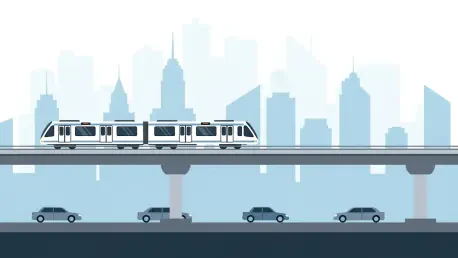

As a leading voice in hospitality and large-scale event logistics, Katarina Railko offers a unique perspective on managing passenger experiences in some of the world’s most demanding environments. With Mumbai launching 26 new air-conditioned suburban trains, we sat down with her to understand the deeper implications of this major infrastructure upgrade. We explore the strategic thinking behind deploying these services on the city’s busiest lines, the operational complexities of transitioning the fleet, and how this focus on comfort is part of a larger vision to reshape urban mobility and enhance the daily lives of millions of commuters.
With 14 of the new services allocated to Central Railway’s busy Harbour Line, what specific challenges does this route present? Can you detail the process for determining the peak travel times and stops for these new trains to maximize their impact on daily commuters?
The Harbour Line is one of the most intense and congested corridors in the entire suburban network, connecting the city’s historic business district at CSMT with sprawling residential areas all the way to Panvel. The primary challenge here is sheer volume; the trains are often packed beyond capacity, especially during the sweltering summer months. The heat and humidity inside a non-AC coach during rush hour can be incredibly oppressive. To maximize impact, the Central Railway authorities have meticulously planned the deployment. It’s not just about running trains in the morning and evening; it’s about targeting those specific windows when the crush of humanity is at its peak. This involves analyzing passenger data to identify the busiest hours and deploying these AC services to provide a tangible, cool alternative right when people need it most, ensuring a more pleasant and bearable journey to work or home.
The new AC trains will replace some existing non-AC services, keeping the total train count relatively stable. Could you elaborate on the operational steps required to manage this transition seamlessly and explain the trade-offs involved in prioritizing AC comfort over increasing the total fleet size?
This is a very deliberate and strategic move. Managing this transition requires incredible precision in scheduling and operations to ensure there’s no disruption for the daily commuter. Essentially, you’re swapping out a standard 12-car train for an AC one without altering the fundamental timetable. The trade-off is fascinating: instead of simply adding more trains, which the saturated tracks may not even support, the focus shifts to enhancing the quality of the existing service. This is a bet on experience over raw numbers. The authorities are prioritizing a significant upgrade in passenger comfort and well-being over a marginal increase in frequency. It’s a recognition that attracting and retaining public transport users isn’t just about getting them from A to B, but about how they get there. This improves the overall travel experience dramatically without overwhelming the existing infrastructure.
These services aim to ease overcrowding, particularly during peak hours. Beyond providing a cooler journey, what specific improvements in passenger space and amenities can commuters expect? Please share any metrics or examples of how this will tangibly change the daily rush-hour experience.
The most immediate and profound change, beyond the obvious relief from the heat, is the improved sense of personal space. The design of AC coaches inherently manages crowding better, and passengers tend to be more orderly. For someone used to the daily struggle of a non-AC train, where you’re often pressed against strangers, the ability to stand or sit without being jostled is a massive improvement. This changes the entire mental and physical experience of the commute from one of survival to one of relative calm. While specific metrics on personal space aren’t provided, the increase in AC services—from 109 to 121 on Western Railway and up to 94 on Central—means thousands more will have access to this better environment. It transforms the journey from a stressful ordeal into a moment where you can perhaps read a book, listen to music, or simply decompress before or after a long day at work.
A broader goal is to reduce traffic congestion by encouraging public transit use. What projections or data suggest these 26 AC services will help shift commuters from private vehicles? Could you outline any complementary initiatives planned to further promote this modal shift?
The core idea is that a more comfortable and pleasant public transit option becomes a viable competitor to private cars. When the choice is between being stuck in traffic in your own vehicle versus a cool, comfortable, and predictable train journey, the decision becomes much easier. While the article doesn’t offer specific projection numbers, this initiative is a key part of the strategy to make public transport more attractive. This is especially true for commuters who might otherwise opt for ride-sharing services or drive their own cars to avoid the discomfort of the old trains. The launch of 26 new AC services is a powerful statement. It signals an investment in passenger quality of life, which is a critical factor in encouraging a long-term modal shift. Complementary initiatives would logically include improving last-mile connectivity and ensuring the reliability of these new services to build trust and make the entire door-to-door journey seamless.
What is your forecast for the evolution of Mumbai’s suburban railway network over the next decade, especially regarding the balance between AC and non-AC services?
I believe this launch marks a significant turning point. Over the next decade, I forecast a continued and accelerating shift toward a fully air-conditioned fleet. As passenger expectations rise and the city continues to modernize, the non-AC local train will likely become a relic of the past. The current model of replacing non-AC rakes with AC ones, rather than simply adding to the fleet, will probably continue as it’s an efficient way to upgrade the system without overburdening the tracks. The ultimate goal will be to make the AC train the standard, not the premium option. This aligns with global trends in metropolitan public transport and is essential for making Mumbai’s lifeline—its local trains—a more humane, efficient, and desirable mode of travel for its ever-growing population.