
As a distinguished expert in hospitality and events with a deep focus on the evolution of international expos, Katarina Railko brings a nuanced perspective to the shifting landscape of the UK event industry. Her career has been defined by a commitment to excellence in service and a keen eye for how storytelling translates into large-scale live experiences. This conversation explores the outcomes of the 2026 CN Agency Awards, delving into the tactical strategies behind the year’s most celebrated campaigns and the organizational structures that allow agencies to thrive in an increasingly competitive market.
In this discussion, we explore the evolving nature of industry leadership and the delicate balance between immersive creative themes and professional prestige. Railko provides insights into how modern agencies integrate sustainability into high-stakes corporate meetings and why smaller, agile firms are successfully challenging industry giants for global contracts. We also examine the technical complexities of modern production and the metrics required to maintain a consistent brand voice across diverse international markets.
Sustaining a career for 16 years as a founding partner requires significant adaptability. How has the definition of leadership in the events sector evolved during that time, and what specific habits help a pioneer maintain a competitive edge while mentoring the next generation of talent?
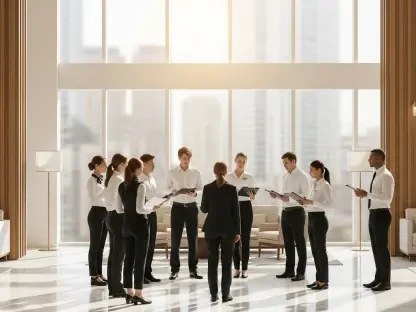
Leadership in our sector has shifted from a top-down command structure to a collaborative, mentorship-driven model where the pioneer acts more as a North Star than a micromanager. Over the last 16 years, we have seen leaders like Karen Kadin, who was honored with the Agency Pioneer Award, demonstrate that longevity comes from fostering an environment where talent can take risks without fear. A habit that maintains a competitive edge is “intentional listening,” where senior partners spend as much time on the warehouse floor or in technical rehearsals as they do in the boardroom to understand the friction points of modern delivery. By focusing on professional development, agencies can see a direct impact on retention; for instance, creating pathways for “Rising Stars” ensures the institutional knowledge of a 16-year-old firm stays fresh and relevant. It is about balancing the wisdom of experience with the hunger of a newcomer, ensuring the agency remains agile enough to win the most competitive shortlists we have seen to date.
The 2026 ceremony featured a Barn Dance theme, reflecting a shift toward highly immersive, themed environments. How do you balance playful creative themes with the professional prestige expected at high-stakes industry awards?
The key to balancing a whimsical theme like a Barn Dance with the prestige of a national benchmark award is ensuring that the “play” never compromises the “purpose.” We use a “thematic anchoring” process where every creative element must serve a functional goal, such as using rustic wooden podiums that are high-spec enough to house broadcast-quality microphones. The process begins with establishing the “prestige pillars”—the lighting, the audio quality, and the smooth flow of the winners’ walk—and then layering the theme on top through sensory details like hay-scented entranceways or denim-clad hospitality staff. If the technical production, such as that provided by the Technical Production Team of the Year, is flawless, the audience feels safe enough to lean into the fun without losing respect for the accolades being presented. It creates a memorable psychological bridge, making the “Core Excellence Awards” feel celebratory rather than clinical.
Some agencies are now winning across diverse categories like sustainability, professional services, and internal communications simultaneously. What internal organizational structures are necessary to achieve this level of cross-disciplinary excellence?
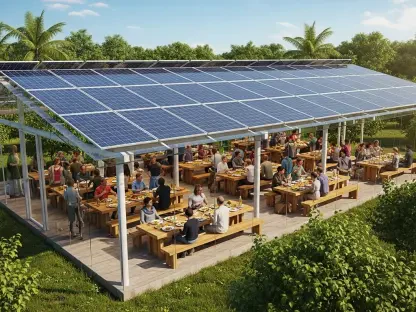
To achieve the “Grand Prix” level of excellence, an agency must move away from siloed departments and toward an integrated “hub and spoke” model where specialists are embedded in every project team. When an agency wins for both a UK Partner Meeting and a Sustainability Pioneer Award, it indicates that green initiatives are not an afterthought but are baked into the initial procurement and logistics phase. For a high-budget corporate meeting, this means the sustainability lead has veto power over the catering and venue selection from day one, ensuring zero-waste mandates are met without sacrificing luxury. We see agencies successful in this space utilizing “cross-pollination workshops” where the internal comms team shares insights with the creative team to ensure the brand’s message is consistent across every touchpoint. This structural integration allows them to deliver a seamless experience that satisfies both the CFO’s requirement for professional services and the global demand for ethical event delivery.
The “David & Goliath” award highlights the tension between boutique firms and industry giants. What specific operational advantages do smaller, more agile agencies have in the current market, and how can they use these strengths to secure contracts for massive global projects?
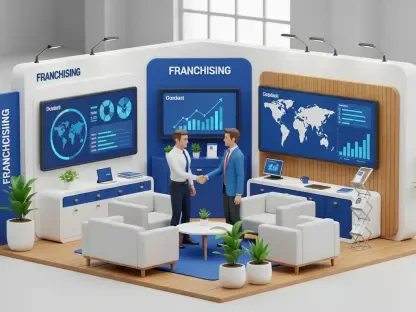
Smaller agencies possess an “intimacy of service” that global giants often struggle to replicate, allowing them to offer clients direct access to senior leadership at every stage of a project. These boutique firms can pivot their strategies in hours rather than weeks, a trait that is incredibly attractive to brands needing to react to sudden market shifts or technical disruptions. To secure massive global contracts, a startup must lead with “hyper-specialization,” proving they are the absolute best in a niche category before expanding their scope to show they can handle the scale. The strategy involves building a “scalable ecosystem” of trusted freelancers and specialist partners, which allows a small core team to punch far above its weight class. By demonstrating this lean but high-impact operational model, a boutique firm can convince a global brand that they are getting a more dedicated, creative, and cost-effective solution than a traditional industry giant could offer.
Projects like “The Lost Dimensions” illustrate the growing demand for complex technical production and immersive experiences. How do you manage the risks associated with high-concept technical delivery, and what specific anecdotes can you share about overcoming a major technical hurdle during a live activation?
Managing high-concept risks requires a “fail-safe” mentality where every primary technical system has a redundant backup that can be triggered instantly. During complex immersive activations, the biggest hurdle is often the synchronization between live performance and digital triggers, where a single millisecond of lag can shatter the illusion for the attendee. I recall a situation where a massive projection mapping sequence failed due to a sudden power surge, and the team had to rely on a pre-planned “analog bridge”—a physical performance element designed specifically to distract the audience while the servers rebooted. This level of coordination requires a production team that communicates via a “silent cueing” system, ensuring that the transition between digital and physical is invisible to the guest. It is the invisible labor of the technical crew that allows these “lost dimensions” to feel like seamless, magical realities rather than fragile tech demos.
High-profile events for global brands, such as those in the automotive and pharmaceutical sectors, require immense precision. How do you maintain a consistent brand voice across international markets while ensuring the event remains culturally relevant to local audiences?
Maintaining a consistent voice in sectors like automotive requires a strict “Global Brand Playbook” that defines the non-negotiables—such as the exact color temperature of the lighting or the specific way a vehicle like the Bentley Bentayga is unveiled. However, we achieve local relevance through “cultural localization,” where we adapt the hospitality, the pacing of the program, and the local language nuances to fit the specific region. For a pharmaceutical launch like AstraZeneca’s, the precision is measured through engagement metrics: we look at “educational dwell time” and the “interaction rate” with clinical data displays to see if the message resonated. We also track post-event sentiment through localized surveys to ensure the “global” message didn’t feel like an “imported” one. Success is found when a doctor in London and a distributor in Dubai both feel the event was designed specifically for their professional context.
What is your forecast for the event agency landscape?
I predict a significant shift toward “hyper-local sustainability,” where the measure of a successful agency will be its ability to deliver world-class experiences using entirely local supply chains to minimize carbon footprints. We will see the rise of the “Hybrid Architect,” a new role within agencies that focuses exclusively on blending physical attendance with high-fidelity digital immersion to ensure global reach without the travel impact. Agencies that fail to integrate ESG (Environmental, Social, and Governance) principles into their core operations will find themselves excluded from the tightest shortlists as corporate clients prioritize ethical delivery above all else. Furthermore, the “David & Goliath” trend will accelerate, with brands increasingly favoring smaller, specialized “boutique collectives” over the traditional one-stop-shop global agencies. Ultimately, the industry will move away from just “organizing” events and toward “engineering” meaningful human connections that leave a measurable, positive legacy on the communities they touch.