
Hospitality operators who treat marketing as a year-round, data-driven discipline rather than a seasonal afterthought are better positioned to win the holiday market. The current year has proven that waiting until the first frost to launch a festive campaign is a recipe for missed opportunities, as the competitive gap between proactive and reactive venues continues to widen. In this fast-moving environment, the success of a restaurant or event space is measured by its ability to capture the attention of professional planners who are already mapping out corporate calendars months in advance. Marketing in 2026 is no longer about simply announcing a party; it is about establishing a sophisticated digital ecosystem that provides immediate answers to logistical questions. By moving beyond basic outreach and embracing a system where data informs every decision, venues can create a narrative of reliability and festivity that resonates with a diverse clientele. This approach ensures that when the peak booking window arrives, the establishment is not just competing on price, but on the strength of a well-executed, multi-channel strategy that covers everything from private dining to large-scale catering operations.
Establishing Early Market Presence and Urgency
Professional planners, including executive assistants and corporate event coordinators, are known for their meticulous timelines, often initiating venue searches long before the summer heat has faded. For hospitality operators, this means that the digital presence of a venue must be holiday-ready by late August or early September to catch the first wave of inquiries. A holiday-ready presence involves more than just a banner on the website; it requires a comprehensive update to all public-facing platforms, ensuring that spatial utility and venue capacity are clearly defined. Planners need to know immediately whether a space can accommodate a seated dinner for fifty or a standing cocktail reception for two hundred. Furthermore, transparent logistics, such as updated seasonal menus and clearly stated minimum spend requirements, must be easily accessible. Providing this level of detail upfront reduces the time spent on back-and-forth communication, allowing the venue to secure commitments while competitors are still updating their seasonal collateral.
Building on this early entry, the use of value-based perks serves as a powerful tool to drive urgency without compromising the brand’s integrity. Instead of resorting to price-slashing, which can suggest a lack of demand or lower quality, venues in 2026 are finding success by offering complimentary upgrades for early bookings. For example, finalizing a contract by a specific September or October deadline might secure a complimentary welcome toast, an upgraded dessert station, or enhanced audiovisual support. These incentives create a psychological win for the planner, providing them with tangible added value that they can report back to their stakeholders. This strategy effectively builds a base of business for the most desirable dates on the calendar, ensuring that the venue enters the peak season with a solid foundation of revenue. It transforms the booking process into a partnership where the client feels rewarded for their proactivity, while the venue maintains its premium positioning and healthy profit margins.
Reducing Friction Through Standardized Packaging
The phenomenon of decision fatigue is a critical hurdle that hospitality venues must overcome during the high-stress holiday season. When corporate planners or individual hosts are faced with dozens of decisions across multiple projects, the venue that offers the simplest, most comprehensive solution often wins the business. Shifting away from a bespoke, entirely customized model toward a standardized holiday package model is a highly effective way to mitigate this fatigue. By bundling key elements—such as a tiered beverage program, a multi-course fixed-price menu, and a guaranteed time block—venues provide a clear and concise vision of the event. This allows the client to visualize the total cost and experience instantly, removing the guesswork and anxiety associated with hidden fees or complex menu structures. These packages should be designed to cover various price points and styles, ensuring that the venue remains accessible to different market segments while maintaining operational efficiency.
This streamlined approach is further enhanced by the integration of modern booking technology that reflects the convenience of contemporary e-commerce. In 2026, the expectation for immediate gratification has moved from retail into the events sector, where high-intent leads prefer a self-service path to purchase. Implementing a direct booking engine allows clients to check availability, select their desired package, and even pay a deposit without needing to wait for a return phone call. This removal of friction is particularly beneficial for smaller gatherings or repeat corporate clients who already know the venue and simply want to secure their date. For the internal sales team, this automation frees up valuable time, allowing them to focus on high-touch, complex inquiries for large-scale buyouts. By providing a low-friction digital storefront, a venue demonstrates its commitment to efficiency and professional service, setting a positive tone for the entire event planning journey.
Selling the Atmosphere Through Experiential Marketing
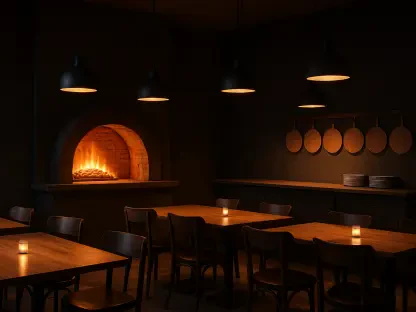
The shift toward experiential marketing has redefined how venues compete in the digital space, moving the focus from physical dimensions to the emotional atmosphere of a space. Static photography of an empty dining room, while necessary for scale, is no longer sufficient to spark the imagination of a modern client. To truly stand out, venues must utilize short-form video content on platforms like Instagram and TikTok to showcase the vibe of a holiday celebration. This involves highlighting sensory details that cannot be captured in a still image: the warm glow of festive lighting, the precision of a bartender crafting a signature seasonal cocktail, or the dynamic energy of a well-attended reception. Visual storytelling allows a prospective guest to feel the sophistication and joy of an event before they ever set foot on the property. By focusing on these human-centric elements, a venue differentiates itself as a curator of memories rather than just a provider of square footage.
Beyond aesthetics, video content serves a practical purpose by acting as a digital walkthrough that clarifies the guest journey. Planners are often concerned with the flow of an event—where guests will arrive, where the bar is located in relation to the dining area, and how private a semi-private space actually feels. Using video to navigate these areas provides clarity and builds trust, especially for planners who may not have the time to visit the venue in person. Furthermore, incorporating social proof by showcasing snippets of successful past events demonstrates that the venue is a proven destination for high-quality gatherings. This approach humanizes the brand and provides a level of transparency that modern consumers find incredibly appealing. When a venue can prove its ability to host a seamless and vibrant event through authentic visual content, it significantly lowers the barrier to entry for new clients who are looking for a guaranteed successful outcome.
Maximizing Inventory and the January Pivot
A successful holiday strategy does not end with a fully booked December; instead, it uses that momentum to address the seasonal fluctuations that often follow the new year. High-demand dates, particularly Thursday and Friday nights in the weeks leading up to the holidays, are the first to fill up, but a savvy operator looks for ways to monetize the entire calendar. This involves a strategic pivot toward mid-week promotions and alternative time slots. Actively marketing holiday luncheons, Monday through Wednesday evening events, and Sunday afternoon gatherings can help fill gaps in the schedule that might otherwise remain empty. By offering specific off-peak incentives, such as a reduced minimum spend or a complimentary wine pairing, venues can attract budget-conscious social groups or smaller corporate teams. This approach ensures that the venue’s overhead costs are covered throughout the week, maximizing the profitability of the existing staff and physical space.
Looking beyond the immediate festive window, the campaign targeting the first quarter of the year is a vital strategy for maintaining revenue during the typically slower post-holiday months. Many corporate groups find themselves too busy to host a proper celebration in December, while others may be operating on a fiscal year that starts in January, making a New Year kickoff or employee appreciation event a more logical choice. By marketing these post-holiday options early, venues can capture business from planners who are looking for more flexible availability and potentially better value in the new year. These events often have a different tone—focusing on goals and future successes—but they still require the same level of professional hosting and high-quality catering. This strategy effectively extends the peak season by several weeks, providing a much-needed financial bridge into the rest of the year and ensuring that the venue remains top-of-mind for clients.
Expanding Revenue with Multi-Channel Catering
The diversification of revenue streams is essential for maximizing holiday potential, particularly through the expansion of off-premise catering services. Not every client has the requirement for a full-scale venue buyout, yet many still desire the high-quality culinary experience associated with a top-tier hospitality brand. By promoting specialized catering packages for office luncheons, at-home family celebrations, and client appreciation gifts, venues can tap into a much broader pool of seasonal spending. The key to success in this area is the creation of a clear and intuitive digital storefront where offerings are categorized by occasion. Packages such as the corporate party pack or gourmet family dinner make the selection process simple and direct, catering to the high-intent, low-friction customer who wants a professional result with minimal administrative effort.
Operational success in catering depends heavily on the removal of hurdles during the ordering and delivery process. In the fast-paced environment of 2026, a customer who has to wait for a manual callback to place a catering order is a customer who will likely look elsewhere. Providing a direct, online ordering path allows venues to capture these sales instantly, often at higher margins due to the lack of dedicated event space overhead. Additionally, this multi-channel approach allows a venue to stay connected with its regular dining clientele, offering them a way to bring the restaurant experience into their personal and professional spaces. By leveraging existing kitchen capacity to fulfill these orders during off-peak hours, hospitality operators can significantly increase their total output without needing to expand their physical footprint. This strategy not only boosts the bottom line but also serves as a powerful marketing tool for new guests.
Maintaining an Always-On Sales Cycle
To remain competitive in the current hospitality landscape, venues must adopt an always-on sales cycle that recognizes the 24/7 nature of modern business. Prospective clients frequently conduct research and submit inquiries outside of traditional office hours, and the speed of response is often the deciding factor in which venue they choose. By ensuring that inquiry forms and direct booking links are omnipresent across all digital touchpoints—from social media bios and search profiles to the email signatures of every staff member—a venue ensures that it is always accessible. Integrating centralized event management software serves as the backbone of this strategy, allowing teams to track leads in real-time and ensuring that no opportunity is lost in a crowded inbox. Even the physical space can be used as a lead-generation tool by placing QR codes on menus or table tents, encouraging current diners to think about the venue for their next celebration.
As the 2026 holiday season concluded, hospitality leaders reflected on how a data-driven approach to marketing attribution fundamentally changed their operational success. By utilizing dedicated lead forms and tracking the specific sources of their high-value bookings, sales teams were able to see exactly which campaigns yielded the highest return on investment. This clarity allowed for real-time adjustments to marketing spend, where resources were shifted to fill underperforming dates or to promote specific catering packages. The integration of advanced analytics and frictionless booking tools transformed seasonal marketing from a guessing game into a precise discipline. Operators who embraced these strategies found themselves better prepared for the next cycle, having built a robust foundation of client data and operational efficiency that extended far beyond the festive period. The shift toward transparency and digital accessibility proved to be the most effective way to secure a profitable and sustainable holiday legacy.