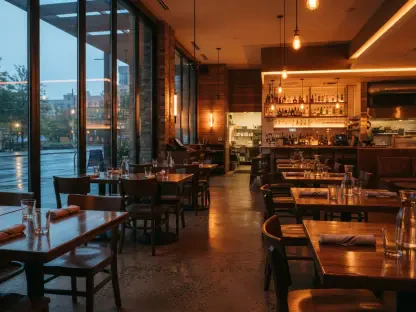

Hidden behind a simple user interface, the partnership between Epson and Kluck manages the intricate logistics of routing data to independent kitchen terminals. This technological synergy has redefined the hospitality landscape at Central Park St. Pete Food Hall in Florida, moving away from fragmented operations toward a unified ecosystem that thrives on precision. The high-energy atmosphere of a modern food hall often masks a digital labyrinth where separate orders for sushi, tacos, and craft cocktails must converge into a single customer’s tray without a moment of hesitation or error. The venue serves as a bustling hub for various culinary identities, each requiring its own preparation space and staff, yet the customer interacts with a single, polished brand. By bridging the gap between independent vendor needs and a centralized management system, the facility ensures that the operational friction traditionally associated with multi-concept dining is completely removed.
Solving the Food Hall Operational Puzzle
Overcoming Multi-Vendor Complexity
Managing a food hall presents a unique set of challenges that a standard restaurant never encounters because it involves orchestrating a single guest transaction across multiple distinct culinary concepts. Each vendor operates with its own specific menu, preparation requirements, and internal workflow, which can quickly lead to a logistical nightmare if not managed through a centralized authority. The primary goal at Central Park St. Pete was to create an environment where a guest can order from several stalls but experience a cohesive fulfillment process that feels like a single entity. Without this integration, diners are often forced to navigate separate payment systems and tracking methods, which degrades the convenience that food halls are supposed to offer. By implementing a centralized system that speaks to every kitchen simultaneously, the hall successfully removes the chaos of disjointed orders, ensuring that the backend complexity remains entirely invisible to every guest.
Streamlining Unified Guest Fulfillment
The transformation of the dining experience depends on the ability of the management software to handle diverse prep times and kitchen capacities without creating bottlenecks at the pickup counter. When a guest places a multi-item order via a kiosk, the system must split that data and route it to the respective kitchen displays and printers instantly. This coordination ensures that a pizza and a salad, which may have very different preparation windows, are tracked and ready for a synchronized handoff. By establishing a unified digital backbone, the facility avoids the common pitfall of forcing customers to hover around multiple different stalls waiting for pagers to go off. Instead, the focus is placed on a streamlined pickup zone where every item is clearly accounted for and organized. This level of orchestration requires more than just basic connectivity; it demands a deep integration of hardware and software that can withstand high-demand environments.
Synergizing Hardware and Cloud Technology
The Power of Integrated Printing Solutions
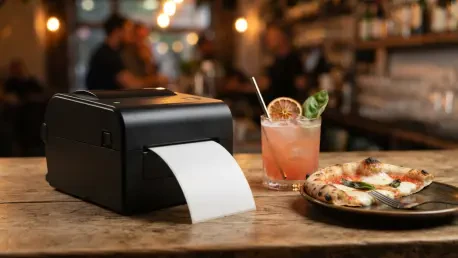
The technical backbone of this transformation lies in the synergy between Kluck’s cloud-native platform and Epson’s specialized hardware, including mSeries and OmniLink TM-L100 printers. Kluck acts as the central brain of the operation, receiving orders from various digital touchpoints and routing them to the correct kitchen stalls with precision. Epson’s hardware provides the essential physical output necessary for tracking these complex orders through the fulfillment process. Specifically, the use of liner-free thermal labels allows each individual item to be clearly marked with the guest’s name and specific order details. This standardized labeling eliminates the common guessing game at pickup stations, where staff or customers might struggle to identify which container belongs to which ticket. By moving away from traditional receipts and toward sticky labels that adhere directly to packaging, the hall has minimized errors and improved the speed at which orders are processed and handled.
Enhancing Service Reliability and Future Scalability
The implementation of integrated POS and labeling systems at Central Park St. Pete provided a clear roadmap for how multi-concept venues resolved the inherent friction of their complex business models. By prioritizing a hardware-first approach to reliability and a cloud-first approach to data management, the partnership successfully transformed a potentially chaotic environment into a streamlined and profitable operation. This transition demonstrated that the most effective technology remained invisible to the end-user while providing total control to the operator. Moving forward, businesses looked toward these automated solutions as the primary method for reducing labor costs and improving order accuracy in high-traffic settings. The shift toward standardized, liner-free labeling proved to be a critical component in ensuring that fulfillment kept pace with the speed of digital ordering. Ultimately, the collaboration established a new benchmark for how modern hospitality groups leveraged specialized tools.